If you were diagnosed with prediabetes last month, or you’re a caregiver trying to help a family member understand how their blood sugar moves through the day, you’ve probably heard about a new category of device: over-the-counter continuous glucose monitors, or OTC CGMs. A CGM is a small wearable sensor — about the size of a nickel — that sticks to your arm and reads your glucose (blood sugar) level automatically, every few minutes, without finger pricks. Until recently, every CGM required a doctor’s prescription. In 2024, two companies changed that: Dexcom launched the Stelo, and Abbott launched the Lingo. Both are now available to any adult without a prescription. This comparison breaks down how the two products stack up on cost, reliability, app compatibility, and real-world owner experience — so you can make the right call before you spend the money.
| EDITOR'S PICKStelo Glucose Biosensor & App b… | Mid-tierLingo Continuous Glucose Monito… | Budget pickLingo Continuous Glucose Monito… | |
|---|---|---|---|
| Pack count | 2 | 2 | 1 |
| Sensor life | 15 days | 14 days | 14 days |
| iOS support | — | — | ✓ |
| Brand | Dexcom | Abbott | Abbott |
| Price | $99.00 | $87.92 | $43.96 |
| See on Amazon → | See on Amazon → | See on Amazon → |
The Core Tradeoff: What Each Product Is Actually Selling You
Before diving into specs, it helps to understand the positioning of each device.
Dexcom Stelo is built on the same sensor hardware lineage as the prescription Dexcom G7 — one of the most clinically validated CGM platforms available. The Stelo sensor wears for up to 15 days per session. It was cleared by the FDA through the 510(k) premarket notification pathway specifically for adults who do not use insulin, making it the natural option for Type 2 and prediabetes management where hypoglycemia (dangerously low blood sugar) is not the primary clinical risk.
Abbott Lingo draws on Abbott’s FreeStyle Libre platform heritage, which has similarly deep clinical roots. Lingo sensors wear for 14 days. Unlike the Stelo, Lingo received FDA marketing authorization through the De Novo classification pathway and is positioned more as a metabolic health and wellness device — its app language leans into concepts like glucose “zones” and behavioral coaching, making it appealing beyond the traditional diabetes patient audience.
Both products target largely the same buyer: an adult who is metabolically curious, managing prediabetes or early Type 2 diabetes, and motivated enough to pay out-of-pocket for real-time glucose data. But the experience of actually using each product diverges in ways the marketing doesn’t advertise.
Cost Math: Running the Real Numbers
This is the question that matters most for anyone evaluating these devices as ongoing tools rather than one-time experiments.
Approximate retail pricing as of mid-2026:
- Stelo: approximately $99 for a 2-sensor pack (15 days each = 30 days of coverage) — roughly $99 per month
- Lingo: approximately $49 per single sensor (14-day wear), available individually or in 2-packs — approximately $98 per month for continuous coverage
- Prescription Dexcom G7: typically $350–$450 per month at retail cash-pay; often $0–$35 per month with commercial insurance
- Prescription FreeStyle Libre 3: typically $75–$150 per month with commercial insurance; approximately $300 or more cash-pay
The OTC price point is genuinely competitive for uninsured or underinsured buyers who would otherwise pay full retail for prescription CGMs. However, neither Stelo nor Lingo is currently covered by most commercial insurance plans or Medicare as of this writing. The American Diabetes Association’s Standards of Care in Diabetes 2025, published in Diabetes Care (Volume 48, Supplement 1), notes that CGM coverage criteria continue to center on insulin-using patients — which excludes the core OTC CGM audience almost by definition.
FSA and HSA eligibility: Both Stelo and Lingo qualify as FSA and HSA-eligible expenses under IRS guidance on medical devices. This is a meaningful unlock for many buyers. A person with $1,200 per year in FSA funds can effectively cover 12 months of OTC CGM use with pre-tax dollars. For caregivers or employees evaluating benefits options, this is the first optimization lever to pull before comparing retail prices.
Side-by-Side Comparison: Stelo vs. Lingo vs. Prescription CGMs
The following three subsections compare the OTC options against each other and against prescription-tier devices across the decision dimensions that matter most for real buyers.
Wear Duration, Accuracy, and FDA Pathway
The Dexcom Stelo offers 15-day sensor wear; the Abbott Lingo offers 14 days. Both are factory-calibrated, meaning no finger-stick calibration is required during wear — the same approach used by the prescription FreeStyle Libre 3 and Dexcom G7.
On accuracy, the FDA’s 510(k) clearance process for Stelo and De Novo authorization process for Lingo both required manufacturers to demonstrate accuracy against a reference blood glucose standard. The prescription Dexcom G7 carries a published Mean Absolute Relative Difference (MARD) of approximately 8.2%, placing it among the most accurate consumer CGMs on the market based on FDA submission data cited in Healthline’s editorial overview of prescription-free CGM options (2025). The OTC Stelo’s published accuracy profile is slightly wider — clinically acceptable for trend-monitoring in non-insulin users, but meaningfully different if a patient were relying on exact readings to dose insulin. Lingo’s accuracy profile is similarly positioned for lifestyle monitoring rather than insulin dosing.
The American Diabetes Association’s Standards of Care in Diabetes 2025 (Diabetes Care, Volume 48, Supplement 1) makes clear that CGM accuracy requirements for insulin dosing decisions are stricter than for lifestyle and trend monitoring. For the OTC CGM buyer — primarily prediabetic or non-insulin Type 2 — the accuracy is fit-for-purpose. For an insulin-using Type 1 or Type 2 patient, neither OTC device is an appropriate substitute for a prescription CGM. This is a firm clinical boundary, not a preference.
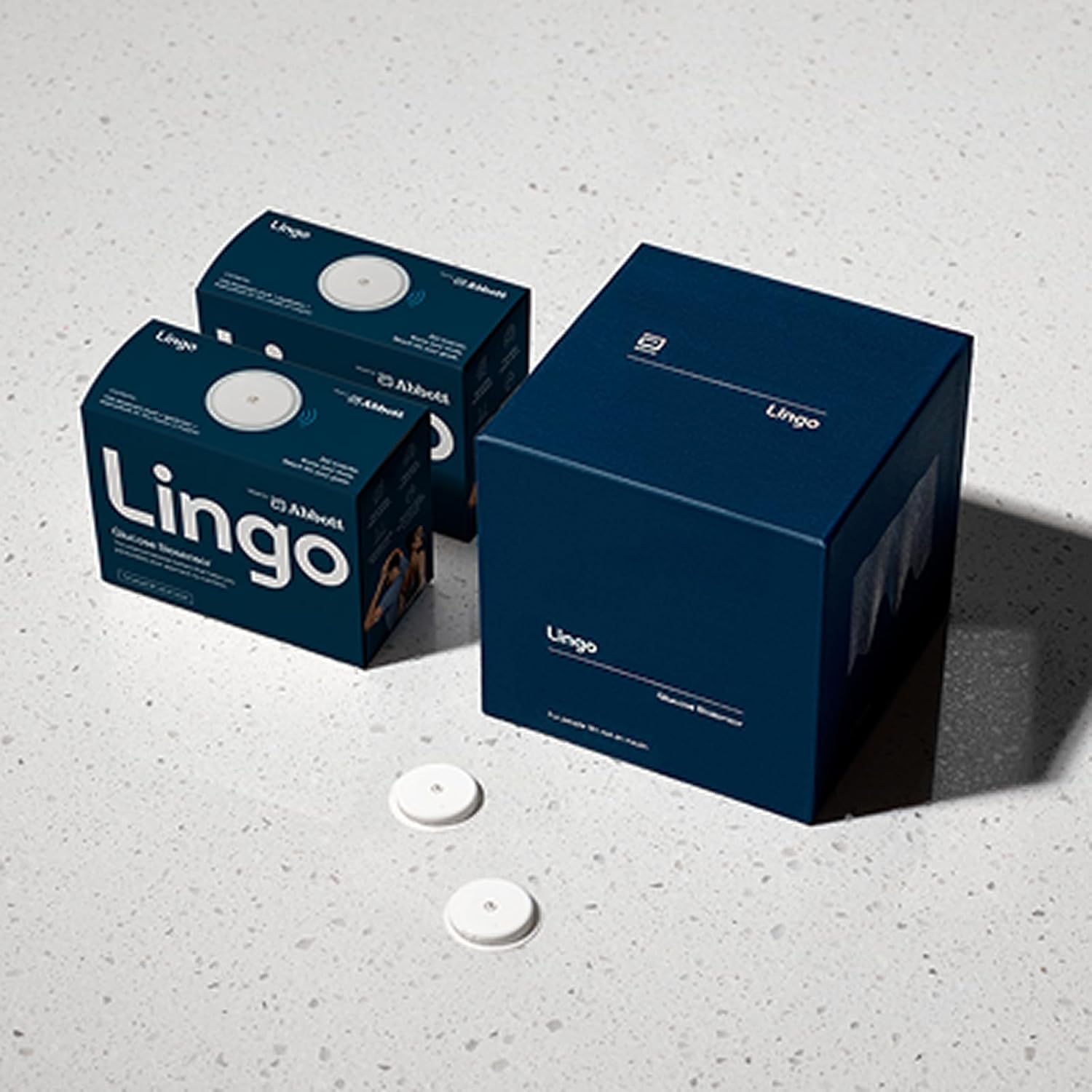
Lingo CGM
$87.92
In stock on Amazon
Check price on AmazonApp Experience, Platform Compatibility, and Real-World Reliability
This is where the marketing diverges most sharply from lived owner experience.
Across aggregated owner reviews for both products, a pattern emerges that Everyday Health’s editorial overview of the Stelo (2025) describes as a “works great if it works” dynamic. That framing is accurate for both devices, though the failure modes are different.
Stelo owner experience: Owners who get a functioning sensor consistently praise the data quality, the 15-day wear duration, and the glucose trend arrows that help contextualize readings. Several reviewers specifically highlight how readable the app is for non-technical users. The problems appear at the edges: a meaningful cluster of owners report sensors dying mid-wear — sometimes as early as day 3 or 4 — with “Signal Loss” errors that do not self-resolve. The customer support experience around replacements has been described in multiple reviews as slow and inconsistent. At least one documented owner review describes being unable to obtain a replacement after a confirmed early failure. One informed buyer noted that they had researched Dexcom’s support reputation before purchasing and felt “comfortable” with the risk going in — a reminder that buyer preparation and realistic expectations are themselves a form of risk management.
Lingo owner experience: Lingo reviews show sharper polarization. Owners who successfully complete setup — sensor applied, app opened, Bluetooth pairing confirmed — frequently praise the product and specifically highlight the coaching-oriented interface. The failure mode, however, is distinct: a significant cluster of owners report that the sensor and app never successfully communicate at all. This appears disproportionately concentrated among Android users, and explicitly among Samsung device owners. One reviewer stated they would “never know” whether their sensor worked because setup failed completely and could not be resolved. Healthline’s editorial overview of prescription-free CGM options (2025) notes that Lingo’s iOS compatibility is more stable than its Android support — a finding that aligns with the broader owner review pattern.
Bottom line on reliability: Neither device has a reliability problem that makes it categorically unusable. Both have a meaningful minority failure rate that buyers should account for — mentally and financially — before committing. The key difference: Stelo failures tend to be mid-wear hardware issues; Lingo failures tend to be upfront connectivity and app problems concentrated on specific Android and Samsung configurations.
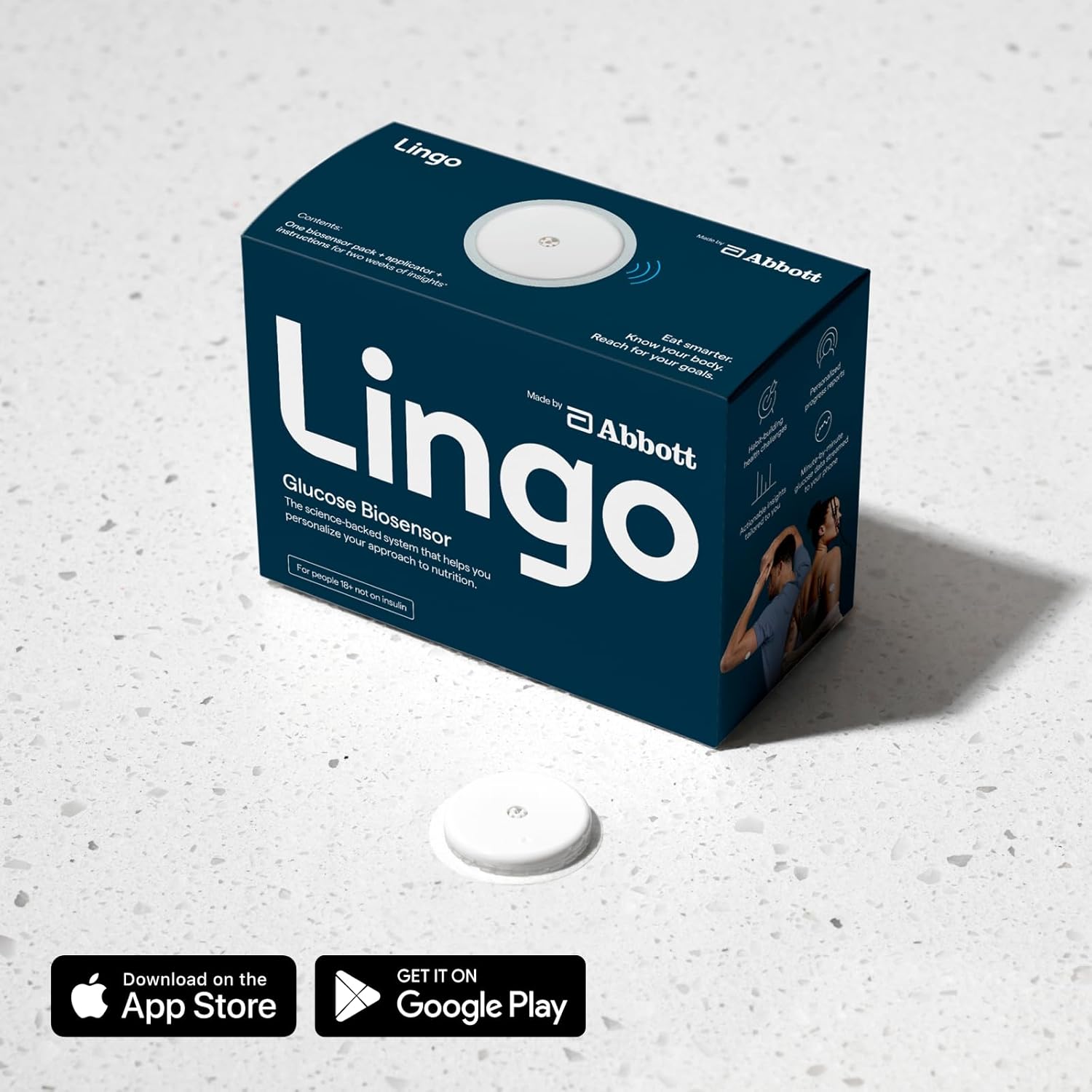
Lingo CGM
$43.96
In stock on Amazon
Check price on AmazonWho Each Device Actually Serves Best
Mapping the tradeoffs to a clear purchase decision requires being specific about the buyer’s situation.
iOS users managing prediabetes or non-insulin Type 2 diabetes: Either device can work. Lingo’s app is more polished on iOS and the coaching interface provides more actionable behavioral prompts. Stelo’s 15-day wear versus Lingo’s 14 days is a small but real cost-per-day advantage. Slight edge: Stelo for cost efficiency; Lingo for behavioral coaching depth.
Android users, especially Samsung device owners: The Lingo connectivity failure pattern documented in owner reviews and noted in Healthline’s 2025 editorial overview is a real risk. Until Abbott publishes updated and verified Android compatibility documentation, the lower-risk choice is Stelo. Clear edge: Stelo.
Clinicians or educators recommending a device to a patient panel: Stelo’s clinical lineage and 510(k) FDA clearance pathway will be easier to document and defend in care notes. Lingo’s wellness framing may underserve patients who need to communicate glucose data to a prescribing provider. Edge: Stelo for clinical settings.
Buyers evaluating OTC CGMs against prescription options: If you have commercial insurance and are on insulin, a prescription CGM — the Dexcom G7 or FreeStyle Libre 3 — will likely cost you less out-of-pocket and offer better accuracy for dosing decisions. OTC CGMs fill the gap for non-insulin users without insurance coverage, not as a workaround for patients who qualify for covered prescription devices. Per the American Diabetes Association’s Standards of Care in Diabetes 2025 (Diabetes Care, Volume 48, Supplement 1), CGM use in non-insulin-treated Type 2 diabetes has demonstrated benefit for glycemic awareness and behavioral change — which is the legitimate use case for both Stelo and Lingo.
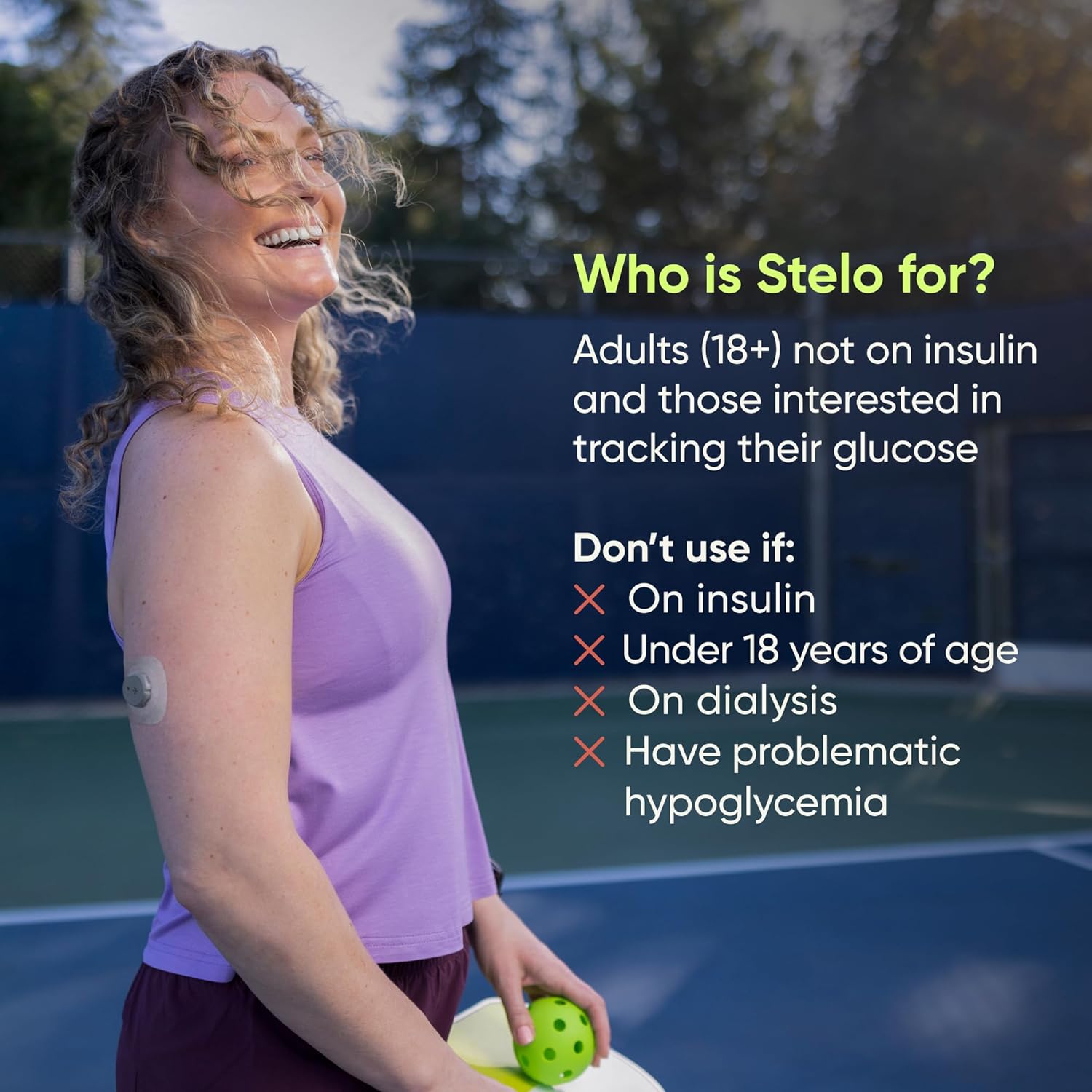
Stelo CGM
$99.00
In stock on Amazon
Check price on AmazonFrequently Asked Questions
Does the Lingo app work on Android or Samsung phones? This is the single biggest reported pain point in Lingo’s owner review base. App-to-sensor communication failures appear disproportionately on Android devices, with Samsung specifically named in multiple owner accounts. As of mid-2026, Abbott’s published compatibility list should be verified on their official product page before purchase. Based on current owner experience reported in Healthline’s 2025 editorial overview and aggregated owner reviews, Android support is meaningfully less reliable than iOS. If you are on Android, Stelo is the lower-risk choice.
What should I do if my Stelo sensor stops working before 15 days? Document the failure immediately — note the day it occurred, the error message displayed (“Signal Loss” is the most commonly reported), and the lot number on the sensor packaging. Contact Dexcom’s OTC customer support. Owner reviews documented in Everyday Health’s 2025 Stelo editorial overview suggest the replacement process can be slow and inconsistent, so proactive documentation and persistence matter. Do not discard the failed sensor until you have confirmed the resolution outcome.
Can I use Stelo or Lingo without a smartphone? No. Both devices require a compatible smartphone to display glucose readings. Neither offers a standalone receiver option — unlike some prescription CGMs that include dedicated readers. If smartphone dependency is a barrier for a specific patient or family member, this is a genuine limitation of the entire OTC CGM category, not just one product.
Are OTC CGMs worth it for someone who is only prediabetic? Potentially yes — but only if you will engage with the data. The clinical value of CGM for prediabetes lies in understanding how specific foods, exercise, sleep, and stress affect your individual glucose curve. If that feedback loop will motivate behavioral change, the approximately $99 per month investment has a reasonable return. If you are buying out of anxiety without a plan to act on the data, value diminishes quickly. A single sensor trial — roughly two weeks — is a low-commitment way to test your own engagement before committing to ongoing use.
Is there any insurance coverage for Stelo or Lingo? As of mid-2026, most commercial insurance plans and Medicare do not cover OTC CGMs. The American Diabetes Association’s Standards of Care in Diabetes 2025 (Diabetes Care, Volume 48, Supplement 1) notes that coverage criteria continue to center on insulin-using patients. FSA and HSA funds can be used for both devices, which provides a meaningful pre-tax cost reduction for eligible buyers.
Sources cited in this article: FDA 510(k) premarket notification program and De Novo classification program (U.S. Food and Drug Administration); American Diabetes Association, Standards of Care in Diabetes 2025, published in Diabetes Care, Volume 48, Supplement 1; Healthline, “Best CGMs Without a Prescription,” editorial overview, 2025; Everyday Health, “Dexcom Stelo Review: What to Know Before You Buy,” 2025. All citations are named-source plain-text references; no hyperlinks are included per editorial policy.