Continuous glucose monitors — CGMs for short — are small wearable sensors that track your blood sugar in real time, every few minutes, without finger-prick blood draws. Until recently, you needed a prescription to get one. That changed in 2024 when the FDA cleared Dexcom Stelo and Abbott Lingo for over-the-counter sale, meaning anyone can walk into a pharmacy or order online and start wearing one. No doctor visit required.
That’s genuinely new. And it’s attracting a wave of buyers who aren’t diabetic at all — biohackers, athletes, people who “just want to see what their glucose is doing.” This article is for you if you’re in that camp, or if you’re advising someone who is. We’ll look at what these two devices actually deliver, where real-world reviews diverge sharply from marketing copy, and — most importantly — whether the cost pencils out for a non-diabetic buyer.
| EDITOR'S PICKStelo Glucose Biosensor & App b… | Mid-tierSkin Grip Adhesive Patches Comp… | Budget pickLexcam Adhesive Patches Pre-Cut… | |
|---|---|---|---|
| Sensor included | ✓ | ✗ | ✗ |
| Pack count | 2 sensors | 20 patches | 20 patches |
| Compatibility | — | Dexcom G7 & Stelo | Dexcom G7 & Stelo |
| Days per unit | Up to 15 | 10-15 | — |
| Waterproof | — | ✓ | ✓ |
| Color | — | Tan | Clear |
| Price | $99.00 | $25.99 | $20.95 |
| See on Amazon → | See on Amazon → | See on Amazon → |
What “OTC CGM” Actually Means — and What It Doesn’t
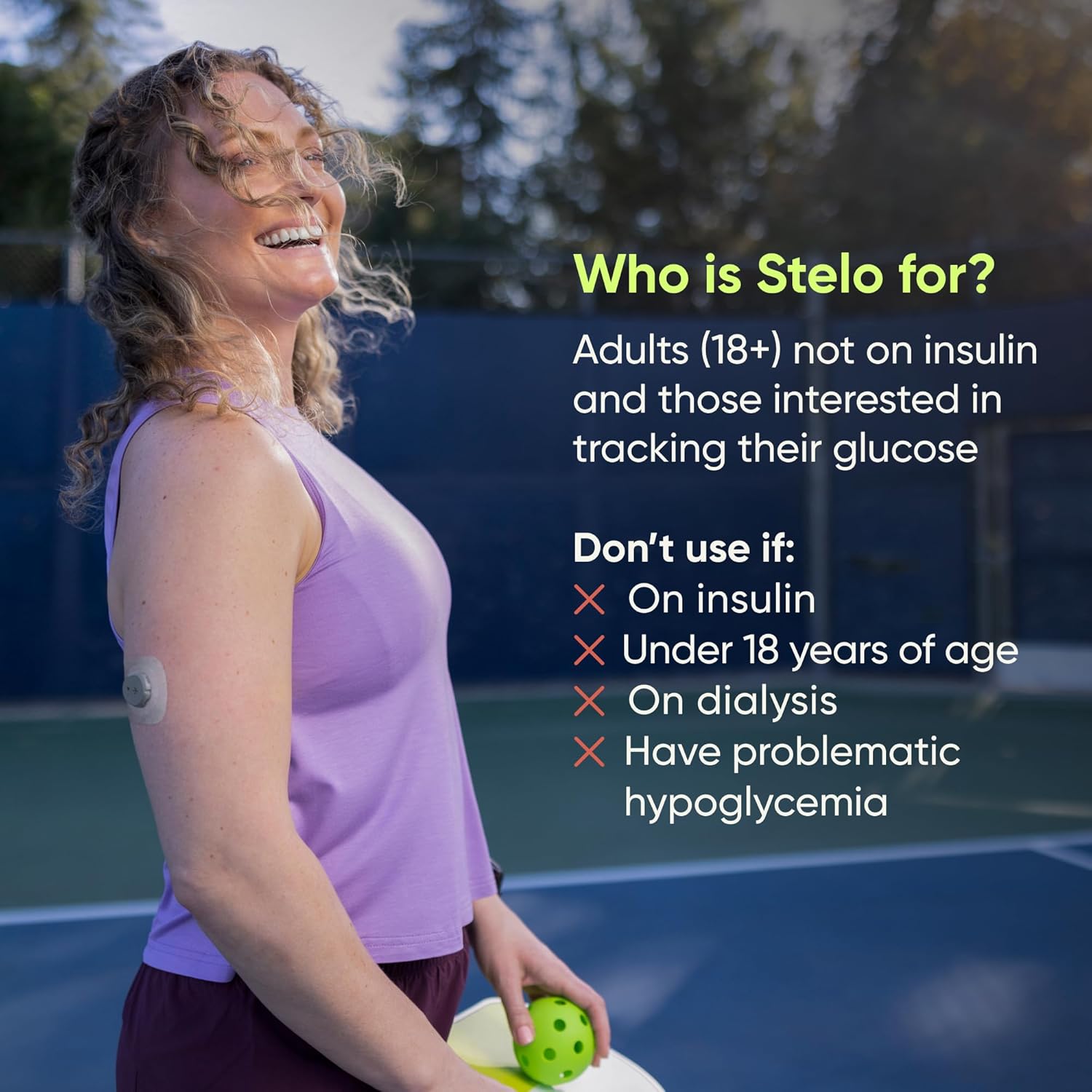
The FDA clearances for Stelo (Dexcom) and Lingo (Abbott) are specifically scoped. Per the FDA’s 510(k) clearance summary for Stelo and the De Novo authorization for Lingo, both devices are indicated for adults 18 and older without diabetes or for adults with Type 2 diabetes who are not on insulin. They are not cleared as therapeutic tools for insulin dosing decisions. That’s not a technicality — it’s the entire frame you need before evaluating these products.
Stelo wears for 15 days per sensor. Lingo wears for 14 days. Both use interstitial fluid glucose readings (measuring the fluid between your cells, not blood directly), which means there’s an inherent lag — typically 5 to 15 minutes behind a fingerstick reading — a detail that confuses buyers expecting real-time precision. Per Healthline’s overview of CGM technology, this lag is normal across all CGM platforms, including prescription devices. But for non-diabetic buyers expecting stock-ticker accuracy, it’s a calibration of expectations that the marketing materials don’t always surface prominently.
The Real-World Review Landscape: What Buyers Are Actually Saying
Aggregated review patterns for both products reveal a story that’s meaningfully different from the advertising.
Lingo’s polarization is almost entirely one issue: Android compatibility. Multiple 1-star reviews follow an identical narrative — buyer purchases, opens app, cannot complete setup on a Samsung or other Android device, and gives up. One reviewer describes being unable to get past the initial pairing screen on a mid-range Samsung phone. Meanwhile, 5-star reviews come predominantly from buyers who either used an iPhone or are healthcare professionals (several self-identified RNs and dietitians) who understood what the device was designed to do before they opened the box. One RN reviewer explicitly addressed negative reviews in her write-up, noting that the device isn’t a clinical diagnostic tool and that the glucose “scores” Lingo generates are wellness trend data, not lab values. That buyer-education gap is doing real damage to Lingo’s aggregate score — and it’s a solvable problem Abbott hasn’t fully solved.
Stelo’s complaints are more hardware-specific. Signal loss mid-wear is the dominant complaint pattern — sensors that simply go dark before the 15-day period ends. A notable secondary issue: customer service responsiveness when requesting replacements. One reviewer described the experience as “horrendous,” a word that appeared in multiple independent reviews. And consistent with a pattern across both OTC CGMs, multiple Stelo buyers mentioned purchasing overpatches — adhesive covers that hold the sensor in place — as a secondary purchase after losing a sensor early. That’s a real out-of-pocket cost most buyers don’t anticipate.
By the Numbers:
| Dexcom Stelo | Abbott Lingo | |
|---|---|---|
| Sensor wear duration | 15 days | 14 days |
| Sensors per pack (typical) | 2-pack (30 days) | 2-pack (28 days) |
| Monthly sensor cost (approximate) | ~$89–$99/month | ~$89–$99/month |
| FDA clearance type | 510(k) | De Novo |
| Indicated for insulin users? | No | No |
The Cost Math for Non-Diabetic Buyers
This is where the decision often closes — and where honest analysis matters most.
At approximately $90–$99 per 30-day supply, a non-diabetic buyer running Stelo or Lingo continuously is spending ~$1,080–$1,188 per year on glucose data alone. That’s before overpatches, before any app subscription tier (Lingo has offered premium coaching tiers in some markets), and before any replacement sensors needed for early dropouts.
FSA/HSA eligibility note: As of mid-2026, OTC CGMs do not uniformly qualify as FSA/HSA-eligible for buyers without a diabetes diagnosis. Eligibility typically requires a letter of medical necessity from a physician for non-diabetic purchasers. Buyers with Type 2 diabetes not on insulin are in a grayer zone — check with your plan administrator directly. This is a meaningful variable if you’re advising patients or clients on whether to self-fund.
For comparison: a standard at-home glucose meter with a box of test strips runs $10–$30 per month at entry-level (ReliOn, CVS store-brand). For a non-diabetic buyer who wants occasional glucose curiosity data — not continuous monitoring — that math is hard to ignore.
If X, then Y — the decision rule for non-diabetics:
- If you’re a data-native buyer (tracking HRV, sleep stages, recovery scores) and will actively use trend data to modify eating or exercise behavior over 60–90 days, the cost has a plausible return.
- If you’re curious but don’t have a specific behavioral protocol you’ll follow, you’re paying ~$1,100/year for data you won’t act on.
- If you have Type 2 and are not on insulin, this is the clearest use case — you’re close enough to the clinical population that trend visibility has real utility, and your physician may be able to support an FSA/HSA justification.
Android vs. iPhone: The Compatibility Issue That’s Hiding in Plain Sight
The Lingo Android problem deserves its own section because it’s purchase-decisive and not clearly disclosed at point of sale.
As of this writing, Lingo’s app has been most consistently reliable on iOS. Abbott has released Android-compatible versions, but review patterns suggest that Samsung devices in particular — the most widely owned Android phones in the U.S. — have disproportionately high setup failure rates. If your patient, client, or customer is on Android, flag this before purchase. It’s not a minor friction point; it’s a documented barrier to the product delivering any value at all.
Stelo’s app compatibility issues are less severe in aggregate reviews, but the product’s signal-loss and customer service problems represent a different kind of abandonment risk.
Per Everyday Health’s coverage of OTC CGMs (2024), both products are intended to lower the barrier to glucose awareness. The irony is that the real barrier for a meaningful subset of buyers isn’t medical — it’s technical onboarding.
Who These Products Are Actually Built For
Medscape’s 2024 clinical commentary on OTC CGMs notes that the clearest clinical signal for non-prescription CGM use is in pre-diabetic adults and those with metabolic syndrome who can use trend data to reinforce dietary behavioral change with a healthcare provider’s guidance. That framing is more precise than the consumer marketing.
The buyer profiles where the math actually works:
- Prediabetic adults working with a dietitian or lifestyle coach — the trend data has a structured recipient.
- Type 2 non-insulin users who want to see real-time food-response data and whose physician supports it — potentially the most defensible use case, and the one the ADA’s 2025 Standards of Care acknowledges in its discussion of CGM utility across the glycemic spectrum (per the American Diabetes Association, Diabetes Care, 2025).
- Health professionals who want first-person familiarity with CGM UX before recommending it to patients — several reviewers in this category report genuine professional value.
The buyer profile where the math is weakest: “I saw it on social media and I’m curious.” Curiosity is real, but at ~$90/month, it’s expensive curiosity without a behavioral protocol to attach it to.
Frequently Asked Questions
Do Stelo and Lingo work with Android phones, or are they iPhone-only? Both have Android apps, but real-world review patterns — particularly for Lingo — show significantly higher setup failure rates on Android devices, especially Samsung phones. If you’re on Android, verify current app compatibility for your specific device before purchasing. iPhone users report fewer onboarding issues across both products.
What happens if my sensor falls off before the 14- or 15-day wear period ends — will the company replace it? Neither Dexcom nor Abbott guarantees automatic replacement for sensors lost to adhesion failure. Stelo customer service responses to this issue have drawn repeated criticism in reviews, with some buyers describing replacement requests as difficult or slow to resolve. Multiple buyers across both products have independently purchased overpatches to extend adhesion — a cost worth budgeting for separately.
How accurate are OTC CGMs compared to a traditional finger-stick meter? OTC CGMs measure interstitial fluid glucose, not blood directly. This introduces a physiological lag of roughly 5–15 minutes and means readings won’t match a simultaneous finger-stick, especially during rapid glucose changes. For wellness trend monitoring, this is acceptable. For clinical decision-making (e.g., insulin dosing), it’s not — and neither Stelo nor Lingo is cleared for that use.
Can I use an OTC CGM if I have Type 2 diabetes but don’t take insulin? Yes. Both Stelo and Lingo are specifically indicated for adults with Type 2 diabetes who are not on insulin, in addition to non-diabetic adults. This is arguably the strongest use case for OTC CGMs: you’re in a population where glucose trend data has real clinical relevance, and your physician may be able to support FSA/HSA eligibility with a letter of medical necessity.
Do I need to buy overpatches separately, or will the sensor adhesive hold on its own? The adhesive is designed to hold for the full wear period, but real-world review patterns show meaningful adhesion failure — particularly in buyers who sweat heavily, swim, or have active lifestyles. Overpatches are sold separately by third-party manufacturers and are a common secondary purchase among CGM users of all types. Budget for them if adhesion is a concern.
Is there a subscription required, or can I buy individual sensors as needed? Both Stelo and Lingo are sold in sensor packs — typically a 2-pack covering 28–30 days — without a mandatory subscription. However, subscriptions or auto-ship options are offered and generally reduce per-sensor cost. The app features (coaching, trend scoring) may vary between subscription and non-subscription tiers depending on the platform’s current offering.
The Bottom Line
Stelo and Lingo are genuinely interesting products that solve a real access problem. For the right buyer — prediabetic, Type 2 non-insulin, or a health professional building patient-facing intuition — the data has a home and the cost is defensible. For the curious non-diabetic without a behavioral protocol, it’s a $90/month experiment that most people abandon before the second sensor.
If you’re advising someone on the purchase: ask what they’ll do with the data before the conversation reaches the checkout. That question does more work than any spec comparison.