If you wear a continuous glucose monitor (CGM) — a small sensor that sits on your skin and tracks blood sugar automatically — or an Omnipod insulin pump, you’ve probably already met the enemy: early peeling. A sensor rated for 10 or 14 days starts lifting at the corners on day four. An overpatch is the fix. It’s a second layer of medical-grade adhesive tape, cut with a hole or slot in the center so it frames the device and holds everything flat against your skin. Overpatches are inexpensive, widely available, and genuinely effective — when you pick the right one. The catch is that “right one” varies by device shape, sweat level, skin type, and how aggressively you need to remove it later. This article maps the real-world performance of the major overpatch brands for Omnipod and Dexcom users so you can make a confident choice rather than trial-and-error your way through a six-pack sampler.
| EDITOR'S PICKSkin Grip Adhesive Patches Comp… | Mid-tierSkin Grip Adhesive Patches for… | Budget pickOnida Dexcom G7 Adhesive Patche… | |
|---|---|---|---|
| Compatible with | Dexcom G7 & Stelo | Libre 2 & Lingo | Dexcom G7 & Stelo |
| Wear time | 10-15 days | 10-14 days | — |
| Sweatproof | ✓ | ✓ | — |
| Color | Tan | Black | — |
| Price | $25.99 | $25.99 | $15.99 |
| See on Amazon → | See on Amazon → | See on Amazon → |
Why Overpatches Fail (And What Reviewers Consistently Report)
Before comparing brands, it helps to understand the failure modes that come up repeatedly in aggregated buyer feedback. Three distinct failure patterns dominate the complaint landscape across retail channels in 2025–2026.
Edge lift without center failure. The patch stays perfectly anchored in the middle but rolls up from the perimeter — usually caused by a thin or flexible adhesive that can’t handle body-contour flex, sweat wicking under the border, or clothing friction. This is the most common complaint across all brands reviewed.
Over-adhesion that damages skin on removal. A patch that grips beautifully for 10–14 days can take the top layer of skin with it on removal. Users with mature or “crepey” skin (thinner, more fragile skin surface common in older adults and some long-term insulin users) flag this as the dealbreaker — particularly with brands that use aggressive acrylic adhesives rather than gentler formulas.
Geometry mismatch. Omnipod pods are wide and oblong; Dexcom G7 is a compact disc shape; Abbott’s Stelo OTC biosensor is roughly similar in footprint to the G7 but with a slightly different profile. Patches designed for one device often sit off-center or leave exposed edges on another.
Wear-Time Reference by Device
The table below summarizes manufacturer-rated wear windows and the most common overpatch need by device. Wear times are drawn from the Insulet Corporation Omnipod 5 User Guide (2024 edition), the Dexcom G7 CGM System User Guide (2024), and the Abbott Stelo Biosensor Instructions for Use (2024). The Dexcom G7 CGM System User Guide (2024) specifically notes that users in high-perspiration environments should ensure site adhesion before sensor activation — a tacit acknowledgment that stock adhesive alone is insufficient for a meaningful share of wearers.
| Sensor / Device | Manufacturer-rated wear time | Most common overpatch need | Primary failure driver |
|---|---|---|---|
| Dexcom G7 | 10 days | Days 6–10 edge lift | Sweating, clothing friction |
| Omnipod 5 pod | Up to 3 days per pod | Pod-width geometry mismatch | Narrow patches, edge curl |
| Abbott Stelo (OTC) | 15 days | Days 8–15 edge lift | Humidity, extended wear duration |
Brand-by-Brand Breakdown
Skin Grip
Skin
$25.99
In stock on Amazon
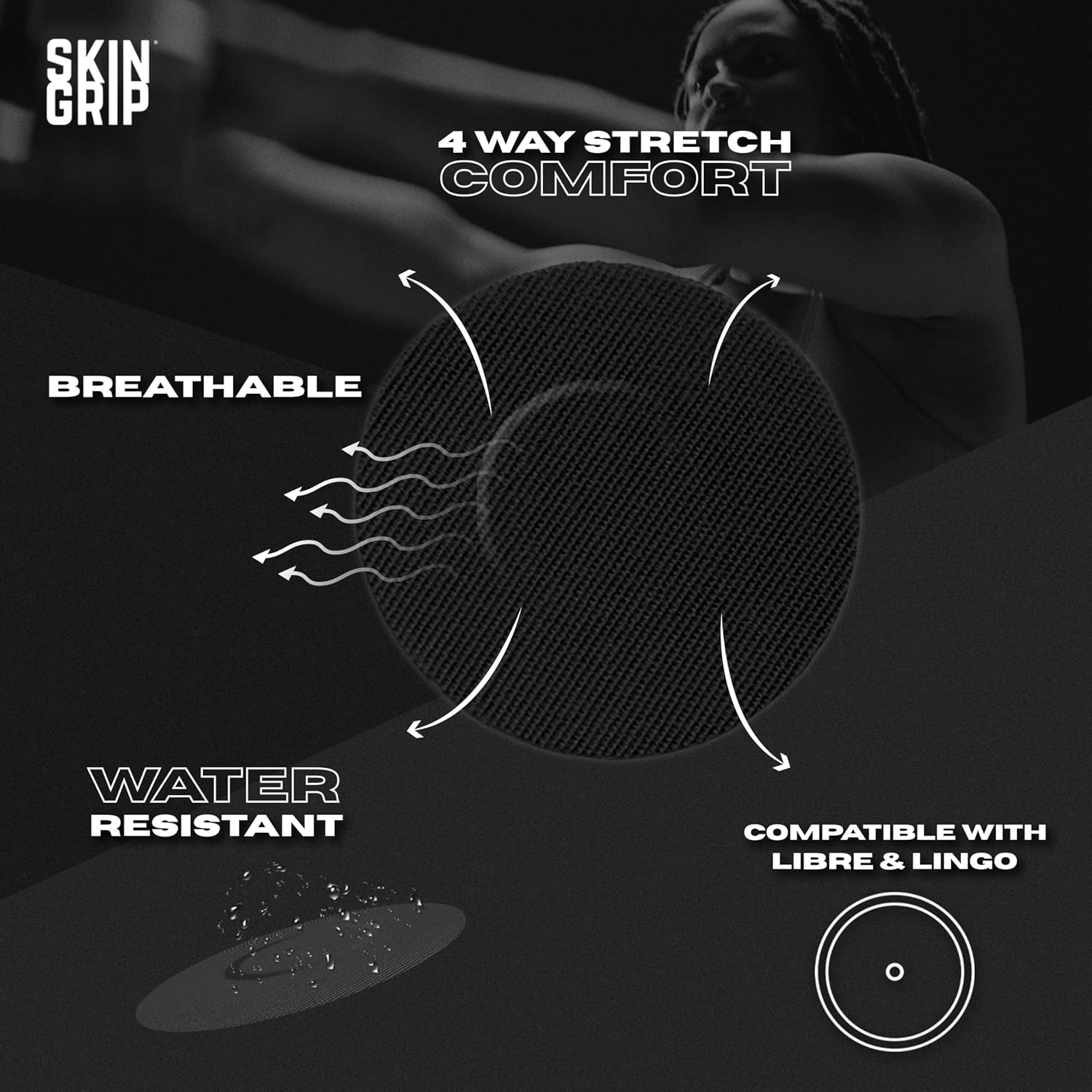
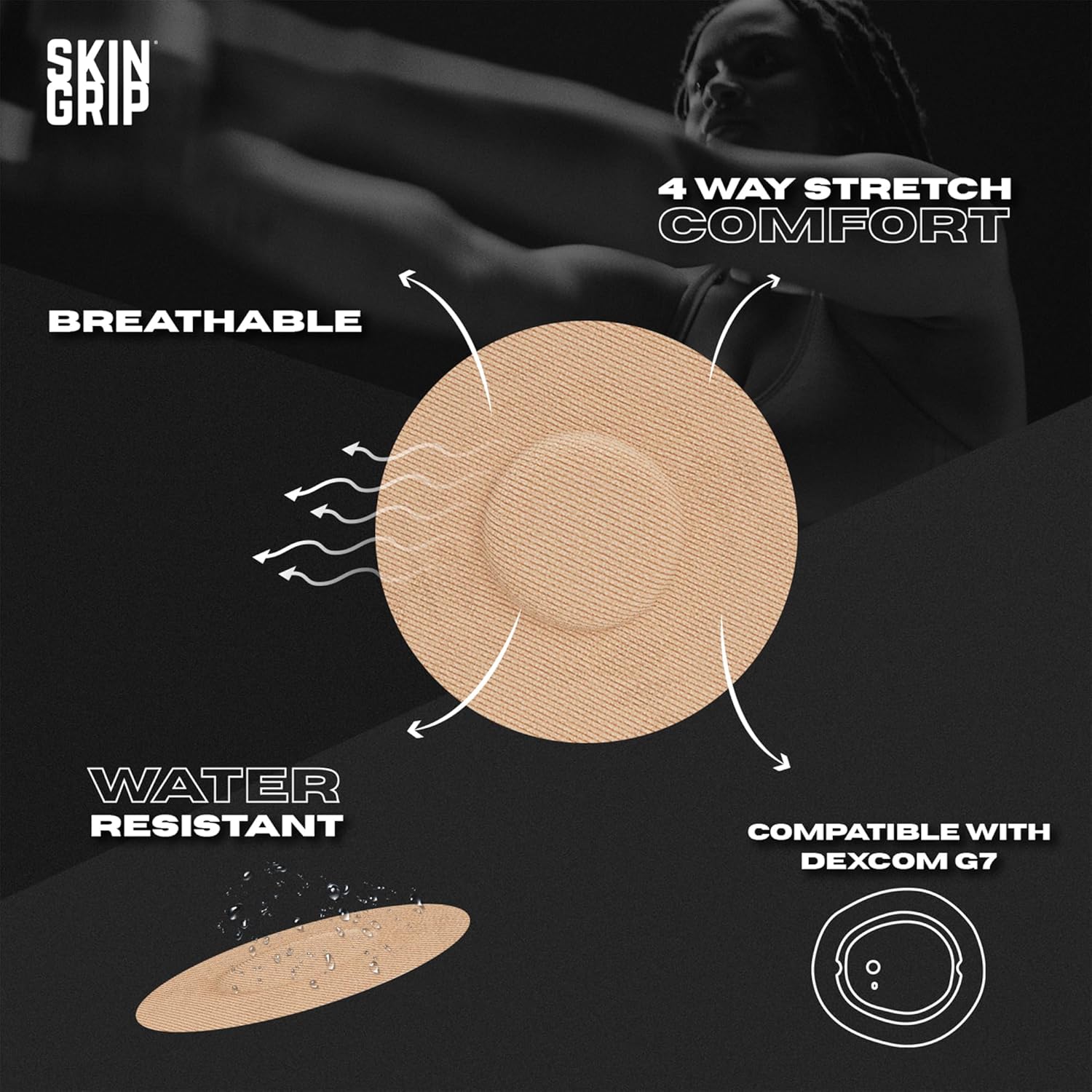
Check price on AmazonSkin Grip is the most frequently cited brand in diabetes self-management communities, and its user feedback is notably bifurcated — which itself is instructive.
For high-sweat users in humid climates, Skin Grip is often described as the solution rather than one option among many. Users with documented early peeling in summer heat specifically credit Skin Grip with resolving the problem outright, particularly in warmer Southern U.S. regions where perspiration is a daily variable. In that use case, the brand performs clearly above baseline and earns its “sport” market positioning.
For users with mature or fragile skin, the story flips. Reviewers with thinner, more delicate skin describe the patch’s removal process as the primary complaint — not adhesion failure, but over-adhesion. The same tack level that makes Skin Grip a hero in humid conditions becomes a liability when skin tolerance for removal force is lower. This is a clinically meaningful split: the population for whom Skin Grip is the right answer and the population for whom it causes problems are nearly opposite in profile.
Skin Grip does offer device-specific cut patterns for the G7, which reduces geometry mismatch failures and is worth seeking out over generic-fit versions.
Best for: High-sweat or sport use with normal skin tolerance. Less appropriate as a first choice for older adults or users with skin fragility concerns.
Skin
$25.99
In stock on Amazon
Check price on AmazonLexcam
Onida
$15.99
In stock on Amazon
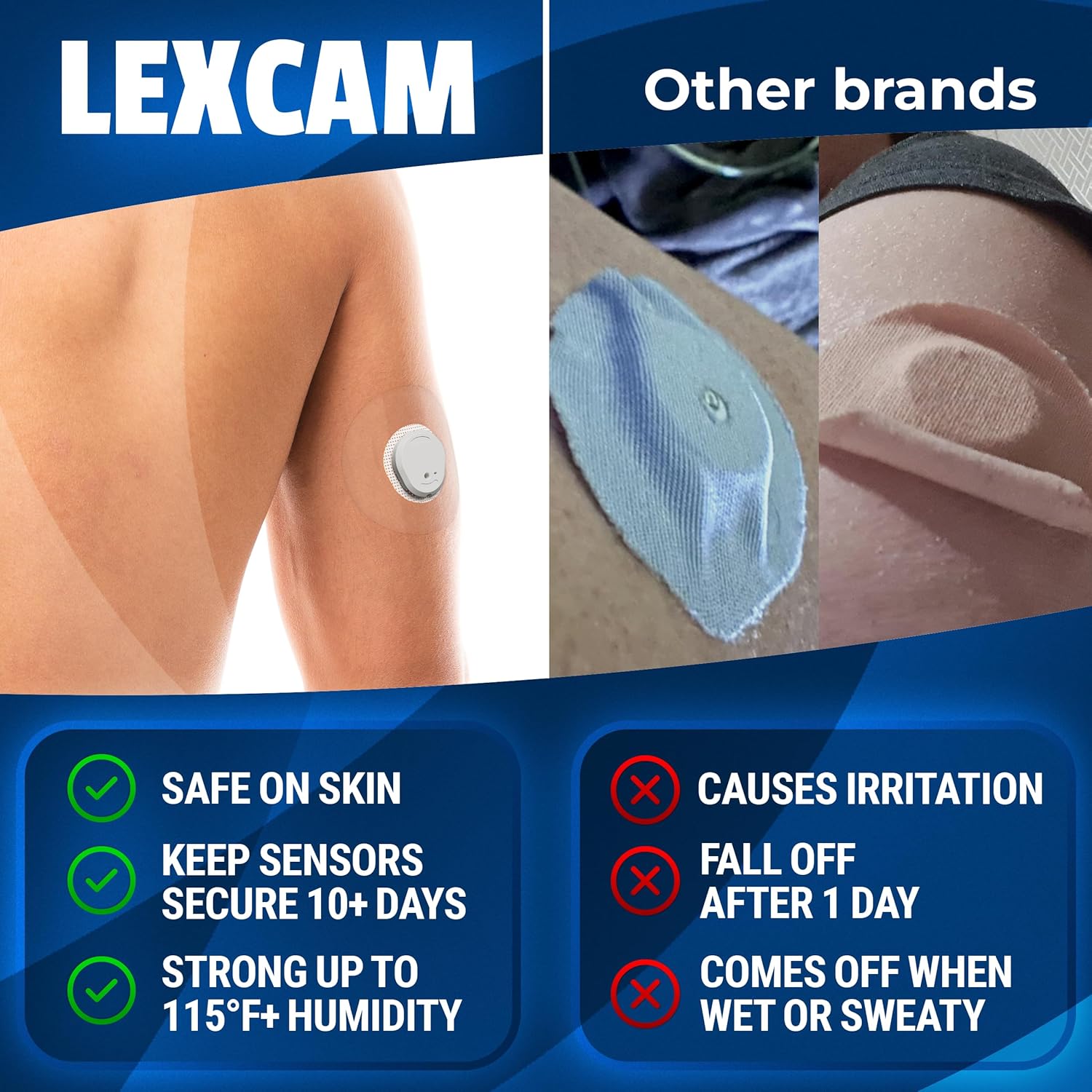
Check price on AmazonLexcam earns consistent praise for one operational detail that sounds minor but matters at scale: release liner ease. The paper backing peels away cleanly and predictably, which reduces the fumbling and accidental fold-over that wastes patches and frustrates users with limited hand dexterity. For a product applied every 10–15 days, reliable application mechanics compound meaningfully over time.
Adhesion through approximately day 8–9 is rated positively across reviews. The specific and repeated complaint appears at the end of the wear cycle: Lexcam becomes difficult to remove after day 10. For Dexcom G7 users completing a full 10-day cycle, this is a timing problem — the patch has served its purpose but resists coming off cleanly. The practical workaround most reviewers describe is soaking the patch edges with warm water for 2–3 minutes, or applying a dedicated adhesive remover product around the perimeter before peeling slowly from one corner.
For Stelo’s 15-day wear cycle, the late-cycle adhesion problem is more pronounced. Reviewers note increased skin irritation at the 12–15 day mark, which makes Lexcam a less natural fit for Abbott’s longer biosensor schedule.
Best for: Dexcom G7 10-day cycles with planned warm-water removal. Less suitable for extended 15-day Stelo wear.
Onida
$15.99
In stock on Amazon
Check price on AmazonOnida
Skin
$25.99
In stock on Amazon
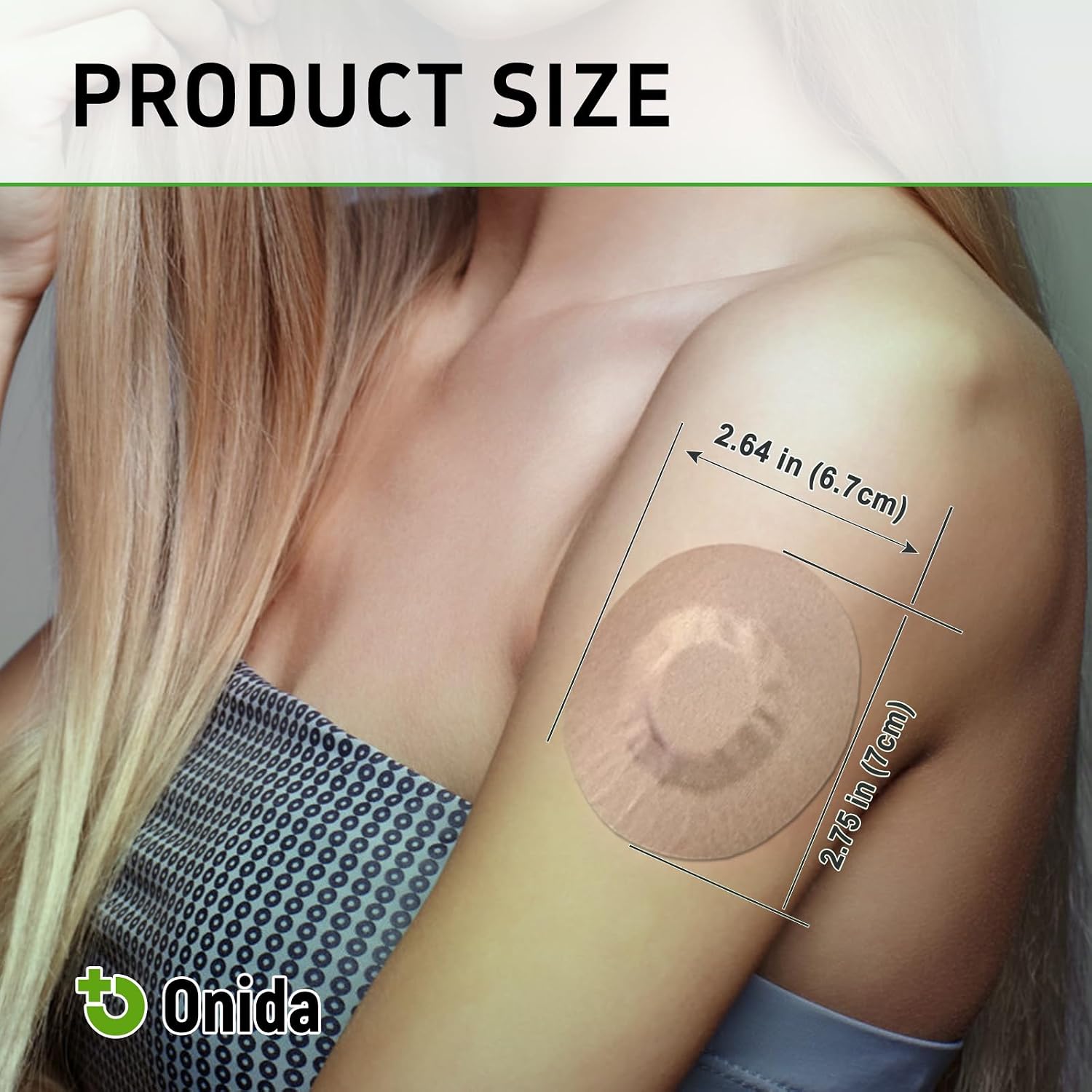
Check price on AmazonOnida occupies the premium tier of the overpatch market, and the reviewer pattern that emerges from users who have tried multiple brands before landing here is unusually consistent: the price-to-performance case is described as justified, specifically because of edge hold.
Where Skin Grip and Lexcam reviewers describe managing edge lift as an ongoing maintenance task — pressing down lifted corners, spot-treating borders — Onida users describe the patch sitting flat through the full wear cycle without intervention. The phrase “most expensive but worth it” appears across multiple independent reviewer accounts in a pattern that reflects genuine satisfaction rather than isolated experience.
What Onida’s premium price buys is hold, not necessarily gentleness. Users with sensitive skin should verify tolerance with a single patch before committing to bulk quantities. The brand does not specifically market to fragile or mature skin as a primary feature, and removal experience on thinner skin is underrepresented in available reviewer feedback.
For practitioners recommending products to patients with active lifestyles, or users who find sensor maintenance distracting during work or athletic activity, Onida’s set-it-and-forget-it edge performance is a meaningful differentiator that justifies the cost step up.
Best for: Users whose primary complaint is edge lifting despite adequate center hold. Athletes, active professionals, and anyone who finds mid-cycle patch maintenance disruptive.
Skin
$25.99
In stock on Amazon
Check price on AmazonCeeport
Skin
$25.99
In stock on Amazon
Check price on AmazonCeeport has developed a specific structural differentiator that reviewers call out explicitly: a closed-center design rather than an open aperture or slot. Most overpatches have an opening that frames the sensor reader or pod body; Ceeport’s geometry provides a more complete seal around the device perimeter.
Reviewers who compare Ceeport directly against Skin Grip — and a notable subset have tried both — consistently find that Ceeport’s construction holds longer under sustained water exposure. Swimming, showering, water sports, and extended sweaty workouts are the use cases where the closed-center waterproof advantage is most clearly reported.
The practical tradeoff worth flagging: closed-center designs can make it harder to scan or read the sensor without peeling back a corner. For Dexcom G7 and Stelo users who scan a dedicated reader device rather than relying on Bluetooth app transmission alone, this is worth testing before committing to a bulk purchase. Users who rely primarily on phone-based CGM apps are less affected.
Best for: Daily swimmers, water sports participants, and users in sustained high-humidity environments where full waterproof coverage outweighs scan-access convenience.
Skin
$25.99
In stock on Amazon
Check price on AmazonANGTICS
Onida
$15.99
In stock on Amazon
Check price on AmazonANGTICS earns a narrow but important recommendation: it is the brand most consistently called out by name as solving the Omnipod pod’s specific geometry problem. Omnipod pods are wider and more oblong than any major CGM sensor, and reviewers describe a meaningful share of overpatch brands failing at this size requirement — leaving exposed pod edges that peel early.
ANGTICS patches require sideways stretching to achieve proper coverage, a characteristic that reads as a flaw in isolation but is actually the mechanism allowing the patch to conform to the pod’s unusual aspect ratio. Buyers who specifically switched to ANGTICS after other brands failed the Omnipod fit test describe the stretch-to-conform behavior as intentional and effective rather than a quality control issue.
For CGM sensors — G7 or Stelo — ANGTICS offers less differentiation than the Omnipod-specific advantage. Its budget price point makes it a reasonable starting-point sampler for CGM users, but the brand’s clearest value proposition is for pump users who have already exhausted generic-fit options.
Best for: Omnipod 5 pod users whose previous overpatches failed due to width mismatch. The stretch-fit geometry is the differentiator; it is not a substitute for CGM-specific cut patterns on G7 or Stelo.
Onida
$15.99
In stock on Amazon
Check price on AmazonDecision Framework: If X, Then Y
This decision rule is distilled from the pattern across all brands reviewed above.
If the user is in a high-humidity or high-sweat environment (outdoor work, Southern U.S. summers, athletes): Skin Grip for G7 and Stelo; Ceeport if water immersion is a daily factor rather than occasional.
If the user has mature, thin, or fragile skin: Avoid high-tack acrylic patches as the first choice. Lexcam with planned warm-water removal is a gentler starting point. Test any patch on a small non-device skin area first.
If the primary complaint is edge lifting with adequate center hold: Onida is the direct answer. The premium price is validated by the specific problem it solves.
If the device is an Omnipod pod (not a CGM): ANGTICS is the name to know. The sideways-stretch geometry is the feature, not a defect.
If the wear cycle extends to 15 days (Stelo): Avoid Lexcam as the primary choice past day 10. Ceeport or Onida carry the longer timeline more reliably.
Frequently Asked Questions
Will a Dexcom G7 overpatch also fit the Stelo sensor? The G7 and Stelo have similar but not identical footprints. Patches cut specifically for the G7 may fit Stelo with small edge gaps. Reviewers who wear Stelo consistently recommend buying Stelo-specific cuts where available, or testing a G7 patch before committing to a bulk order.
How do I remove a patch after 10-plus days without damaging skin? Soak patch edges with warm water for 2–3 minutes, or apply a dedicated adhesive remover product around the perimeter before peeling slowly from one corner. Roll the patch back on itself at a low angle rather than pulling perpendicular to the skin — this distributes removal force more evenly and reduces surface trauma.
Why does my CGM patch peel at the edges but stay stuck in the center? The center of the patch is mechanically anchored by the device body; the border moves with skin flex, sweat, and clothing contact. Thinner adhesives and patches with wide border margins are most susceptible to this pattern. Pressing edges down firmly immediately after application — before any perspiration accumulates — reduces early edge lift, as does applying a skin prep barrier beforehand.
Does skin prep like Skin Tac change how long an overpatch lasts? Yes, meaningfully. Skin Tac and similar tacky wipes create a surface layer that gives the patch adhesive more to grip. Reviewers across all brands report extended wear time when using a skin prep barrier, particularly in humid conditions. The tradeoff: skin prep products make removal harder, especially on fragile skin. Apply them to the skin only, avoid the sensor’s own adhesive ring, and allow them to reach a slightly tacky (not wet) state before applying the patch.
Are there patches specifically designed for sensitive or crepey skin? No major brand reviewed here explicitly markets to fragile or mature skin as a primary feature. The practical approach reviewers describe: choose the lowest available tack rating, use an adhesive remover at removal, and test on a small non-device area first. Some users with very sensitive skin report success with a hydrocolloid barrier tape (such as Tegaderm or Mepitac) as a skin-protective underlayer before applying any overpatch — though this adds an application step and modifies the adhesion geometry.
Device wear specifications cited in this article are drawn from the Insulet Corporation Omnipod 5 User Guide (2024 edition), the Dexcom G7 CGM System User Guide (2024), and the Abbott Stelo Biosensor Instructions for Use (2024), all referenced as plain-text named sources. Standards of care guidance draws on the American Diabetes Association’s Standards of Care in Diabetes 2025, published in Diabetes Care (diabetesjournals.org). FDA 510(k) clearance classifications for CGM adhesive accessories are maintained in the FDA 510(k) Clearance Database (fda.gov).