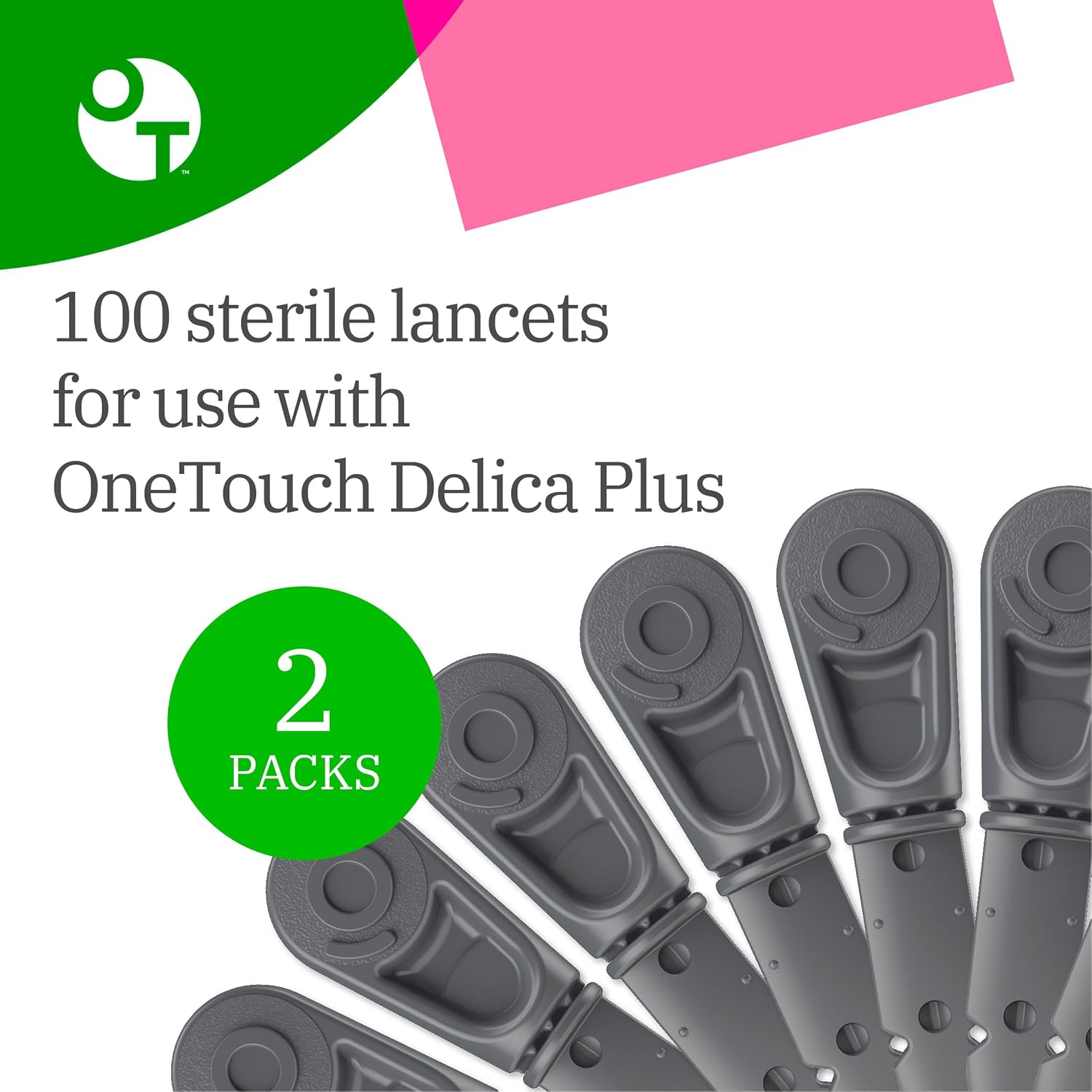
If you’re managing diabetes, a lancet is the tiny needle — about the width of a human hair — inside the spring-loaded device (called a lancing device) you use to prick your finger and draw a small drop of blood for testing. It sounds simple, and it is. But if fingersticks feel like a punishment every single time, something is off. It shouldn’t hurt that much. The difference between a lancet that stings and one you barely notice comes down to a handful of engineering details: the gauge (thickness) of the needle, the depth it penetrates, the tip geometry, and whether you’re reusing a lancet that went dull after its first use. This guide walks you through each of those variables, shows you the cost math, and ends with a clear decision framework so you can match the right lancet to your real situation — not a theoretical one.
| EDITOR'S PICKOneTouch Delica Plus Lancets -… | Mid-tierAscensia MICROLET Lancets for G… | Budget pickTRUEplus Sterile Lancets 33 Gau… | |
|---|---|---|---|
| Gauge | 30G | 28G | 33G |
| Count | 180 | 100 | 200 |
| Coating | — | Silicone | — |
| Sterile | — | ✓ | ✓ |
| Multicolored | — | ✓ | — |
| Price | $24.89 | $12.10 | $6.42 |
| See on Amazon → | See on Amazon → | See on Amazon → |
Gauge: The Single Biggest Lever on Pain
Gauge is a measurement of needle diameter, and it works backwards from what you’d expect: a higher gauge number means a thinner needle. A 28-gauge lancet is noticeably thicker than a 33-gauge one. Most lancets sold at pharmacy counters today fall between 28 and 33 gauge, with a growing cluster of ultra-thin options at 30–33 gauge dominating newer product lines.
Why does thinness matter so much? Per Healthline’s overview of finger-stick blood testing, a thinner needle displaces less tissue on entry and exit, which means fewer nerve endings are triggered. The result is a prick that registers more as pressure than pain. Clinical literature indexed on diabetesjournals.org around pain and anxiety in diabetes self-monitoring consistently identifies needle diameter as the primary modifiable variable in patient-reported discomfort — ahead of depth, device brand, or fingertip location.
Practical tradeoff to know: Thinner gauges (32–33G) are ideal for most adults with typical skin thickness. They draw sufficient blood for modern meters, which require only 0.3–0.5 µL per Accu-Chek and OneTouch published specifications. If you have thickened fingertip skin from manual labor or very dry skin, a 30G lancet may actually be more reliable — it’s still much thinner than the 28G lancets that dominated the market a decade ago, and it reduces the chance of a failed draw that requires a second prick.
The Gauge Quick-Reference
| Gauge | Needle Thickness | Best For |
|---|---|---|
| 28G | Thicker | Calloused skin, high-volume clinical use |
| 30G | Medium | General adult use, balanced reliability |
| 32G | Thin | Sensitive skin, regular adult use |
| 33G | Ultra-thin | Comfort-first, standard skin thickness |
Depth Settings: Dialing Down the Poke
Your lancing device (the reusable pen-shaped holder) typically has a numbered depth dial — usually 1 through 7 or similar. This controls how far the needle extends beyond the device tip. Most people set this once at the factory default and never touch it again. That’s a missed opportunity.
The Mayo Clinic’s guidance on blood sugar testing recommends using the lowest depth setting that still produces an adequate blood drop, and adjusting up only if you’re getting dry sticks. Most adults with soft fingertip skin will find that settings 2–3 (on a standard 7-point scale) are plenty. Only individuals with very thick, calloused skin or those testing through alternate sites typically need settings above 4.
Why depth gets dialed too high by default: Retailers and clinicians often set devices at mid-range (4–5) to ensure patients don’t fail their first test. That’s pragmatic for onboarding but leaves people with unnecessary pain afterward. If you’ve never adjusted your depth setting, try dropping two notches. If you still get a blood drop, stay there.
Site selection matters too. The fingertip sides (lateral edges, away from the center pad) have a higher density of capillaries and fewer nerve endings than the flat pad. Per the American Diabetes Association’s Standards of Care in Diabetes 2025, rotating sites across all ten fingers and using the sides rather than the center pads is the standard recommendation for reducing cumulative discomfort and callous formation.
The Reuse Problem (and the Real Cost Math)
Here’s the uncomfortable truth the lancet industry doesn’t advertise: lancets are rated for single use. The FDA’s device regulation framework categorizes them as single-use sharps. Every additional use after the first dulls the tip — lancet tips are laser-cut to a precise taper, and that edge degrades measurably after one puncture.
Across aggregated reviews and diabetes community feedback, the pattern is consistent: people who switch from reusing lancets to single-use per-stick report an immediate and significant drop in perceived pain. The taper that makes a 33G lancet gentle on the first use is blunted by the second, essentially turning it into a functional 30G with a jagged tip by the third.
The cost math (May 2026 pricing, approximate):
- Entry-level lancets (ReliOn, CVS store brand, BD Ultra-Fine): ~$5–$9 per 100-count box
- Mid-range lancets (Accu-Chek FastClix cartridges, OneTouch Delica Plus): ~$10–$18 per 100-count equivalent
- Premium ultra-thin lancets (Genteel, Reli+On Advanced 33G): ~$12–$20 per 100
At two tests per day (730/year), a $9 box of 100 lancets costs roughly $65/year at single use — or about $0.09 per stick. If you’re reusing lancets to save money, the savings are real but small, and the pain cost is concrete. For most people, single use is the defensible tradeoff.
FSA/HSA eligibility: Lancets and lancing devices are FSA/HSA-eligible under IRS Publication 502. Flag this at checkout — it effectively makes a $15 box of premium lancets cost $10–$12 after pre-tax savings at a 25–30% marginal rate.
Device-Lancet Compatibility: The Gotcha Nobody Mentions
Not all lancets fit all lancing devices. There are two dominant form factors:
-
Universal/standard lancets — fit the vast majority of lancing devices including most Accu-Chek, OneTouch, and generic pen-style devices. This is the default format from BD, McKesson, ReliOn, and most store brands.
-
Proprietary lancets — some devices use manufacturer-specific lancets. The Accu-Chek FastClix, for example, uses a drum-style 6-lancet cartridge that doesn’t accept universal lancets. The Genteel lancing device uses its own lancet format.
If you’re recommending a lancing system to a patient or advising someone who’s mid-switch, verify compatibility before purchasing a 200-count box. The Roche Accu-Chek FAQ and OneTouch product documentation both list compatible lancet formats — check those published specs before committing to bulk.
Pain Reduction Beyond the Lancet: What Else Actually Moves the Needle
Per the Diabetes Care journal literature on self-monitoring pain and anxiety, lancet gauge and depth account for the majority of fingerstick discomfort — but a few adjacent factors are worth addressing:
Warm fingers bleed easier. Cold fingertips constrict capillaries, leading to dry sticks and repeat pokes. Washing hands with warm water for 30 seconds before testing is more reliable than milking the fingertip, which can dilute the sample per Mayo Clinic guidance.
Lancing device spring tension varies by brand. Owners of the Accu-Chek FastClix consistently report a smoother, more controlled strike compared to older twist-style pen devices, attributing this to the drum mechanism reducing vibration. The OneTouch Delica Plus receives similar reviewer commentary around its adjustable cap and side-port entry reducing skin drag.
Alternate site testing has limitations. Palm, forearm, and thumb-base testing is possible with compatible meters, but per the ADA’s Standards of Care, fingertip testing remains the accuracy standard for post-meal and hypoglycemia checks. Alternate sites are acceptable for fasting or pre-meal readings, but not when rapid glucose changes are likely.
If You’re Also Using a CGM: Do Lancets Still Matter?
Yes, and more than you’d think. Even users on Dexcom G7 or Abbott FreeStyle Libre 3 systems still perform fingerstick calibration or confirmation checks — particularly during sensor warm-up, when readings seem inconsistent, or during any suspected hypoglycemic episode. The ADA’s 2025 Standards of Care explicitly notes that fingerstick testing remains the reference standard for confirming CGM readings before treating symptomatic lows.
CGM users who test 1–2 times per day (instead of 6–8) actually have a stronger incentive to optimize their lancet setup: each stick is more consequential, so discomfort per event matters more, not less.
The Decision Framework: If X, Then Y
If your current lancets sting noticeably on every use: → Drop two gauge numbers (e.g., 28G to 30G or 32G) and confirm your depth dial is below 4. This alone resolves most reported pain.
If you’re reusing lancets to reduce costs: → Run the math. At $0.09/stick single-use with FSA/HSA pre-tax pricing, the annual cost difference versus reuse is under $30. Single use is the clear call unless you’re testing 4+ times daily with no insurance or FSA access.
If you have calloused or thick fingertip skin: → Stay at 30G rather than 32–33G. Reliable blood draw on the first poke beats ultra-thin comfort if it leads to repeat sticks.
If you’re advising a patient new to self-monitoring: → Prioritize a device with a wide depth range (1–7 scale preferred) and universal lancet compatibility. Start at depth 3, adjust from there. Recommend single-use from day one — the habit is easier to build than to break.
If you’re managing procurement for a small practice or patient panel: → Universal 30G lancets in 100-count boxes are the defensible standard. They balance cost, compatibility, and comfort without requiring SKU proliferation across patients with different skin types.
The lancet category looks boring on the surface. Under the hood, it’s one of the highest-frequency pain points in daily diabetes management — literally. Getting the gauge, depth, and replacement cadence right costs almost nothing extra and pays off 365 times a year.