If you wear an insulin pump — a small wearable device that delivers insulin continuously through a thin tube (or, in the case of Omnipod, wirelessly) — you already know the logistics puzzle it creates. Where does it go when you sleep? What happens when you go for a run? How do you keep it from flopping around under your clothes at work? An insulin pump belt is exactly what it sounds like: a wearable carrier, usually worn around the waist or torso, designed to hold your pump securely in any situation. The right one can genuinely change your day. The wrong one becomes a source of small, grinding frustration.
This guide breaks down the real-world tradeoffs across three distinct use cases — sleeping, active wear, and all-day daily carry — with structured comparisons for each tier of product. If you’re deciding between options right now, the decision rules at the end are written for you.
| EDITOR'S PICKInsulin Pump Belt with Mesh Pou… | Mid-tierInsulin Pump Belt with Double S… | Budget pickMEDMAX Diabetic Running Belt wi… | |
|---|---|---|---|
| Pouch type | Mesh pouch | Double zipper | Waist pouch |
| Tubing slits | ✓ | — | — |
| Adjustable waist | — | ✓ | ✓ |
| Bag only | — | — | ✓ |
| Designed for | Diabetic T1D | Diabetic T1D | Running |
| Price | $17.98 | $14.99 | $9.99 |
| See on Amazon → | See on Amazon → | See on Amazon → |
Why One Belt Rarely Does It All
The temptation is to find a single belt and call it done. Owners who’ve been pumping for years consistently push back on that approach. The physical demands of sleeping (low movement, need for tangle-free wear, soft materials) are almost opposite to the demands of an intense workout (secure compression, sweat resistance, pump stability during dynamic movement). Daily wear adds a third axis: you need access — specifically, the ability to do a bolus (a manual dose of insulin entered on the pump) without making a production of it.
Understanding that tradeoff upfront saves a lot of frustrated returns.
By the numbers:
- Tubed pump users typically access their pump 4–8 times per day for boluses, settings adjustments, or status checks.
- Average pump tubing length runs 23–43 inches depending on brand and user preference — a key variable in any belt design choice.
- Omnipod 5 users operate their system via a separate handheld controller, which changes the belt equation entirely (no need to access the pod directly for boluses), as detailed in the Insulet Corporation Omnipod 5 System User Guide, 2024 edition.
Sleep Belts: Tangle-Free Carry Through the Night
Sleep-specific feedback from pump owners is unusually consistent. The complaint isn’t pain — it’s tangling and repositioning. Tubing gets caught. The pump slides off a bedside table. Rolling over pulls the infusion site (the small adhesive patch where the cannula enters the skin). Three belt formats address this in meaningfully different ways.
Budget Pick: Basic Elastic Waist Pouch
A flat, zippered elastic pouch in a single-zipper configuration is the lowest-cost entry point. It keeps the pump against the body and prevents tubing from roaming freely. The limitation is access: a single-direction zipper means you may have to roll or reposition yourself to open the pouch from the correct end when you’ve shifted in the night. For light sleepers or those who don’t move much, this works adequately. For stomach and side sleepers, it introduces a consistent friction point.
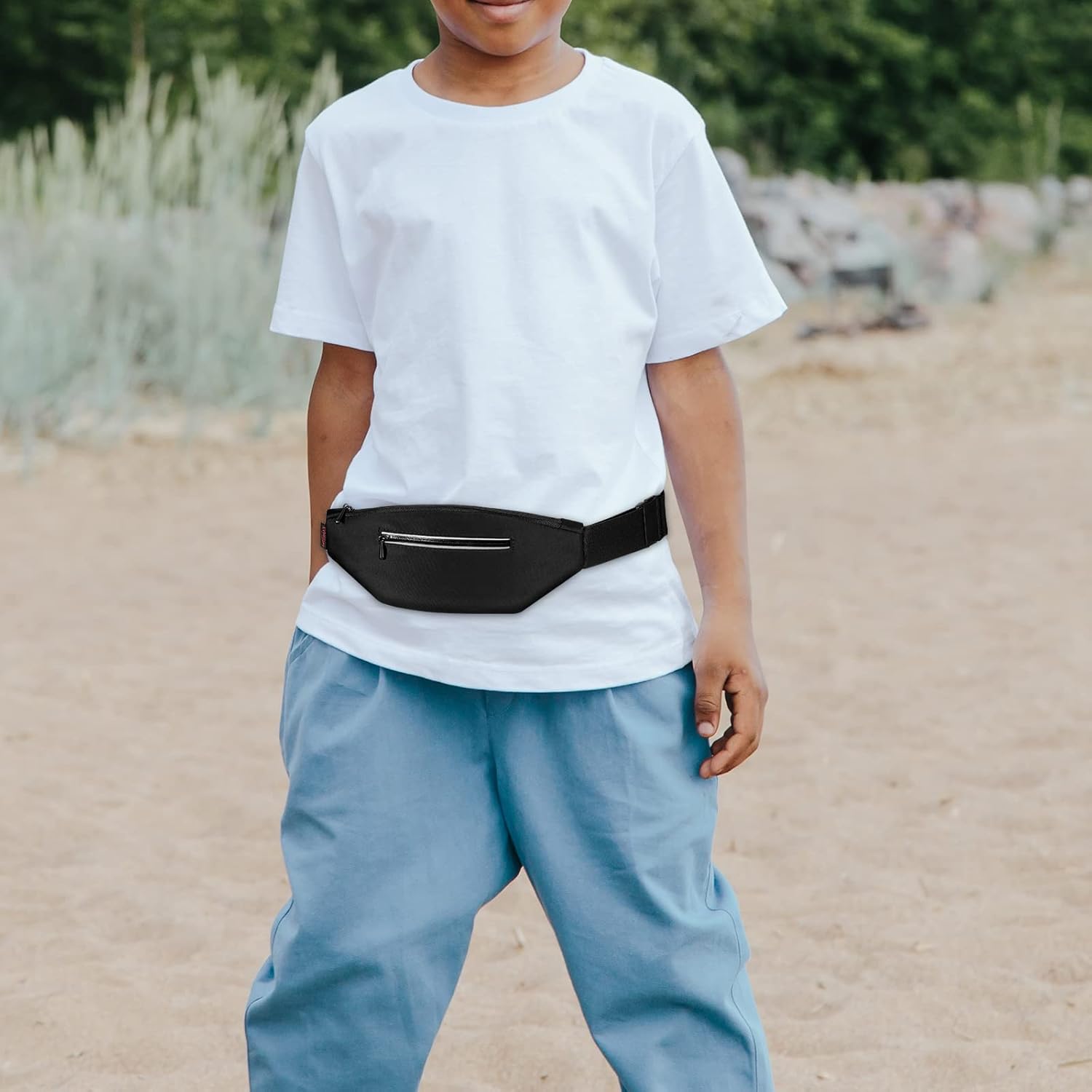
MEDMAX
$9.99
In stock on Amazon
Check price on AmazonMid-Tier Pick: Double-Zip Waist Belt
The double-zip waist belt design addresses sleep problems more directly than any other format in this category. The logic is practical: a zipper that opens from either end means you can access the pump from whichever side you roll to without repositioning the belt. Long-term pump owners specifically credit the two-way zipper as the feature with the highest impact on sleep quality, noting it as the most consistently recommended sleeping solution across a decade or more of trying alternatives.
What to look for in a sleep-specific double-zip belt:
- Soft, breathable fabric. Stiff elastics or rigid hardware wake you up when you shift position.
- Low profile. Bulk at the back creates pressure points when you’re on your side or stomach.
- Secure-enough fit. A loose pouch means your pump migrates by 3 a.m.
One note for Tandem t:Slim X2 users: the t:Slim X2 touchscreen requires a swipe-and-confirm interaction for boluses, per the Tandem Diabetes Care t:Slim X2 Insulin Pump User Guide, 2024 edition. At night this matters less — most users on Control-IQ automated insulin delivery are making fewer manual bolus decisions — but any belt pouch will require you to remove or partially extract the pump for a manual bolus.
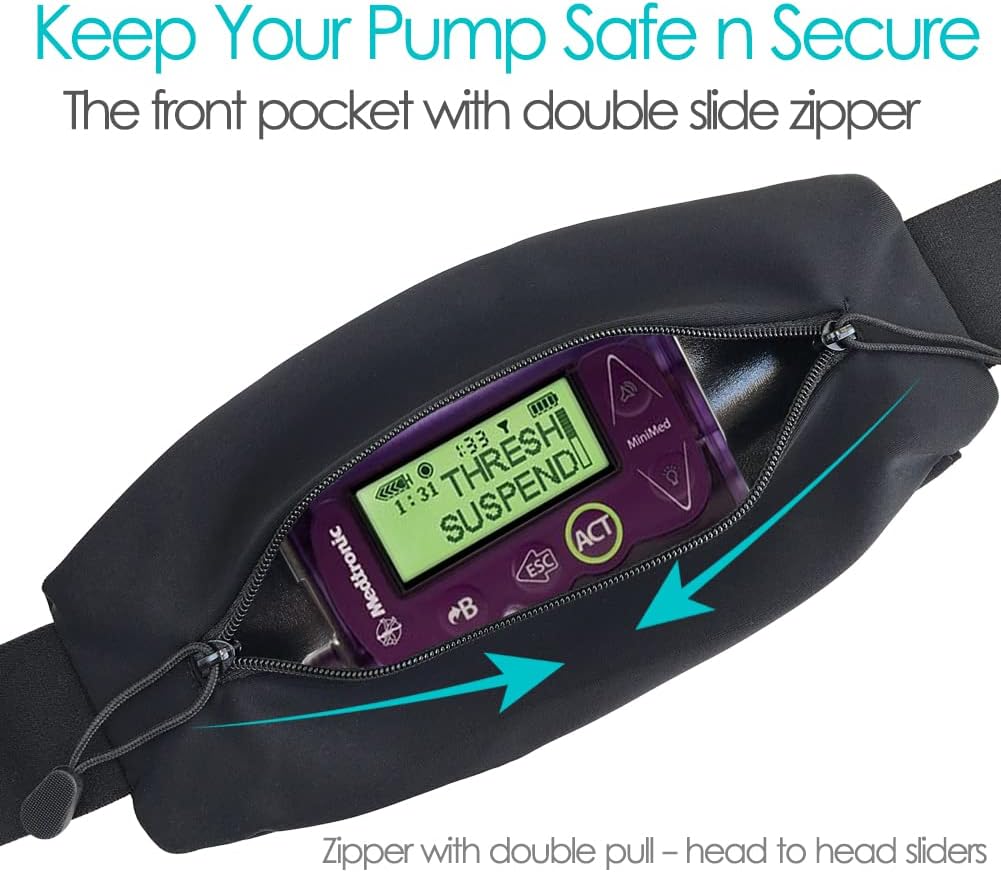
Insulin
$14.99
In stock on Amazon
Check price on AmazonPremium Pick: Soft-Band Belly Belt with Dual Pockets
For users who want dedicated compartments — one for the pump, one for a CGM receiver or snack — a wider belly belt with dual zippered pockets and a seamless inner lining offers the highest comfort ceiling. The trade-off is cost and bulk: these run wider across the torso, which some sleepers find intrusive. For users managing both a tubed pump and a standalone CGM receiver overnight, however, the dual-pocket format eliminates a second loose device entirely.
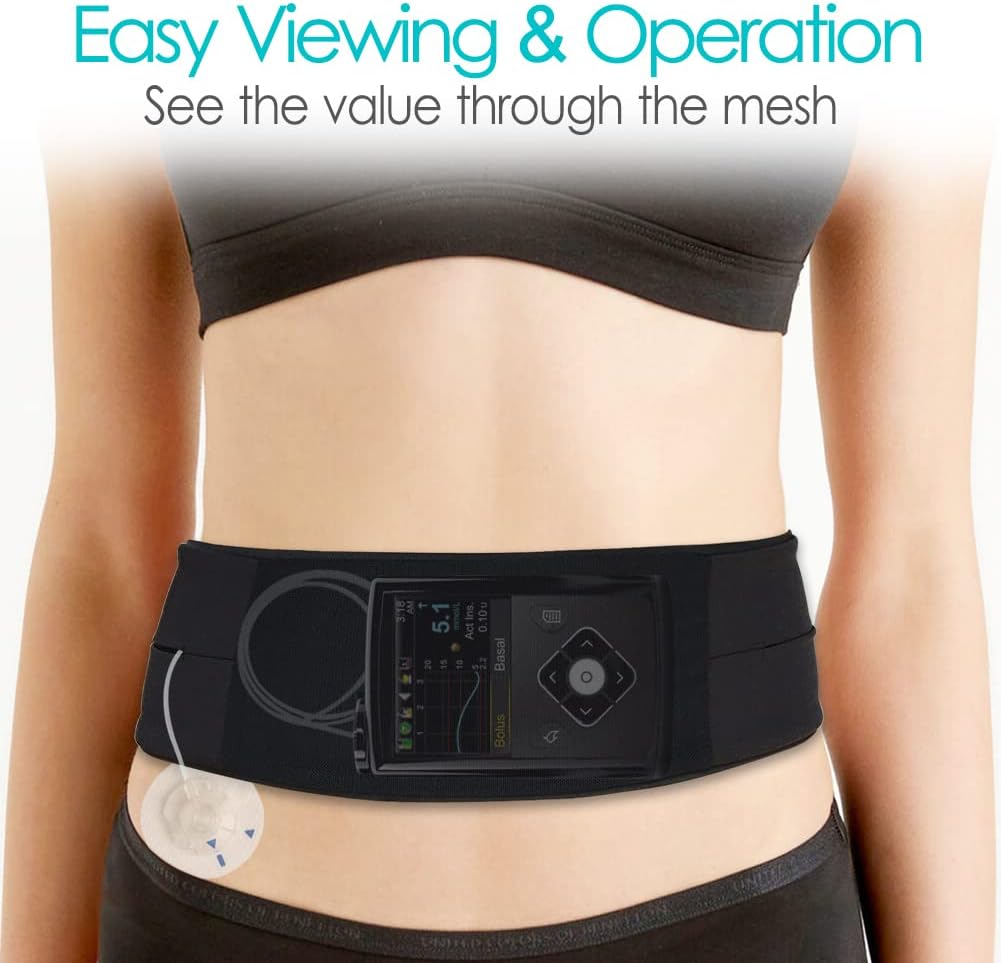
Insulin
$17.98
In stock on Amazon
Check price on AmazonWorkout Belts: Compression, Stability, and the Dual-Carry Problem
Running belts and active-wear carriers face a different set of forces: lateral movement, sweat, and the need for the pump to stay put through impact. Three tiers address the active-user spectrum from casual walks to high-intensity training.
Budget Pick: Clip-Style Silicone Case
A molded silicone case with a belt clip is the most minimal active-carry option. It works for low-intensity movement — walking, light cycling — where lateral forces are modest. During running or HIIT, however, the clip pivot point introduces bounce and torque that can stress the infusion site. The American Diabetes Association’s Standards of Care in Diabetes 2025 notes that pressure or repeated mechanical stress on an active infusion site can affect insulin absorption, which makes site-adjacent bouncing a real concern at higher intensities.
MEDMAX
$9.99
In stock on Amazon
Check price on AmazonMid-Tier Pick: Dedicated Running Waist Belt (Single-Pouch Format)
A purpose-built running belt with an elasticized single pouch and moisture-wicking lining earns consistent marks from active users and parents of younger athletes for its stability during higher-movement activities. The limitation worth naming directly: most single-pouch running belts in this tier are not designed to simultaneously hold a smartphone alongside the pump.
For a subset of users, that’s a dealbreaker. Tandem’s Control-IQ system displays status on the t:Slim X2 pump screen itself, but many users also run a companion CGM app — such as the Dexcom G7 app — on their phone for secondary glucose visibility during workouts. If your workflow depends on phone access, a single-pouch belt forces two separate carriers.
Decision frame:
- If you’re running Control-IQ and comfortable monitoring from the pump screen alone → a single-pouch running belt works well.
- If you need phone + pump simultaneously during a workout → move to a dual-pocket option below.
Insulin
$14.99
In stock on Amazon
Check price on AmazonPremium Pick: Dual-Compartment Running Belt or Vest-Style Carrier
A belt or lightweight vest with separate, independently sized compartments for pump and phone solves the dual-carry problem at the cost of added bulk and price. Vest-style carriers distribute weight across the shoulders and chest rather than concentrating it at the waist, which some users find more stable during longer runs. The practical principles that apply across this tier, consistent with owner reports and diabetes educator guidance:
- Wider elastic bands are more stable. Narrow bands under one inch roll and twist with movement; bands of 1.5 inches or more distribute tension and stay flat.
- Moisture-wicking lining extends usable life and prevents skin irritation during longer sessions.
- Snug but not compressive on the infusion site. Per the American Diabetes Association Standards of Care in Diabetes 2025, infusion site management during physical activity includes avoiding sustained mechanical pressure at the cannula entry point.
Insulin
$17.98
In stock on Amazon
Check price on AmazonDaily-Wear Belts: The Bolus-Access Problem Nobody Talks About Enough
For all-day wear, the dominant complaint among Tandem t:Slim X2 users is ergonomic: attempting a bolus without removing the pump from the belt pouch is awkward. The touchscreen requires a two-handed interaction, and belt pouches — especially those that zip or button closed — make that interaction clumsy at best and impossible without unbuckling at worst.
Budget Pick: Stretchy Waistband Slip Pocket
A seamless waistband with a slip pocket (no zipper, elastic-only closure) offers fast access — you simply pull the pump out. The trade-off is security: during movement, a slip pocket can allow the pump to migrate or partially eject. For sedentary workdays this is a reasonable low-cost option; for anyone moving frequently, the lack of a closure is a liability.
MEDMAX
$9.99
In stock on Amazon
Check price on AmazonMid-Tier Pick: Front-Clip Zippered Waist Belt
A front-access zipper or clip design reduces the reach-around fumble that rear-positioned pouches create. The practical fix that experienced users recommend for any zippered daily-wear belt: develop a pre-bolus unbuckle habit. Before meals or correction boluses, unclip or unzip the pouch as part of the routine, complete the bolus interaction, then re-secure. It adds about 15 seconds and removes the ergonomic frustration entirely.
Per the Tandem Diabetes Care t:Slim X2 Insulin Pump User Guide, 2024 edition, the pump’s touchscreen lock requires a deliberate swipe-to-unlock step before any bolus can be initiated — a design intended to prevent accidental dosing. No belt pouch design eliminates the need to extract the pump for this interaction; the pre-bolus unbuckle habit is the practical workaround regardless of belt choice.
For Omnipod 5 users, this friction point largely disappears. Because boluses are entered via the handheld PDM controller or a compatible smartphone app — not on the pod itself, per the Insulet Corporation Omnipod 5 System User Guide, 2024 edition — the pod carrier just needs to hold the pod securely without requiring manual access.
Insulin
$14.99
In stock on Amazon
Check price on AmazonPremium Pick: Adjustable Banded Belt with Dual-Orientation Wear
The highest-end daily-wear belts offer adjustable sizing across a wider range, multiple wearing orientations (waist, cross-body, thigh), and front-positioned access in all configurations. For users whose waistline changes across the year — or who need to reposition carry based on clothing type — this flexibility justifies the premium. Fabric in this tier typically includes antimicrobial treatment, relevant for warm-weather or active office environments.
Daily carry checklist regardless of tier:
- Front-access closure for tubed pump users
- Adjustable sizing — a belt that fits in January should still fit in July
- Low-profile enough to sit under work attire without visible bulk
Insulin
$17.98
In stock on Amazon
Check price on AmazonA Note for Diabetes Educators: The Tandem Cartridge Filling Tool
While researching this accessory category, one adjacent product surfaced consistently in a specific context: the Tandem cartridge filling tool, designed to assist with loading insulin into the t:Slim X2 cartridge reservoir. This isn’t a belt, but diabetes educators report raising it proactively during pump onboarding sessions — particularly for patients flagging dexterity concerns or cognitive burden around cartridge fills. One reviewer describes it as a cognitive-load reducer: one fewer thing to troubleshoot during a process that already demands attention. Educators advising new pump patients may find it worth adding to the standard accessory conversation.
Frequently Asked Questions
What’s the best way to carry an insulin pump while sleeping without it getting tangled? A soft waist belt with a two-way double zipper is the format long-term pump owners recommend most specifically for sleep. The bidirectional zip means you can access the pump regardless of which side you roll to, and the belt keeps tubing contained against your body rather than loose in the bed.
Can I do a bolus on my Tandem t:Slim without taking it out of a belt pouch? Practically speaking, no — not comfortably. The t:Slim X2 requires a touchscreen swipe interaction that needs two hands and clear screen access, per the Tandem Diabetes Care t:Slim X2 Insulin Pump User Guide, 2024 edition. The realistic solution is to make unbuckling the pouch part of your pre-bolus routine.
Is there a pump belt that also holds my phone for the pump app? Not all running belts accommodate both. Single-pouch running belts are typically sized for the pump only. If you need phone + pump access during workouts, look specifically for dual-compartment running belts or vest-style carriers designed with that combination in mind.
Do these belts work for both tubed pumps and Omnipod? Most waist belt pouches are designed for tubed pumps (t:Slim X2, Medtronic, and similar). Omnipod 5 users have different needs — the pod adheres directly to skin and doesn’t sit in a belt pouch. Per the Insulet Corporation Omnipod 5 System User Guide, 2024 edition, Omnipod 5 users typically need a carrier for the PDM controller, not the pod itself, which makes belt design choices considerably more flexible.
How do I keep a pump belt from twisting or riding up during the day? Width is the primary variable. Bands under one inch twist easily with movement. Bands of 1.5 inches or more distribute tension across more surface area and stay flat. Correct sizing — snug but not compressive — also prevents the upward migration that happens when a too-large belt shifts with movement.
The Decision Rules
- If your primary pain point is nighttime tangling → prioritize a soft double-zip waist belt. Long-term owners name it the highest-impact sleep upgrade.
- If you’re running or doing high-movement workouts with a tubed pump and don’t need simultaneous phone carry → a purpose-built single-pouch running belt earns consistent marks from active users and parents of younger athletes.
- If you need phone + pump during workouts → step up to a dual-compartment belt or vest-style carrier.
- If you’re a Tandem t:Slim X2 user doing daily carry → build the pre-bolus unbuckle habit regardless of which belt you choose. No pouch design fully solves the touchscreen access issue.
- If you’re an Omnipod 5 user → belt design is primarily a PDM carrier question, not a pod carrier question. Your options are wider.
- If you’re a diabetes educator onboarding new pump patients → the Tandem cartridge filling tool is worth adding to the standard accessory conversation, particularly for patients flagging dexterity or cognitive-load concerns around cartridge fills.