If you manage diabetes with an insulin pump — a small, wearable device that delivers insulin continuously through a thin tube (or wirelessly, in the case of patch pumps) — you already know the hardware itself is only part of the story. The pump needs to go somewhere on your body, survive your workouts and sleep and work clothes, and stay accessible when you need to deliver a manual dose (called a bolus). For most pump users, the standard belt clip or included case falls short fast. That’s where the accessory market comes in: pump belts designed to wrap around your waist or hips, cartridge filling tools that make loading insulin less of an ordeal, and purpose-built cases that actually account for the reality of modern pumping — including the fact that your phone has to live somewhere nearby too, especially if you’re running a continuous glucose monitor (CGM) app alongside your pump. This guide pulls from aggregated reviewer patterns, published product specs, and educator-reported recommendations to help you decide which accessories are actually worth buying — and which tradeoffs to own going in.
| EDITOR'S PICKInsulin Pump Belt with Mesh Pou… | Mid-tierInsulin Pump Belt with Double S… | Budget pickMEDMAX Diabetic Running Belt wi… | |
|---|---|---|---|
| Closure | — | Zipper | — |
| Tubing slits | ✓ | — | — |
| Mesh window | ✓ | — | — |
| Adjustable | — | ✓ | ✓ |
| Bag only | — | — | ✓ |
| Price | $17.98 | $14.99 | $9.99 |
| See on Amazon → | See on Amazon → | See on Amazon → |
Why Pump Users End Up Here: The Frustration-First Discovery Problem
Here’s the pattern that shows up consistently across belt product reviews: almost nobody bought a pump belt proactively. The overwhelming majority of buyers arrived at these products after a pocket failed them, a clip broke, or they spent six months awkwardly stuffing their pump into a sports bra or waistband with no retention.
Healthline’s overview of day-to-day pump life (article: “Living With an Insulin Pump: What to Expect Day to Day”) notes that this improvised carrying phase is nearly universal among new pump users. The default options — a spring clip, a locking case, or a flimsy pouch — are designed to demonstrate that the pump can be worn, not to solve for how it’s worn across 16 waking hours.
The reviewer who matters most here is the one with ten or more years of experience. Across aggregated reviews for the double-slide zipper waist belt category, the most credible endorsements consistently come from buyers who have cycled through multiple waist pack and athletic belt options since the early 2010s. When someone with that context says a product is the one that finally stuck, that signal is worth more than a hundred five-star reviews from first-time pump users who have no comparison baseline.
What to take from this: If you’re evaluating belts right now — whether for yourself, a patient panel, or a family member — lead with the question of what they’ve already tried. A reviewer who has been pumping since 2012 and burned through athletic pouches, running belts, and waist packs before landing on a product carries different weight than a new pumper’s first-purchase review. The experienced reviewer has already run the comparison you can’t afford to run yourself.
Belt Tradeoffs: Access, Fit, and the Phone Problem Nobody Solved Yet
Bolus Access Is the Most Honest Failure Mode
The Tandem t:Slim X2 belt option earns one of the more useful critical reviews in this product category — a four-star rating (not five) from a reviewer who likes the product but names the bolus-access limitation clearly: getting to the pump touchscreen while the belt is worn requires a specific maneuver that isn’t always practical in public or during activity.
This matters clinically. The American Diabetes Association’s Standards of Care in Diabetes 2025, Section 7 (Diabetes Technology), published in Diabetes Care as a supplement to Volume 48, emphasizes that access ease is a key component of pump usability adherence. If the belt makes routine bolus delivery awkward, users adapt by skipping or delaying — a meaningful downstream risk.
The decision frame here is binary:
- If the pump user is primarily managing background basal delivery and boluses infrequently (or remotely via phone app), a belt with moderate access tradeoffs is acceptable.
- If the user boluses manually multiple times daily and the touchscreen is their primary interface, access needs to be a non-negotiable filter before everything else.
The four-star Tandem belt review is rare in this category because it is honest — most belt reviews either love or hate the product without explaining the mechanism of the failure. Finding reviewers who document the specific use case where the product underperforms is how you build a real pre-purchase checklist.
Insulin
$14.99
In stock on Amazon
Check price on AmazonThe Cell Phone Gap
Reviewers of the MEDMAX-style waist belt raise a problem the product itself doesn’t solve: modern pump management almost always involves a smartphone. Whether it’s the Dexcom G7 or FreeStyle Libre 3 app, a Tandem Control-IQ status check, or an Omnipod 5 controller, your phone has to live somewhere accessible.
Most pump belts are designed around the pump alone. They don’t include a phone pocket, or if they do, it’s sized for a device from several years ago — not a current 6.7-inch flagship. Reviewers of MEDMAX-style belts who flag this aren’t complaining about the belt itself; they’re surfacing a gap in the product category as a whole.
If you’re recommending belts to patients or evaluating for a practice: ask about their CGM workflow first. A pump user on Dexcom G7 Pro who monitors remotely via phone is going to need a carry solution that accounts for both devices simultaneously. That requirement narrows the field considerably.
MEDMAX
$9.99
In stock on Amazon
Check price on AmazonBy the Numbers
| Belt Feature | Double-Slide Zipper Belt | Tandem t:Slim Belt | MEDMAX-Style Belt |
|---|---|---|---|
| Bolus access while worn | Good (zipper reaches pump face) | Limited (screen access awkward) | Moderate |
| Phone pocket included | No | No | Small / dated sizing |
| Sleep comfort (reviewer-reported) | Generally positive | Mixed | Mixed |
| Adjustability for size range | Wide | Moderate | Moderate |
Sources: aggregated reviewer patterns across product listings; Everyday Health, “Insulin Pump Troubleshooting Tips From Real Users.”
MEDMAX
$9.99
In stock on Amazon
Check price on AmazonInsulin
$14.99
In stock on Amazon
Check price on Amazon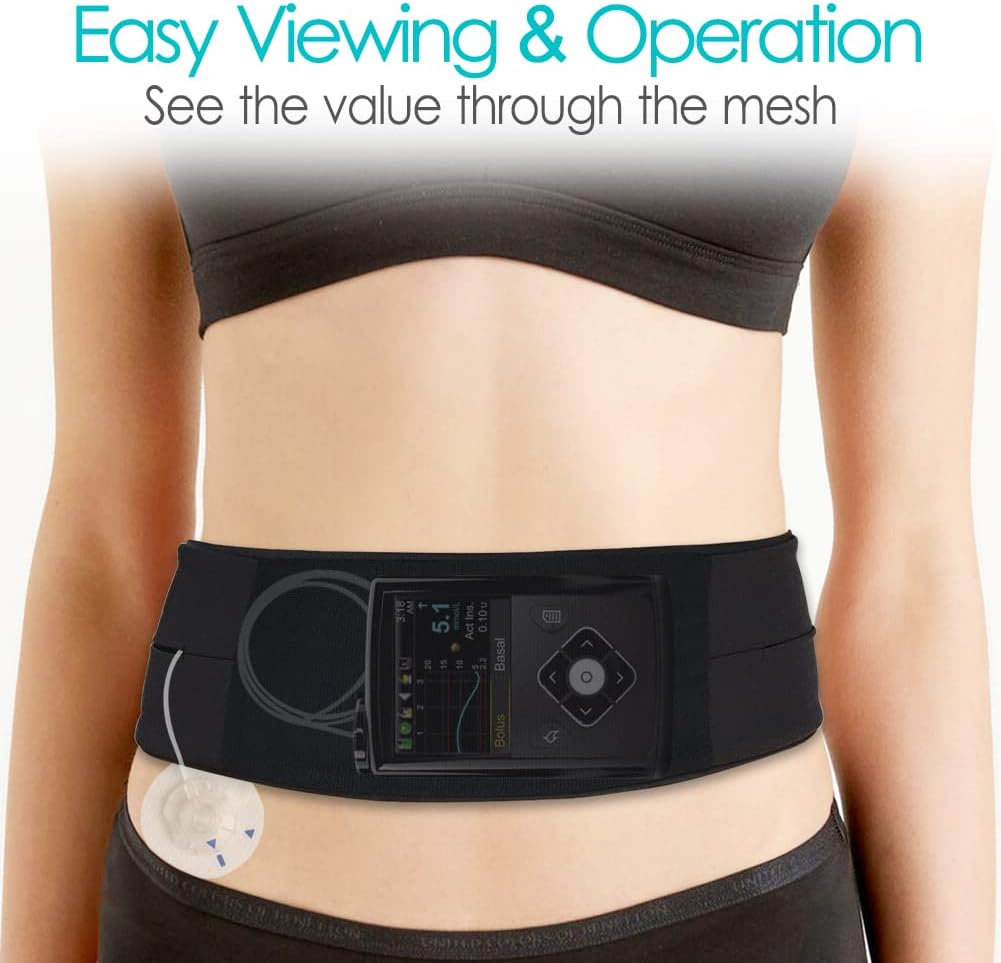
Insulin
$17.98
In stock on Amazon
Check price on AmazonCartridge Filling Tools: The Accessory Educators Are Recommending at Training
The Discovery Problem
Here’s what the cartridge filling tool review pattern tells you: most t:Slim X2 users who buy this accessory didn’t hear about it at pump start. They found it weeks or months later, after fighting with the cartridge fill process manually — either air-bubbling their cartridges, under-filling, or just finding the procedure physically awkward with cold or arthritic hands.
Everyday Health’s reporting on pump troubleshooting (“Insulin Pump Troubleshooting Tips From Real Users”) identifies cartridge fill errors as among the most common early-stage frustrations for new pump users. The fill process on the t:Slim X2 is notably different from older Medtronic-style reservoir systems — it requires a deliberate fill sequence to avoid air bubbles, and the insulin bag-and-vial interface has a specific ergonomic demand that a fill-assist tool directly addresses.
The critical signal in the reviews: diabetes educators are recommending this tool during pump training sessions. That means some practices have already built it into their new-pump orientation workflow, while others haven’t — which is why you get reviewers who discover it at month one versus month six. If you’re a diabetes educator or certified diabetes care and education specialist working with t:Slim initiates, this is worth adding to your standard new-pump checklist now rather than waiting for the patient to report back frustrated.
Insulin
$14.99
In stock on Amazon
Check price on AmazonPump Compatibility: What the Spec Reality Is
The cartridge filling tool is specific to the t:Slim X2 cartridge system. It is not a universal tubed-pump tool. Medtronic 630G, 670G, and 780G systems use a different reservoir design — screw-fill versus bag-fill — and the tool doesn’t map to that workflow. Omnipod Dash and Omnipod 5 are patch pumps with no cartridge fill process at all, making this accessory category irrelevant for those users.
The FDA’s Summary of Safety and Effectiveness Data for the Tandem t:Slim X2 Insulin Pump System (available at fda.gov under recently approved devices) documents that the cartridge and fill mechanism are integral to the device’s insulin delivery accuracy. Using third-party fill-assist accessories is technically user discretion, and pump users should confirm with their Tandem clinical team or diabetes educator before adopting any fill-assist tool.
If X, then Y:
- If your patient or buyer is on a t:Slim X2 and reports fill frustration → recommend the cartridge tool immediately.
- If they’re on Medtronic or Omnipod → this accessory category is irrelevant; redirect toward reservoir covers, clip cases, or phone integration accessories instead.
MEDMAX
$9.99
In stock on Amazon
Check price on AmazonFrequently Asked Questions
Can I shower or swim while wearing an insulin pump belt, or do I need to remove it?
Most fabric pump belts are not rated for submersion. They’re sweat-resistant at best — fine for workouts, not for pool laps or showers. The pump itself may carry an IPX7 water-resistance rating (the Tandem t:Slim X2 is rated IPX7 per Tandem’s published product specifications), but the belt is a separate product without that rating. Standard practice is to remove the belt before showering and use a dedicated waterproof case or disconnect the pump per your clinical team’s guidance for swimming.
How do I execute a bolus without taking off my pump belt entirely?
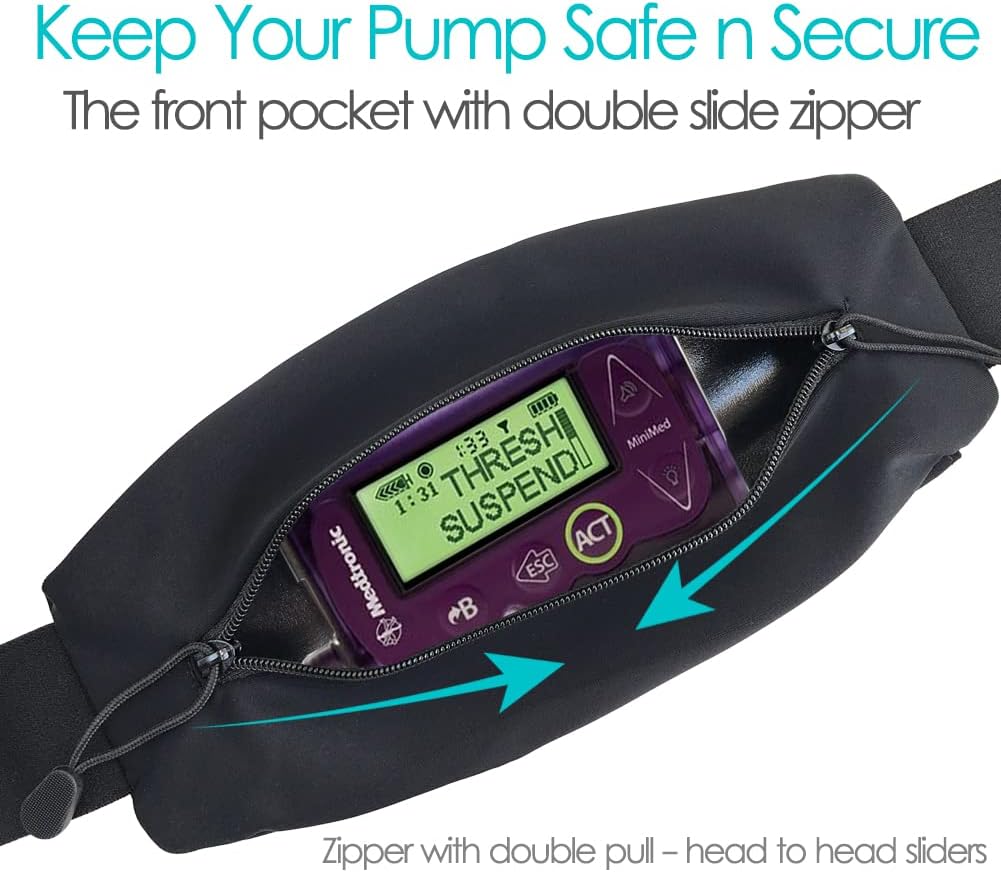
This depends on belt design. The double-slide zipper belt design allows access to the pump face without full removal — reviewers report being able to reach the screen by unzipping from one end. The Tandem-branded belt is the one where reviewers have flagged this as a practical limitation. If frequent bolus access is a priority, confirm the zipper or access panel design before buying, and read reviews specifically from users who bolus manually rather than relying on automated delivery mode.
Are these belts adjustable enough to fit both slim and larger waist sizes?
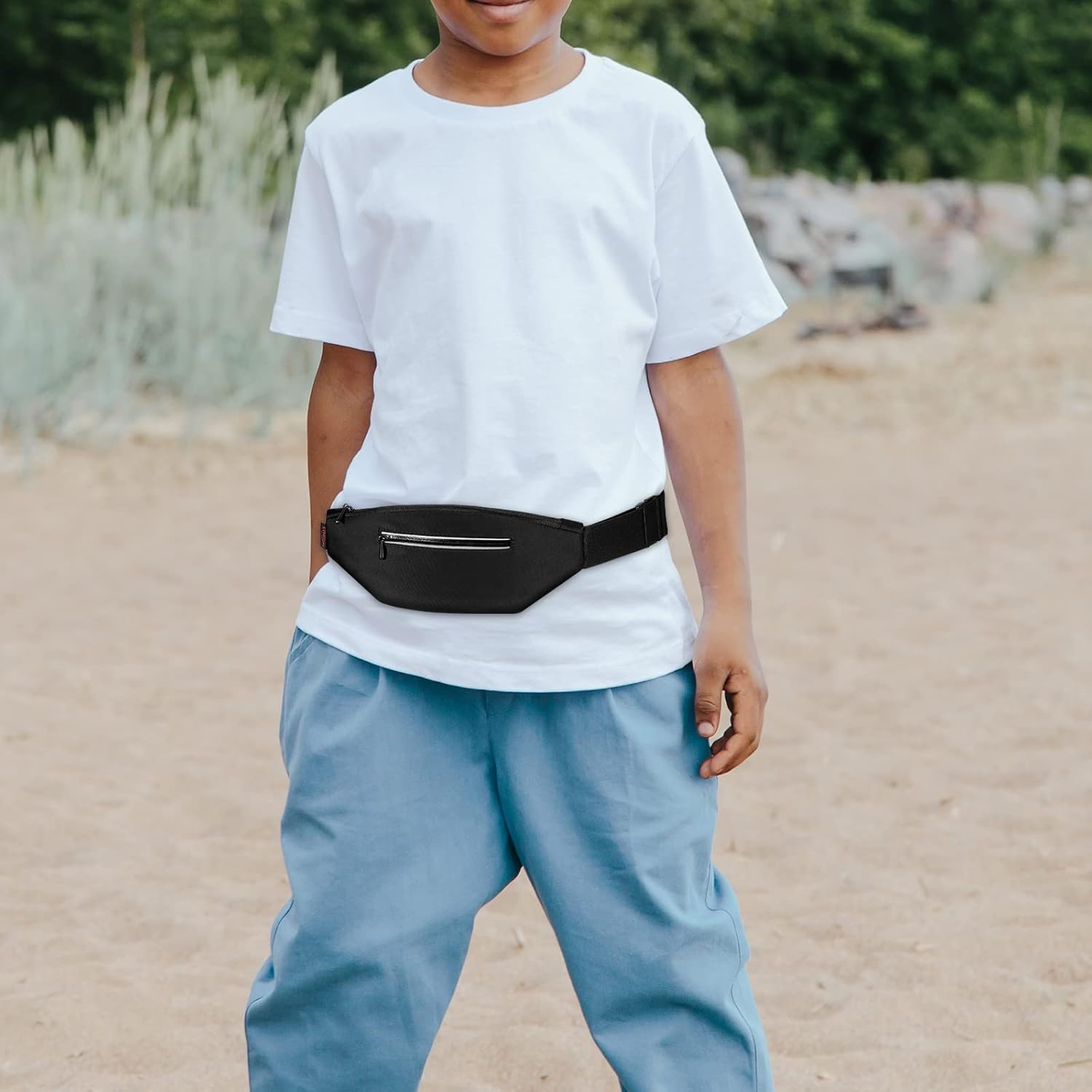
Reviewer patterns suggest meaningful variation here. The double-slide zipper belt draws positive size-range comments, with reviewers noting it accommodates a wider waist span than typical athletic waist packs. Tandem-branded and MEDMAX-style options receive more mixed feedback on size range. If you’re buying for a patient panel with diverse body types, look at the manufacturer’s stated size range in the product specs, and cross-check against reviewers who mention their waist measurement explicitly — those are more reliable than generic “fits great” comments.
Will a waist belt work for sleeping without pressing uncomfortably against my side?
Reviewer consensus: it depends on sleep position. Back and stomach sleepers report fewer issues. Side sleepers consistently flag the pump bulk as a pressure point, regardless of belt design — the problem is the pump itself, not the belt. Many pump users move to a clip-on pajama waistband or a dedicated armband for nighttime wear and reserve the belt for waking hours.
Are these belts compatible with all pump brands — Medtronic, Tandem, Omnipod — or are they pump-specific?
Most third-party waist belts, including the double-slide zipper design and MEDMAX-style options, are brand-agnostic — they hold the pump in a pouch or zippered compartment that accommodates most tubed pump dimensions. The Tandem-branded belt is designed around the t:Slim X2 footprint specifically. Omnipod patch pump users generally don’t need a belt for the pod itself, but may use one to carry the PDM (personal diabetes manager) controller — confirm pod dimensions versus pouch dimensions before ordering.
Is the cartridge filling tool specific to the Tandem t:Slim X2, or does it work with other tubed pumps?
It is specific to the t:Slim X2 cartridge and fill process. The bag-fill system on the t:Slim X2 is unique to Tandem’s design; Medtronic reservoirs use a different mechanism. This tool does not have cross-brand utility.
The Decision Rule: Matching Accessory to Workflow
The clearest if-X-then-Y framework for this category:
- If the user is a new t:Slim X2 pumper and hasn’t been told about the cartridge filling tool yet → flag it now; the frustration window is early and the fix is inexpensive.
- If the user manages boluses manually several times daily → access ease is the primary belt filter; the double-slide zipper design earns the recommendation based on aggregated reviewer patterns.
- If the user is running a CGM app alongside their pump and needs phone access → no single belt in this review set fully solves the two-device problem; a secondary pouch or hip pack pairing is likely necessary.
- If the user is a side sleeper → set expectations that any waist belt will present nighttime comfort tradeoffs; an armband or pajama-clip alternative is worth exploring.
The accessory market for insulin pumps is still catching up to how people actually live with these devices. The best reviewers in this space aren’t rating products under ideal conditions — they’re rating them against ten years of trial-and-error, and that’s the perspective worth trusting.