Getting diagnosed with gestational diabetes (GD) — a form of high blood sugar that develops during pregnancy and typically resolves after delivery — can feel overwhelming, especially when your OB hands you a glucose target sheet and tells you to start testing four times a day. A glucose meter is a small handheld device that measures the concentration of glucose (sugar) in a tiny drop of your blood, usually taken from a fingertip. For GD, accuracy matters more than it does in many other contexts: your OB or maternal-fetal medicine specialist will be watching your numbers against tight thresholds, typically fasting readings under 95 mg/dL and one-hour post-meal readings under 140 mg/dL, per the American Diabetes Association’s 2025 Standards of Medical Care. This guide is built for the person who just got the diagnosis, isn’t sure their insurance will cover anything yet, and needs to make a fast, informed decision about which meter — and how many strips — to buy right now.
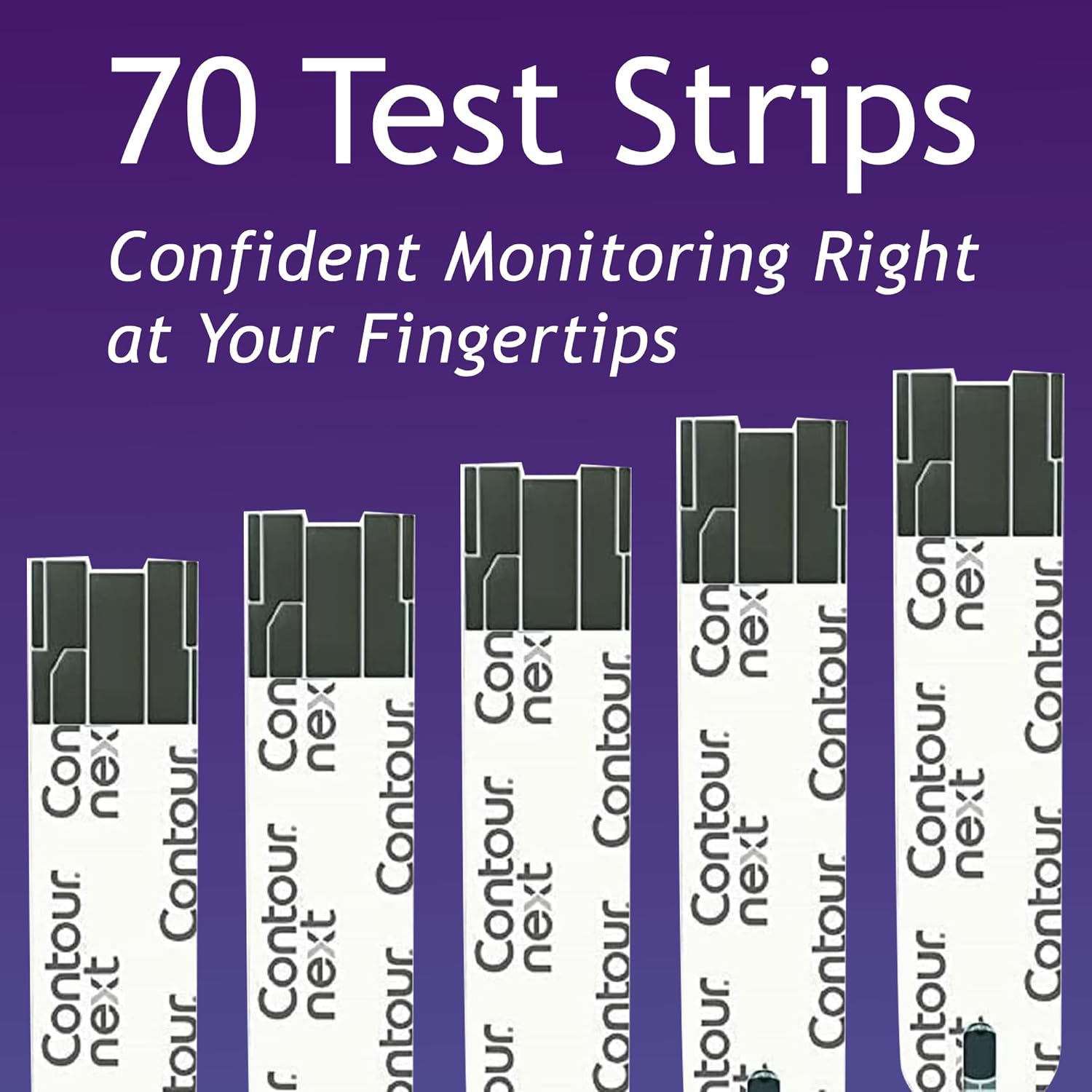
| EDITOR'S PICKOneTouch Verio Test Kit - Inclu… | Mid-tierAscensia Contour Next Blood Glu… | Budget pickAUVON Blood Glucose Monitor Kit | |
|---|---|---|---|
| Test strips | 30 | 70 | 50 |
| Lancets | 30 | — | 50 |
| Lancing device | ✓ | — | ✓ |
| Meter included | ✓ | ✗ | ✓ |
| No coding | — | ✓ | ✓ |
| Compatibility | — | All Contour Next | — |
| Price | $49.99 | $23.97 | $19.98 |
| See on Amazon → | See on Amazon → | See on Amazon → |
Why Gestational Diabetes Sets a Higher Bar for Meter Accuracy
Most glucose meters sold in the U.S. must meet ISO 15197:2013 accuracy standards — meaning 95% of readings need to land within ±15 mg/dL or ±15% of a laboratory reference value (whichever is wider). That sounds reassuring until you do the math at a 130 mg/dL reading: a ±15 mg/dL swing means the meter could legally display anywhere from 115 to 145 mg/dL. For someone managing Type 2 diabetes with A1C as the primary long-term metric, that variance is mostly noise. For a gestational diabetic trying to stay under a 140 mg/dL one-hour post-meal ceiling, it’s clinically meaningful.
This is why the meter category you choose actually matters here. Budget meters marketed as “trending tools” are fine for general awareness. They are not fine for GD target-hitting. The FDA’s guidance document on blood glucose monitoring systems for point-of-care use distinguishes between consumer-grade and clinical accuracy tiers — a distinction that shows up clearly in real-world owner reviews.
The pattern across aggregated reviews is consistent: owners of the AUVON and similarly priced ultra-budget kits frequently describe them as useful for spotting directional trends but note inconsistency when readings are compared side-by-side with a lab draw or a second meter. For GD patients where a missed threshold could change a management plan, that variance is a meaningful risk to flag before purchase.
The Short List: Four Meters Worth Considering
Contour Next ONE — The Strongest Case for GD
The Contour Next ONE is the name that comes up most often in gestational diabetes communities, and the owner-reported reasons are clinically coherent. Contour Next strips consistently rank at or near the top of independent accuracy benchmarks — Healthline’s overview of glucose meters specifically highlights Contour Next’s accuracy profile. The meter’s second-chance sampling feature (the ability to add more blood to the same strip within 60 seconds if the initial drop wasn’t large enough) is genuinely useful when you’re doing four sticks a day and your fingertips are getting sensitized.
One reviewer pattern worth noting: multiple GD-specific reviews describe being diagnosed mid-pregnancy, needing a meter immediately, and choosing the Contour Next ONE because setup was fast and the readings felt consistent with what their OB’s office showed them. The Bluetooth-connected app logs readings automatically and, importantly for the decision you’re making right now, allows you to generate shareable reports — relevant to the FAQ below about sharing logs with your provider.
Strip cost math (as of mid-2026):
- Contour Next strips typically run $0.35–$0.50 per strip at major retailers
- 4 tests/day × 84 days (12 weeks) = 336 strips
- Estimated range: $118–$168 in strips alone
FSA/HSA eligible: Yes — meter, strips, and lancets are FSA/HSA-qualified medical expenses.
OneTouch Verio Reflect — Clear Display, Higher Ongoing Cost
Owners consistently praise the OneTouch Verio Reflect’s display readability and the color-coded feedback system that flags readings as in-range, high, or low at a glance — useful when you’re new to interpreting glucose numbers. Accuracy is solid; the OneTouch platform has a long clinical track record and is one of the meters most frequently recommended by hospital diabetes education programs, per Mayo Clinic’s gestational diabetes treatment overview.
The persistent owner complaint is strip cost. OneTouch strips have historically carried a price premium over Contour Next strips, and that gap matters over a 12-week monitoring window.
Quick comparison:
| Meter | Approx. Strip Cost | 336-Strip Total | Second-Chance Sampling |
|---|---|---|---|
| Contour Next ONE | $0.35–$0.50 | $118–$168 | Yes |
| OneTouch Verio Reflect | $0.55–$0.75 | $185–$252 | No |
| AUVON kit | $0.20–$0.30 | $67–$101 | No |
The OneTouch ecosystem earns its place if your OB’s office or hospital uses the OneTouch data platform for patient uploads, or if you have insurance coverage that makes strip cost less of a variable. Cash-pay buyers running the math will almost always land on Contour Next.
Care Touch — Minimizing Lancet Pain for Multiple Daily Sticks
The Care Touch system isn’t primarily a meter story — it’s a lancet story. Reviewers of Care Touch lancet kits consistently highlight reduced fingertip pain as the standout attribute, with multiple users noting they switched to Care Touch specifically because they were testing frequently (four or more times daily) and the cumulative discomfort of cheaper lancets was becoming a real adherence problem. One reviewer’s note — that minimal pain mattered acutely when testing four times a day through a pregnancy — surfaces repeatedly in the review corpus.
For the accuracy conversation: Care Touch meters perform in the mid-tier range, better than ultra-budget options, not at the Contour Next level. If your GD is being managed conservatively and your OB is primarily watching for obvious out-of-range flags rather than splitting hairs between 138 and 141, Care Touch is a defensible budget choice. If you’re borderline and your care team is watching your numbers closely, the accuracy tradeoff matters.
AUVON — When “Ballpark” Is the Right Word (and the Wrong Choice for GD)
AUVON kits are well-reviewed in their intended context: budget-conscious screening, casual trending, or supplemental checking for someone who already has a primary meter. The accuracy concern raised consistently in owner reviews is real. Multiple reviewers describe the AUVON as useful for knowing whether you’re generally high or low — not for confirming you’re within a specific clinical threshold.
For gestational diabetes, that’s the wrong tool. The editorial recommendation here is direct: if you’re managing GD with OB-set targets, the AUVON is not the right meter for primary monitoring. The $30–$40 in strip savings over a 12-week window is not worth the data quality risk.
Lancets: The Part Everyone Under-Buys
The default 28-gauge lancets included in most starter kits work, but they’re not optimized for comfort at four-times-daily frequency. The published spec difference between lancet gauges is meaningful: 28-gauge needles are larger in diameter than 30- or 33-gauge, which means more tissue displacement per stick. The FDA’s point-of-care guidance acknowledges that lancet gauge affects patient comfort and, downstream, testing adherence.
The practical rule: 30-gauge for most people, 33-gauge if you have particularly sensitive fingertips or your skin thins as pregnancy progresses. Rotate finger sites systematically — alternating fingers and sides of the fingertip — to slow callus buildup. Multiple daily stickers in owner communities report that a consistent rotation pattern extends comfortable testing for the full monitoring window.
Frequently Asked Questions
Is a $25 glucose meter accurate enough for gestational diabetes targets?
Probably not as your primary meter. At GD thresholds (fasting under 95, one-hour post-meal under 140), the ±15 mg/dL variance that budget meters can legally display creates real clinical ambiguity. The FDA’s accuracy guidance for point-of-care glucose monitoring is explicit that variance at clinical decision points matters. Spend the extra $10–$20 on a Contour Next ONE.
Can I use Contour Next strips with the kit meter I already own?
No. Glucose strips are meter-specific — the chemistry and calibration are matched to the device. Contour Next strips only work with Contour Next meters. If you already own a different meter and it meets accuracy standards, check whether your current strips are within expiration before buying a new system.
How many test strips will I actually use in a 12-week gestational diabetes window?
The standard GD monitoring protocol is four tests per day: fasting (first thing in the morning) plus one or two hours after each main meal. At four tests per day for 84 days, that’s 336 strips minimum. Buy in boxes of 100 or larger to reduce per-strip cost. Add 10–15% buffer for voids, calibration checks, and re-tests after questionable readings. Call it 380 strips for budget planning.
Does the Contour Next ONE app let me share logs directly with my doctor?
Yes. The Contour Diabetes app generates PDF reports of readings, trends, and time-in-range data that can be emailed or printed. Some OB practices and maternal-fetal medicine offices have direct integrations with the Contour platform; others accept the PDF. Ask your care team which format they prefer before your first follow-up appointment.
Is second-chance sampling worth paying more for when I’m testing this frequently?
Yes — and the cost premium is smaller than it appears. A voided strip (where you didn’t get enough blood) costs you the same as a used strip. At $0.40 per strip and 336 minimum tests, avoiding even 15–20 voids over the monitoring window saves $6–$8 in strips and, more importantly, eliminates re-sticks. For someone doing four daily finger sticks for three months, that’s a meaningful quality-of-life difference. Second-chance sampling is one of the Contour Next ONE’s strongest GD-specific features.
What lancet gauge is least painful for multiple daily finger sticks?
30-gauge is the practical sweet spot for most people — fine enough for comfortable sticking, widely available, and compatible with most lancing devices. 33-gauge is noticeably gentler but may not produce an adequate blood drop in one stick for everyone, which creates its own frustration. If you’re new to self-monitoring, start at 30-gauge and adjust based on your experience in the first week.
The Decision Rule
If you’re managing gestational diabetes with OB-assigned numeric targets and you’re paying cash (or haven’t confirmed insurance coverage yet): buy the Contour Next ONE. The accuracy profile is documented, the second-chance sampling reduces voids, the app generates shareable logs, and the per-strip cost is competitive at mid-market. Run the 336-strip math, buy in a 100-count box or larger, and flag the purchase as FSA/HSA-eligible if you have a qualifying account.
If your OB’s office uploads directly to the OneTouch platform and you have insurance covering strips: the OneTouch Verio Reflect is a defensible choice — just understand that cash-pay strip costs run meaningfully higher over a 12-week window.
If you’re considering a budget meter to save on upfront cost: the savings are real, but so is the accuracy tradeoff. For GD specifically, the clinical stakes of imprecise readings outweigh the $30–$50 you’d save over the monitoring window. This is one buying decision where the mid-market meter is the genuinely correct answer, not an upsell.
Sources: American Diabetes Association, “Standards of Medical Care in Diabetes — 2025,” Diabetes Care Vol. 48 Supplement 1; U.S. Food and Drug Administration, “Blood Glucose Monitoring Test Systems for Prescription Point-of-Care Use — Guidance for Industry and FDA Staff”; Mayo Clinic, “Gestational diabetes — Diagnosis and treatment”; Healthline, “Best Glucose Meters.”