Buying a glucose meter for someone you love is one of those purchases where you really want to get it right. A glucose meter — also called a blood glucose monitor or BGM — is a small handheld device that measures the amount of sugar (glucose) in a person’s blood using a tiny drop from a fingertip. For people managing diabetes, checking blood sugar regularly can prevent dangerous highs and lows, and it’s often the centerpiece of daily care. If you’re a caregiver — a parent, adult child, spouse, or long-distance family member — making this purchase on someone else’s behalf adds a layer of pressure. You can’t afford a trial-and-error approach. This guide is designed to eliminate that guesswork: you’ll leave with a clear decision framework, honest product tradeoffs, and a few real-world stories that illustrate exactly what goes wrong when caregivers pick the wrong meter.
| EDITOR'S PICKLingo Continuous Glucose Monito… | Mid-tierCareSens N Blood Glucose Monito… | Budget pickMicroTech Blood Glucose Monitor… | |
|---|---|---|---|
| Monitoring | Continuous | Spot check | Spot check |
| Sensor life | 14 days | — | — |
| App required | ✓ | — | — |
| Strips in kit | — | 100 | 100 |
| Lancets in kit | — | 100 | 100 |
| Coding | — | — | No coding |
| Price | $43.96 | $31.99 | $21.99 |
| See on Amazon → | See on Amazon → | See on Amazon → |
The Caregiver’s Real Decision Matrix
Most buying guides assume the user and the buyer are the same person. For caregivers, they’re almost never the same person — and that gap changes everything.
Here’s what you’re actually optimizing for when buying for someone else:
Reliability over features. Your parent or spouse doesn’t care about Bluetooth connectivity if it doesn’t connect. Every feature that depends on setup, app pairing, or software introduces a failure point you may not be there to troubleshoot.
Physical usability. Meters vary significantly in button size, screen contrast, lancing depth options, and how much blood they require. Elderly users or anyone with arthritis, tremors, or fragile skin need a meter engineered around those limitations — not retrofitted for them.
Strip cost sustainability. A meter is only useful if the person actually uses it. Strip costs determine whether testing becomes a habit or a guilt-laden luxury. Per IRS Publication 502, both meters and test strips are FSA/HSA-eligible expenses — an important consideration if you’re managing benefits on behalf of a family member.
Remote visibility. Can you see their readings without calling them? This is no longer a premium feature; it’s a genuine safety tool for long-distance caregiving.
Strip Cost: The Number That Determines Whether Testing Actually Happens
This is the most underappreciated variable in caregiver purchases, and it’s the one most likely to cause the care plan to quietly collapse.
By the numbers:
| Meter Ecosystem | Approximate Strip Cost (per strip, 2025–2026) | Monthly Cost (2x/day testing) |
|---|---|---|
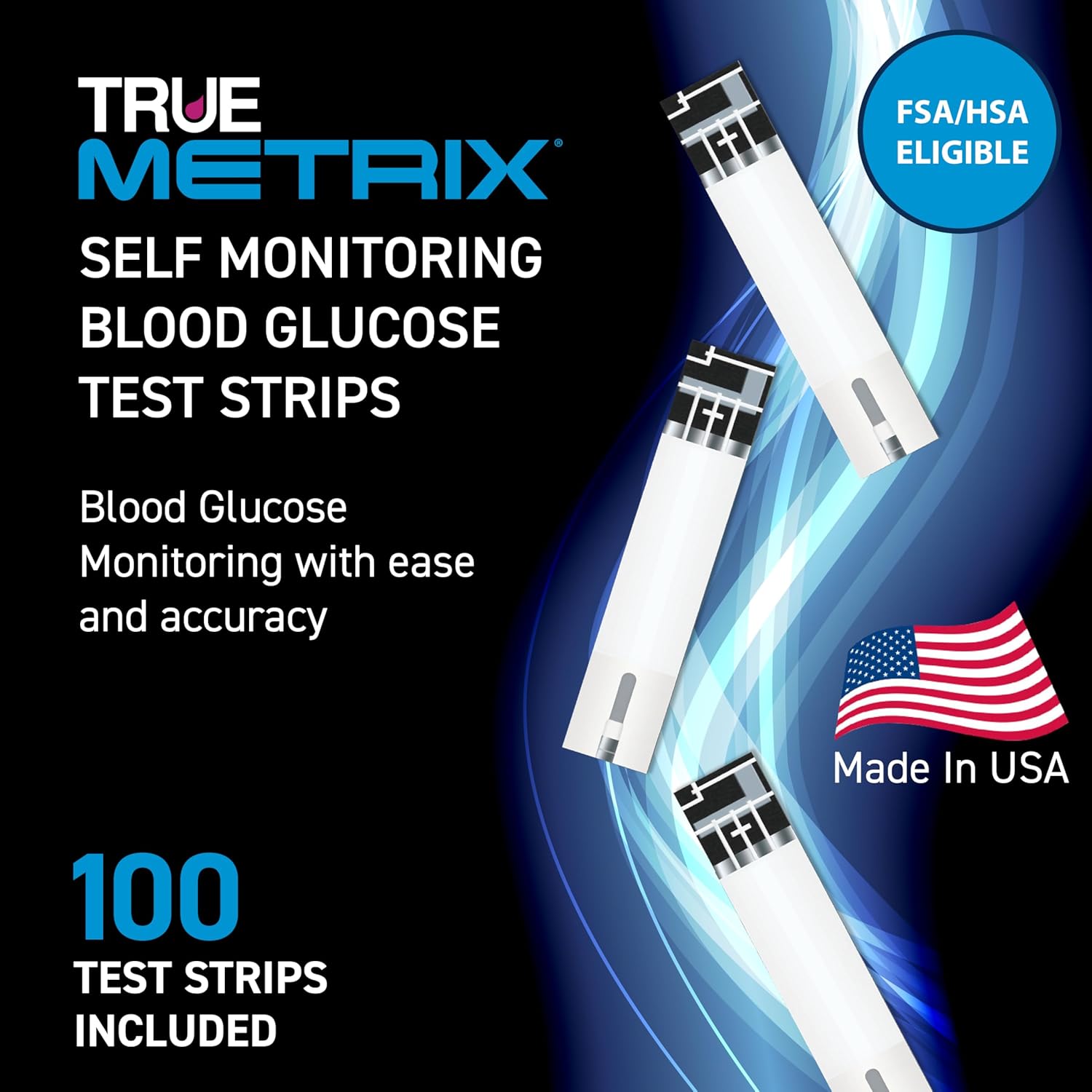
| TRUE METRIX | ~$0.15–$0.18 | ~$9–$11 |
| CareSens N | ~$0.20–$0.25 | ~$12–$15 |
| ReliOn Premier | ~$0.18–$0.22 | ~$11–$13 |
| Contour Next | ~$0.35–$0.45 | ~$21–$27 |
| OneTouch Verio | ~$0.50–$0.65 | ~$30–$39 |
Strip costs are approximate retail estimates for 2025–2026 and vary by retailer and quantity purchased. Insurance coverage can dramatically change out-of-pocket math.
One of the most compelling real-world signals in TRUE METRIX reviews is a pattern that shows up repeatedly: a caregiver reports that their mother — or father, or spouse — had stopped testing because strips were too expensive, and switching to TRUE METRIX brought testing back. That’s not a minor feature win. That’s the entire point of having a meter. The American Diabetes Association’s Standards of Care in Diabetes 2025 emphasizes that consistent self-monitoring of blood glucose (SMBG) is directly tied to glycemic outcomes — but only when it actually happens. A cheaper meter that gets used every day beats a premium meter that sits on the nightstand because strips cost too much.
If cost is the variable most likely to derail your family member’s testing habit, TRUE METRIX belongs at the top of your list.
Physical Usability: What Elderly and Mobility-Limited Users Actually Need
The National Institute on Aging notes in its guidance on managing diabetes in older adults that dexterity limitations, reduced skin elasticity, and vision changes are among the most common barriers to consistent glucose monitoring in elderly patients.
Here’s how to translate that into meter selection:
Small blood sample size matters more than you think. Older adults often have reduced circulation and fragile capillaries. Meters that require a larger blood drop mean more aggressive lancing — which means pain, hesitation, and eventually, skipping tests. CareSens N has earned consistent praise in aggregated reviews specifically for its small blood sample requirement (as low as 0.5 µL). Reviewers note that elderly users who struggled with other meters found CareSens N significantly easier to use without re-lancing.
Screen size and contrast. Look for high-contrast displays with large numbers. Low vision is common in long-term diabetes patients; a meter with a dim or small display becomes unusable without assistance.
Lancing device compatibility. Most meters bundle a lancing device, but the depth settings matter. Elderly users with thin skin often do better at shallower depths. Check that the bundled lancer has adjustable depth settings.
Single-button or minimal-step operation. Every extra step between “I want to test” and “I see my number” is a potential dropout point. Meters that require navigating menus to start a test are poorly designed for low-dexterity users.
Remote Monitoring: Which Meters Actually Let You See Their Numbers
This is where caregiver needs diverge sharply from solo-user needs. The ability to remotely view a family member’s readings — in real time or near-real time — has moved from marketing bullet point to genuine clinical tool.
The iHealth Glucometer (iHealth Smart Gluco-Monitoring System) has documented real-world use as a remote caregiving tool. Reviewers describe using the app’s sharing feature to monitor a family member’s readings from another country — including at least one detailed account involving Cuba, where the caregiver’s ability to see readings remotely was described as the primary purchase driver. That’s not a marginal use case; it’s the exact scenario many long-distance caregivers face. The app’s remote sharing feature, when it works, genuinely delivers on its promise.
That caveat — “when it works” — matters. Healthline’s overview of how to choose a blood glucose meter notes that app-connected meters introduce a dependency on smartphone compatibility and software stability that standalone meters don’t have.
Important Android warning for caregivers: The Lingo CGM (continuous glucose monitor — a sensor worn on the arm that tracks glucose automatically, without fingersticks) has a known pattern in reviews of app connection failures specifically on Android devices. If the person you’re buying for uses an Android phone and isn’t tech-confident, Lingo is a high-risk purchase. Connection failures documented in user reviews are not edge cases; they appear consistently enough to constitute a product-level caution. As a caregiver, you often won’t be there to debug a Bluetooth pairing issue at 7 a.m. Don’t put yourself in that position.
If remote monitoring is your top priority and the user has an iPhone: iHealth is a legitimate choice. If they’re on Android or you’re not sure: stick with a standalone finger-stick meter and build in a check-in routine instead.
CGM vs. Finger-Stick Meter for an Elderly Parent: The Real Tradeoff
A CGM (continuous glucose monitor) is a wearable sensor — usually placed on the arm or abdomen — that tracks blood sugar automatically every few minutes without requiring fingersticks. For many caregivers, this sounds like an obvious upgrade. Before you assume it is, name the tradeoffs:
CGM advantages for elderly users: No daily fingersticks. Trend arrows show whether glucose is rising or falling, not just the current number. Remote sharing apps let you watch readings passively. Alarms can alert both the user and a caregiver to dangerous lows.
CGM complications for elderly users: Sensors must be applied correctly and replaced every 10–14 days. Medicare covers CGMs under specific criteria (the person must use insulin or have a documented history of hypoglycemia), but coverage rules are nuanced — per the American Diabetes Association’s 2025 Standards of Care, CGM coverage under Medicare Part B has expanded but still has eligibility gatekeepers. Commercial insurance coverage varies widely. Cash-pay CGM costs run $75–$150+ per month for sensors alone.
The practical question: Is your family member able and willing to apply a new sensor every 10–14 days? Do they have someone locally who can help if a sensor fails or falls off? Sensor adhesion — keeping the sensor stuck to the skin for its full wear period — is one of the top complaints in CGM user communities, and elderly skin, especially in hot or humid climates, makes adhesion harder.
If X, then Y:
- If your parent is on insulin and Medicare-eligible: evaluate CGM coverage first. The out-of-pocket math may favor CGM over strips.
- If your parent checks blood sugar 1–2x per day and manages with diet or oral medications: a reliable finger-stick meter with affordable strips is almost certainly the right call.
- If you want passive remote visibility and your parent is on iPhone: iHealth or a CGM with family sharing is worth exploring.
- If dexterity and blood sample size are the primary concern: CareSens N belongs at the top of the list.
- If strip cost is the variable that previously broke the testing habit: TRUE METRIX is the evidence-based answer.
Frequently Asked Questions
1. Can I see my parent’s glucose readings on my own phone?
Yes — but only with certain meters and apps. iHealth’s app includes a remote-sharing feature that allows a caregiver to view readings from a separate device. CGMs like Dexcom G7 and Abbott FreeStyle Libre 3 also offer follower apps, though CGM coverage and eligibility requirements apply. Standalone finger-stick meters without app connectivity don’t offer this feature.
2. Which meter is easiest for someone with shaky hands or poor dexterity?
CareSens N is consistently cited in reviews for its small blood sample requirement (0.5 µL), which reduces the need for forceful lancing. Look for meters with larger test strip ports, minimal button steps, and high-contrast displays. Avoid meters that require precise strip insertion under time pressure.
3. What is the best meter to mail to a family member who lives far away?
Prioritize: (1) a meter with app-based remote sharing so you can monitor readings, (2) a strip ecosystem available through Subscribe-and-Save so supplies arrive automatically, and (3) a meter that requires minimal setup out of the box. iHealth fits criteria 1 and 3. TRUE METRIX fits criteria 2 and 3 well for cost-sensitive situations.
4. Should I get a CGM or a finger-stick meter for an elderly parent?
It depends on insulin use, Medicare eligibility, local support for sensor application, and tech comfort. CGMs offer passive monitoring and trend data, but require sensor changes every 10–14 days and app setup. For most elderly patients managing with oral medications or diet, a reliable finger-stick meter with affordable strips is the lower-risk, lower-friction choice.
5. How do I set up Subscribe-and-Save for strips so my parent never runs out?
Most major strip brands offer subscription-style auto-ship programs. When purchasing, select the recurring delivery option, choose a frequency that matches your parent’s testing schedule (typically 30- or 90-day intervals), and ship directly to their address. TRUE METRIX and CareSens N strips are available through auto-ship programs. Set a calendar reminder to review the quantity every 90 days — testing frequency changes, and over-delivery creates clutter while under-delivery causes gaps.
6. What happens if the person I bought the meter for can’t get the app to work?
This is the caregiver’s nightmare scenario — and it’s preventable with the right purchase. If the intended user is not tech-confident or is on Android, buy a meter that works perfectly without any app. The core function of every meter — measuring and displaying blood glucose — works without Bluetooth. The app is optional. If you need remote monitoring and the app fails, fall back to scheduled phone check-ins and a paper log until you can troubleshoot. Never rely on a single point of digital failure for safety-critical health data.
Glucose meters and test strips are FSA/HSA-eligible under IRS Publication 502. Verify your family member’s insurance formulary before purchasing — some plans cover specific meter brands at preferred cost-sharing tiers. The American Diabetes Association’s Standards of Care in Diabetes 2025 is the authoritative clinical reference for monitoring frequency recommendations.