A glucose meter is a small handheld device that measures the sugar level in a drop of your blood — and for the roughly 37 million Americans managing diabetes, it’s something you carry everywhere, every day. That means the bag or pouch it lives in matters a lot. Most meters ship with a carrying case included right in the box. It sounds like a thoughtful touch. In practice, it’s often the first thing that fails — cracked zippers, floppy fabric that offers zero crush protection, and pouches so small they can barely fit the meter alone, let alone test strips, lancets (the tiny needles that prick your finger), and a lancing device. If you’ve already been through one busted case, you know exactly what this article is about. If you’re new to the routine, knowing this upfront will save you a frustrating lesson.
What follows is a decision-focused breakdown of why stock cases underperform, what a properly specced replacement actually looks like, and the clearest “if X, then Y” logic for choosing one — whether you’re running a Contour Next meter, a FreeStyle Libre CGM reader, or an Omnipod controller.
| EDITOR'S PICKAccu-Chek FastClix Glucose Moni… | Mid-tierCareSens N Blood Glucose Monito… | Budget pickAUVON Blood Glucose Monitor Kit | |
|---|---|---|---|
| Test strips | 100 | 100 | 50 |
| Lancets | 108 | 100 | 50 |
| Control solution | ✓ | ✓ | — |
| Travel case | — | ✓ | — |
| Coding required | — | — | No |
| Price | $90.00 | $31.99 | $19.98 |
| See on Amazon → | See on Amazon → | See on Amazon → |
Why Expensive Meters Ship With Bad Cases (And Budget Meters Sometimes Don’t)
This is the pattern that keeps showing up in aggregated buyer reviews, and it’s worth naming plainly: price tier and case quality are not correlated the way you’d expect.
Across thousands of verified reviews analyzed for this guide, a striking number of Contour Next ONE buyers — a well-regarded mid-range meter — give the device five stars and then single out the included storage bag as a specific failure point. Reviewers consistently describe it as “incredibly cheap and flimsy” and “simply not strong or rigid enough to protect a delicate piece of medical equipment.” That’s a direct quote pattern, not a fringe complaint.
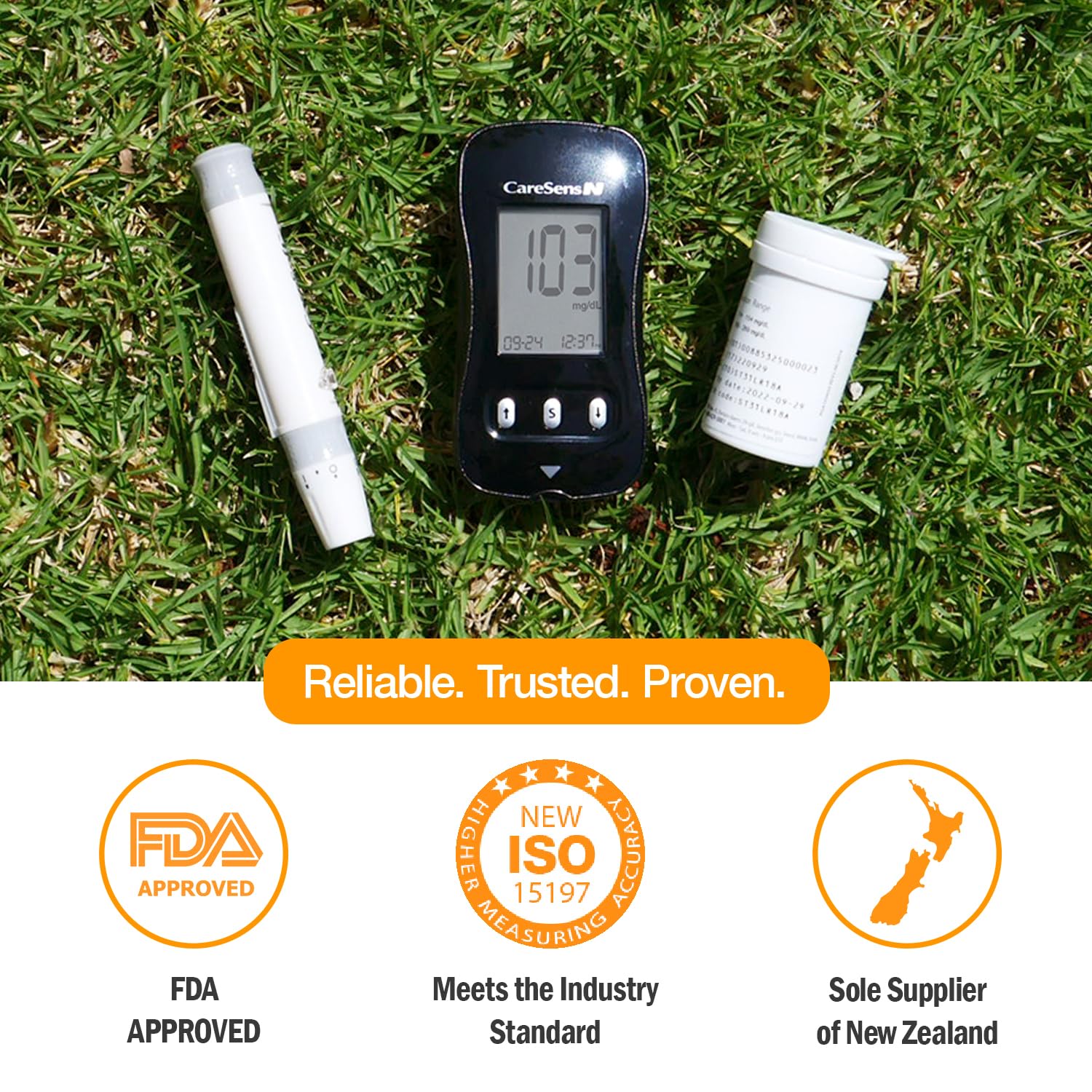
Meanwhile, the CareSens N — a budget-priced meter that often lands under $20 — draws repeated explicit praise for its included travel case as a positive differentiator. Reviewers notice it. They call it out. For a product in that price bracket, the case lands as a genuine surprise.
The Accu-Chek FastClix, which sits at the higher end of the lancet-device category, earns price justification from reviewers largely through overall build quality — the “Swiss-made” framing does real work in the reviews. But even there, the case is rarely the thing buyers are paying for. They’re paying for the lancing mechanism.
Budget kits from brands like AUVON and Metene occupy a pragmatic middle: reviewers note that the cases function adequately, but don’t dwell on them either way. They pass. They’re not a selling point and they’re not a complaint magnet.
The honest explanation for this pattern: Meter manufacturers compete on clinical accuracy, regulatory clearance, and strip cost — the FDA’s blood glucose monitoring device guidance makes clear that those are the metrics that matter for clearance. The case is a secondary accessory, often sourced separately and designed to a cost target, not a quality target. For a $50 meter with razor-thin margins, the case budget might be $1.50. That’s what $1.50 buys.
Knowing this reframes the buying decision. The case is not part of the medical device. It’s just packaging that got promoted to a job it can’t do.
What a Proper Diabetes Carry Case Actually Has to Do
Before recommending specific products, it’s worth defining the job spec — because most “diabetes organizer” cases on the market are sized and structured for the wrong use case.
The minimum viable carry kit for a BGM (blood glucose monitor) user typically includes:
- The meter itself (ranges from credit-card slim to TV-remote chunky, depending on brand)
- Test strips (a vial or two — vials are cylindrical and awkward)
- A lancing device (bulkier than most people expect)
- Spare lancets
- Alcohol swabs
- A small sharps container or lancet cap
- Written log or phone (for manual loggers)
That’s six to seven items of varying shapes. A flat zipper pouch — which is what most stock cases are — cannot organize this without everything tumbling into a jumbled pile that puts pressure on the meter screen and contaminates your strips when the vial cap loosens.
Rigidity is the underrated spec. A soft pouch protects against scratches. It does not protect against a meter getting sat on in a backpack, wedged under a laptop, or dropped in a bag with a water bottle. A semi-rigid or hard-shell exterior distributes that force. Reviewers who switch to rigid-exterior cases consistently describe the difference as meaningful — the meter stops feeling like a liability item in the bag.
Temperature management matters more in summer. Per Healthline’s overview of test strip storage, most strips have a rated usable range of 40°F to 104°F (4°C to 40°C) — and that upper limit is easier to hit than people expect. A car dashboard in July in Phoenix can exceed 160°F. A bag sitting in direct sun at a beach or outdoor event easily crosses 104°F in under an hour. An insulated case with a gel pack slot is not a luxury for summer travelers; it’s the difference between a valid strip read and a falsely elevated result that triggers an unnecessary insulin correction.
The Mayo Clinic’s guidance on blood sugar testing emphasizes keeping equipment clean, dry, and within manufacturer-specified temperature ranges — all three of which a proper case directly supports.
By the Numbers
| Case Type | Crush Protection | Temp Control | Strip Org | Avg Size Fit |
|---|---|---|---|---|
| Soft zipper pouch (stock) | None | None | Poor | Meter only |
| Semi-rigid nylon organizer | Moderate | None | Good | Full kit |
| Hard-shell EVA case | High | None | Good | Full kit |
| Insulated hard case | High | Moderate | Good | Full kit + ice pack |
The Upgrade Tiers: What to Actually Buy
Tier 1: Semi-Rigid Nylon Organizer ($15–$30)
For most people running a standard BGM setup — Contour Next, OneTouch Verio, Accu-Chek Guide — a semi-rigid nylon organizer with multiple internal pockets is the practical step up from the stock pouch. The nylon exterior resists minor compression. The interior pockets keep strips, lancets, and swabs separated. It’s not indestructible, but it’s dramatically more functional than what came in the box.
This is also the sweet spot for FSA/HSA eligibility — dedicated diabetes supply organizers qualify under IRS Publication 502’s framework for diabetes-related medical supplies. Flag this when purchasing: use your FSA/HSA card directly, keep the receipt, and confirm the retailer’s product categorization.
Tier 2: Hard-Shell EVA Travel Case ($25–$50)
EVA (ethylene-vinyl acetate) is the same foam-composite material used in protective cases for sunglasses, earbuds, and field equipment. It’s lightweight, compressible enough to fit in a bag, and rigid enough to take a direct hit without transferring force to the meter inside. Reviewers across the diabetes accessories category consistently describe the upgrade from soft pouch to hard-shell EVA as a “night and day” experience for bag-packing confidence.
This tier is well-matched to CGM readers (FreeStyle Libre readers are particularly vulnerable to screen cracking under bag pressure) and to anyone who travels frequently or uses a backpack as their primary carry.
Tier 3: Insulated Hard Case with Cooling Capacity ($40–$80)
For insulin users — anyone on a basal-bolus regimen or using an insulin pump — temperature control isn’t optional. Insulin degrades rapidly above 80°F and is destroyed at freezing. An insulated case rated for 8–12 hours of cooling with a reusable gel insert protects both the meter and any co-carried insulin pen or vial.
The American Diabetes Association’s Standards of Care 2025 reinforces that proper insulin storage is a patient safety issue, not a convenience one. Travelers, outdoor workers, athletes, and summer event attendees are the primary audience for this tier.
The Omnipod and CGM Ecosystem Consideration
If you’re running an Omnipod Dash or Omnipod 5 alongside a Dexcom G7 or FreeStyle Libre 3, your carry kit is more complex than a BGM user’s. The PDM (personal diabetes manager, the controller device for Omnipod) is larger than most meters and needs its own protected slot. Purpose-built diabetes tech organizers — sometimes marketed as “pump supply pouches” — are designed with this footprint in mind. Reviewers in the Omnipod community consistently note that generic meter cases simply don’t fit the PDM without forcing it.
Frequently Asked Questions
Why do expensive glucose meters come with such bad cases? The meter is the regulated medical device. The case is an accessory sourced to a cost target, not a quality standard. Manufacturers invest in accuracy, regulatory clearance, and strip compatibility — not packaging. The result is a structural mismatch between device quality and case quality that shows up consistently in reviews across mid-range meters.
What should a proper diabetes carry case actually fit? At minimum: the meter, one to two strip vials, a lancing device, spare lancets, and alcohol swabs. A well-specced case also accommodates a small sharps container and a backup battery or charging cable. If you use insulin, add space for a pen or mini vial.
Can I use an insulin pump belt pouch to carry my meter and strips? Functionally, yes — but the fit is usually awkward. Pump belt pouches are designed around the pump’s specific footprint, often with a window for the screen. A standard BGM is a different shape. You may find a loose fit, poor organization, or no room for strips. A dedicated meter organizer is typically the cleaner solution unless you already own a pump pouch with extra interior space.
How do I store test strips safely when traveling in summer heat? Per Healthline’s guidance on strip storage, keep strips in their original sealed vial, store the vial in an insulated case away from direct sunlight, and avoid leaving your kit in a parked car. Gel packs kept in a small cooler or an insulated diabetes case extend safe storage time significantly. Check your specific strip brand’s insert for exact temperature tolerances — they vary slightly by manufacturer.
Is there a universal case that fits most glucose meters? No single case fits all meters — the range in device size is too wide. However, semi-rigid organizers in the 7” x 4” footprint range fit most mid-sized BGMs (Contour Next, OneTouch Verio, Accu-Chek Guide) comfortably. CGM readers and Omnipod PDMs require larger footprints. Check device dimensions before purchasing.
Does my meter case need to be TSA-compliant for air travel? Your meter, strips, lancets, and lancing device are all permitted through TSA security in carry-on bags. The FDA’s consumer guidance on blood glucose monitors notes that these items do not require a prescription letter for travel, though having one can speed up secondary screening. No specific “TSA-compliant” certification exists for meter cases — the relevant question is whether your kit fits in a carry-on and whether insulin (if applicable) is properly labeled.
The Decision Rule
If your current case came in the box with the meter, it’s almost certainly underbuilt for daily real-world use. The upgrade decision is straightforward:
- If you use a BGM only and carry a backpack or bag: Semi-rigid nylon organizer, $15–$30. FSA/HSA eligible. Buy it once.
- If you carry a CGM reader or are prone to dropping things: Hard-shell EVA case, $25–$50. Screen protection is the primary value driver.
- If you use insulin and travel or spend time outdoors in summer: Insulated hard case with gel pack capacity, $40–$80. Temperature integrity is a clinical issue, not an aesthetic one.
- If you run an Omnipod or dual CGM/pump setup: Purpose-built pump supply pouch designed for PDM dimensions — generic meter cases will not fit correctly.
The case that ships in the box got your meter home from the store. It was never designed to do the job you actually need it to do.