If you’re managing diabetes — or buying socks for someone who is — you’ve probably heard the phrase “non-binding top” without a clear explanation of what it means or why it matters. Here’s the short version: people with diabetes often develop a complication called peripheral neuropathy, which is nerve damage in the feet that dulls sensation. That means a sock with a tight elastic cuff can restrict blood flow or press against the skin for hours without the wearer noticing, creating a pressure wound that’s slow to heal. Diabetic socks are designed specifically to solve this: they use a loose, gentle cuff that stays up — or mostly stays up — without compressing the ankle. They also typically feature a seamless toe, extra cushioning, and moisture-wicking fabric to reduce friction and keep skin dry. This article compares four brands — Pembrook, Doctor’s Select, Special Essentials, and Revosox — across the bamboo, standard knit, and crew-cut formats, drawing on aggregated reviewer patterns and published construction specs to help you decide which style fits your buyer’s situation.
| EDITOR'S PICKSpecial Essentials Diabetic Soc… | Mid-tierDoctor's Select® Diabetic Socks… | Budget pickRevosoxs Diabetic Crew Socks fo… | |
|---|---|---|---|
| Pair count | 12 pairs | 4 pairs | — |
| Material | — | — | Bamboo viscose |
| Seamless toe | — | — | ✓ |
| Moisture-wick | ✓ | — | — |
| Price | $24.99 | $17.99 | $14.89 |
| See on Amazon → | See on Amazon → | See on Amazon → |
Why “Non-Binding” Is Harder to Execute Than It Sounds
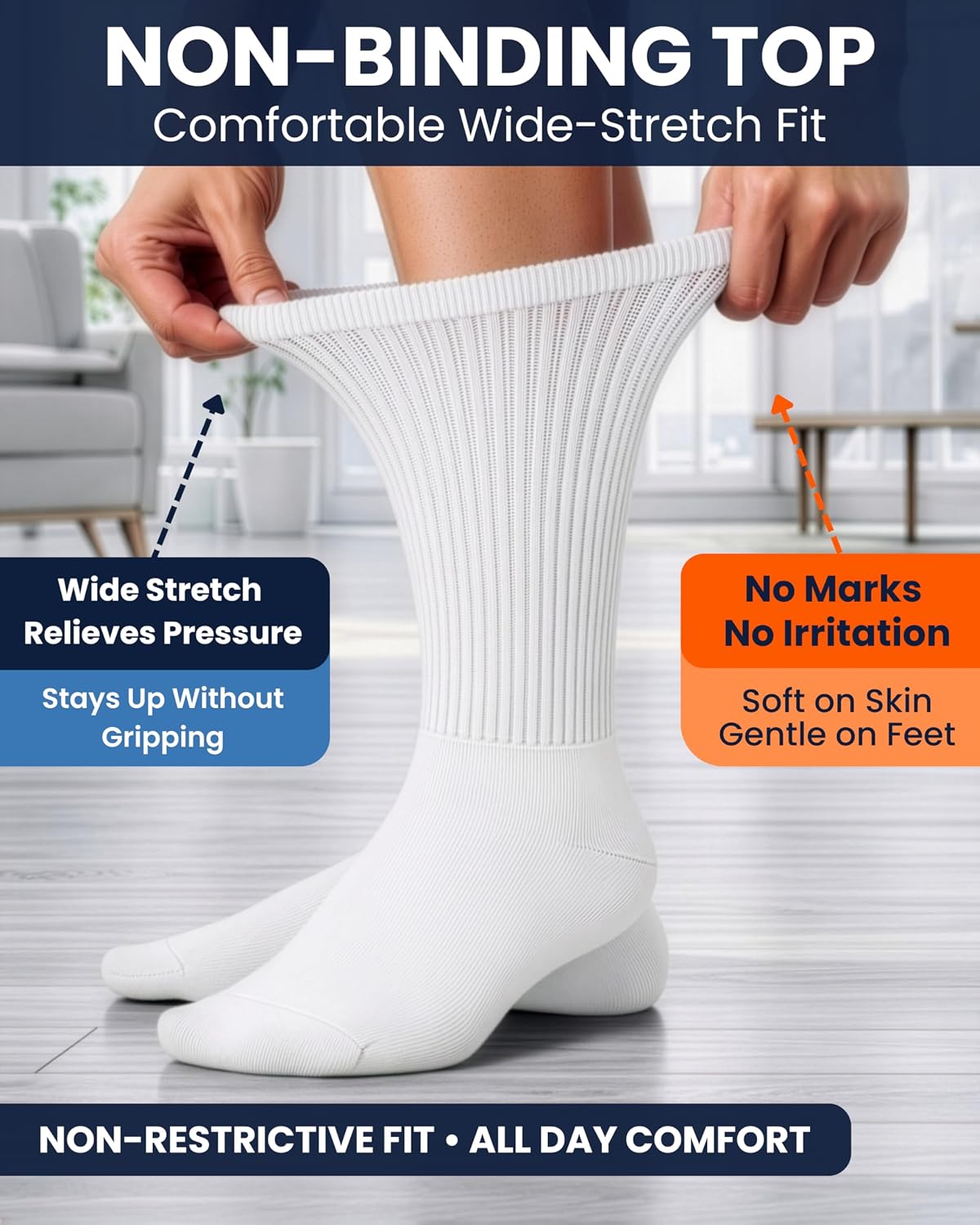
The core engineering problem is simple to state: hold the sock up without squeezing. Most standard socks solve this with a dense elastic band. Diabetic socks solve it with a wider, lower-tension cuff — often a ribbed channel that distributes grip over a larger surface area. The tradeoff is physics: less force means more sliding risk on smooth skin or when the sock is worn over lotion.
The American Diabetes Association’s 2025 Standards of Medical Care in Diabetes (published in Diabetes Care, Supplement 1, January 2025) identifies foot inspection and protective footwear as first-line interventions for people with peripheral neuropathy or poor circulation. The ADA doesn’t prescribe a specific sock brand, but the structural requirements implied — no constrictive banding, moisture management, padding at pressure points — map directly to what these four brands advertise.
According to Mayo Clinic’s overview of diabetic neuropathy, pressure injuries in neuropathic feet frequently develop from footwear friction over days, not from a single incident. That context matters when you’re advising a patient or buyer: a sock that slides and bunches inside a shoe is nearly as dangerous as one that’s too tight. Sliding is not just an annoyance — it’s a clinical concern. Healthline’s review coverage of diabetic socks notes that seamless construction and non-constricting cuffs are the two features most consistently associated with injury prevention for neuropathic feet.
Brand-by-Brand Breakdown: What the Reviews Actually Say
Each of the four brands below occupies a distinct position in the market. The H3 sections that follow are each closed with a tier marker so you can use this as a quick reference when a buyer’s situation maps to a specific profile.
Pembrook Bamboo Diabetic Socks
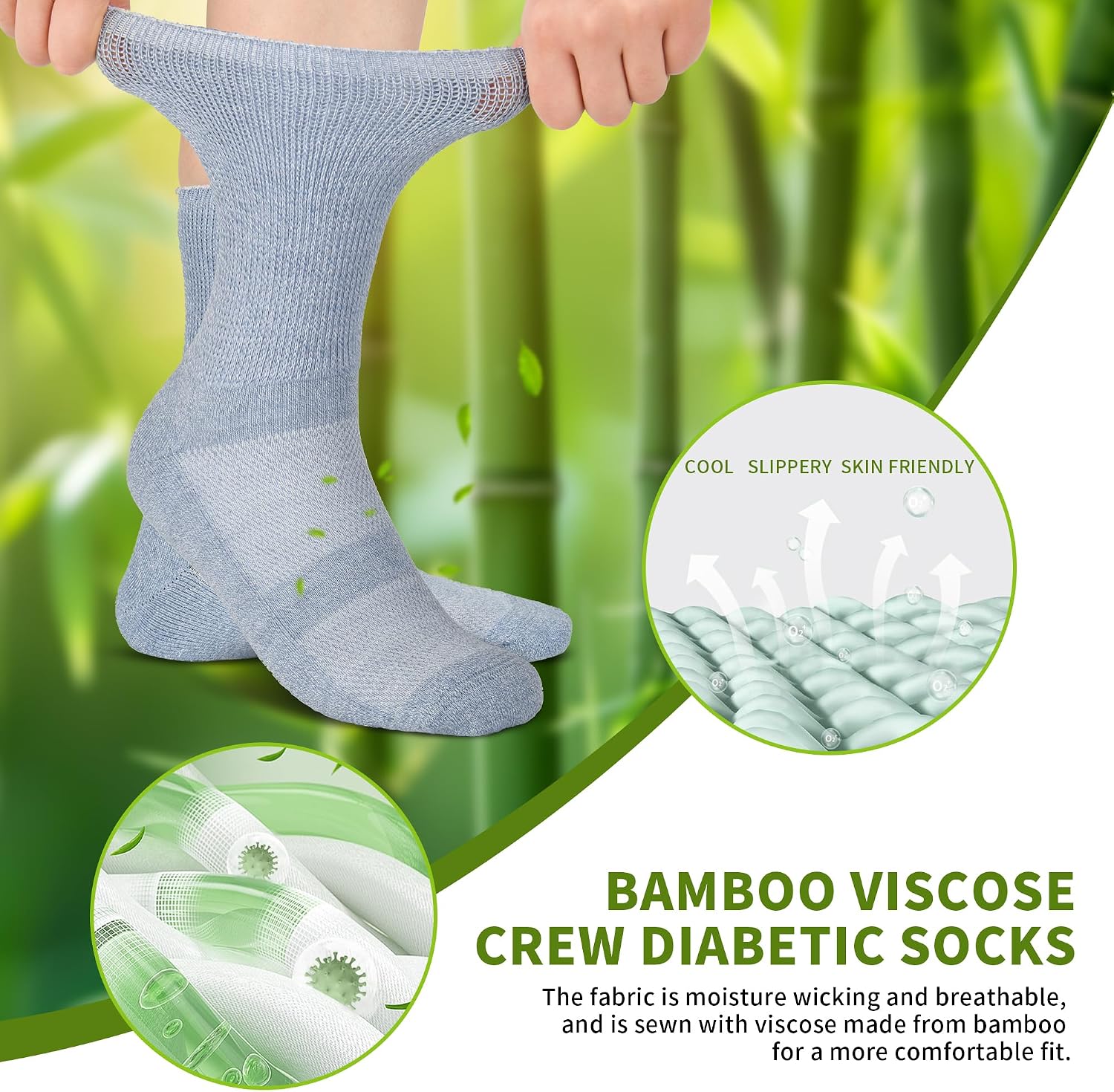
Bamboo-derived rayon is a legitimate functional fabric choice, not marketing fluff. It’s naturally moisture-wicking, has a silky hand-feel that’s gentle on sensitive skin, and tends to run cooler than cotton blends in warm weather — though reviewers who use them on cold floors or in winter note they’re not as warm as a heavier knit option. That warmth question comes up often enough in aggregated reviews to be worth flagging explicitly.
The sliding issue is Pembrook’s consistent soft spot. Reviewers acknowledge it plainly — phrases like “they do creep down a bit during the day” appear across multiple review clusters — but the same reviewers almost universally describe it as non-disqualifying because the alternative (a tight elastic cuff) is worse. The calculus is straightforward: mild sliding versus circulation risk. For a buyer who is mostly sedentary or seated during the day, this is an easy call in Pembrook’s favor. For someone on their feet for a 10-hour shift, the knit alternatives below deserve a closer look.
Notably, Pembrook’s reviewer base extends well beyond its labeled audience. Lymphedema patients, people with naturally thick ankles, and workers with end-of-day leg swelling appear consistently in the review pool — which tells you the non-binding design is solving a real problem well outside the diabetic niche. That’s useful context when a buyer asks whether these are “just for diabetics.”
Revosoxs
$14.89
In stock on Amazon
Check price on AmazonDoctor’s Select Diabetic Socks
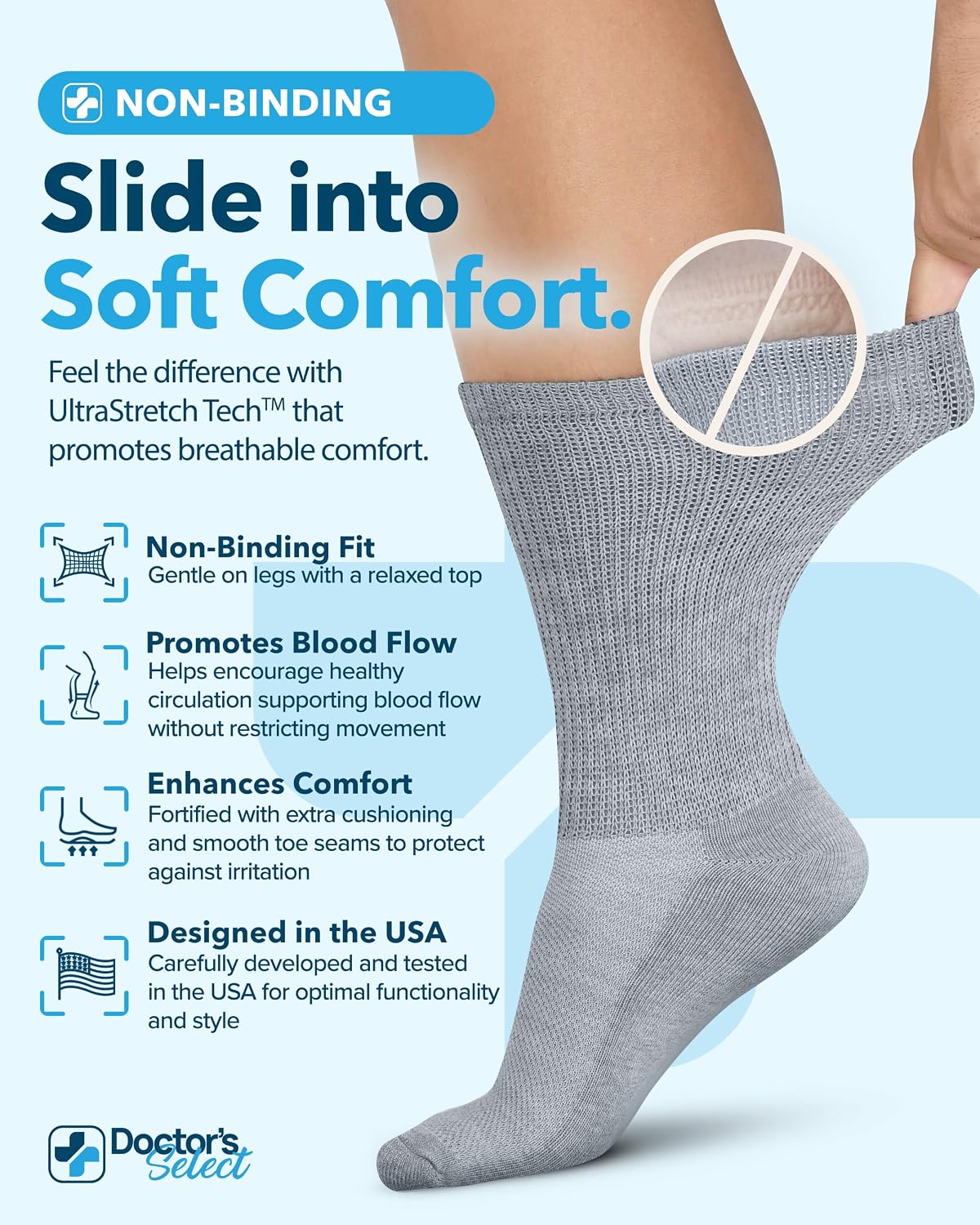
Doctor’s Select earns unusually enthusiastic language for a commodity sock category. Phrases like “sock science at its best” and detailed appreciation for construction quality — specifically the reinforced heel pocket, the flat seam across the toe box, and the consistency across pairs — signal a buyer who has burned through multiple “diabetic sock” options before and is genuinely relieved. That reviewer profile matters: this is not a first-purchase crowd. It’s someone who bought the budget option, was disappointed, upgraded, and is now describing the experience of getting it right.
Healthline’s roundup of diabetic sock options notes that construction consistency across a multi-pack is one of the harder quality signals to verify pre-purchase — and it’s precisely what Doctor’s Select reviewers highlight most. When a buyer needs a product recommendation they can stand behind, a brand that generates enthusiastic repeat purchasers is a meaningful signal.
The crew-cut silhouette works well here: it sits at mid-calf, which gives enough fabric contact to stabilize the sock on the leg without needing aggressive elastic. For a buyer whose main complaint about prior socks was inconsistent sizing from pair to pair within the same pack, this brand addresses that frustration directly.
Doctor's
$17.99
In stock on Amazon
Check price on AmazonSpecial Essentials Diabetic Socks
Special Essentials’ primary differentiator in the review record is simple: the 12-pair pack at its price point is specifically called out as a value differentiator by buyers who do the per-pair math themselves. For a caregiver buying for an aging parent who goes through multiple pairs per week, or a buyer managing a tight FSA budget at year-end, that math matters.
By the numbers: A 12-pair pack amortizes to a per-pair cost that is typically 30–45% lower than buying individual pairs of comparable styles. For a buyer going through three to four pairs per week due to laundering frequency, a 12-pack covers roughly a month of use before restocking.
The construction reviewers describe is standard knit rather than bamboo — which means slightly more warmth, slightly less silky feel, but also slightly better cuff retention on the leg. Reviewers don’t flag a significant sliding problem with this style. That’s consistent with what you’d expect: the knit fabric creates more friction against skin than smooth bamboo-derived rayon does.
FSA/HSA eligibility note: Diabetic socks are FSA/HSA-eligible as a medical supply for diagnosed diabetic individuals under current IRS guidance. If you’re advising a caregiver or patient, the 12-pack format makes FSA bulk purchasing particularly practical near benefit-year deadlines.
Revosoxs
$14.89
In stock on Amazon
Check price on AmazonRevosox Diabetic Socks
Revosox occupies an interesting position in the review record. Buyers consistently describe the cuff as “slightly tighter than hoped” — which is a notable qualifier given that these buyers are specifically purchasing a product labeled non-binding. But in virtually every instance, those same reviewers add that it’s still dramatically better than anything else they’ve tried. That combination — mild disappointment against spec, strong satisfaction against prior experience — tells you the baseline for this buyer is extremely low. They’ve been burned by labeled “non-binding” socks that weren’t, and Revosox is delivering meaningful relief even if it’s not perfect.
For a buyer with moderate swelling (not severe lymphedema), Revosox appears to thread the needle: enough cuff structure to stay up reliably, loose enough not to create the banding marks that trigger the circular advice to switch to diabetic socks in the first place.
Everyday Health’s guidance on choosing diabetic socks notes that buyers with significant ankle swelling may need to size up from their usual shoe size to find a sock that’s both non-binding and doesn’t bunch. That sizing note is worth raising in any product recommendation conversation involving this brand.
Special
$24.99
In stock on Amazon
Check price on AmazonWho Actually Buys These — And What They’re Really Solving
One of the more useful patterns across all four brands: a significant share of the highest-rated reviews come from people who do not have diabetes. Lymphedema patients, workers with standing-induced leg swelling, and people with naturally thick ankles are a consistent secondary audience. They’re choosing diabetic socks for the same reason diabetic buyers do — the non-binding top solves a real problem — but they’re not the labeled audience.
This has a practical implication for anyone advising non-diabetic family members or patients: diabetic socks are not clinically restricted to diabetic use. They’re a structural design choice, and that design solves swelling and circulation concerns across multiple conditions. Healthline’s diabetic sock review coverage confirms this pattern, noting that non-binding and seamless features appeal broadly to anyone with foot sensitivity, not only to people managing blood sugar.
Decision Framework: If X, Then Y
This is the practitioner-facing summary. Use it when you have a specific buyer situation in front of you.
If the buyer has peripheral neuropathy and is on their feet all day: Prioritize a knit-style option — Doctor’s Select or Special Essentials — over bamboo. The slight extra cuff stability of knit reduces the sliding risk that bamboo styles acknowledge in their own review record.
If the buyer is primarily sedentary or office-based: Pembrook bamboo is defensible. The sliding issue is real but mild, and the skin-gentleness of bamboo-derived rayon is a legitimate benefit for sensitive neuropathic skin.
If the buyer is a caregiver purchasing in bulk for a parent or dependent: Special Essentials’ 12-pair pack is the obvious anchor choice. Do the per-pair math with them. Flag FSA eligibility and the benefit-year deadline if relevant.
If the buyer has previously purchased “non-binding” socks that weren’t: Revosox is the de-escalation pick. The review language — “still dramatically better than anything else” — is exactly the signal you want for a disappointed repeat purchaser who needs a credible upgrade recommendation.
If the buyer has no diabetes diagnosis but has swollen ankles or lymphedema: Any of these four brands are appropriate; the non-binding design solves their problem too. Frame it that way to reduce hesitation about buying a product marketed to diabetic users.
Frequently Asked Questions
Do diabetic socks actually stay up without a tight elastic band, or do they all slide? It varies by material and construction. Knit styles — Doctor’s Select, Special Essentials, and Revosox — tend to hold position better than bamboo styles like Pembrook because the fabric creates more skin friction. Bamboo reviewers acknowledge some sliding without calling it disqualifying; the context is that a sock that slides slightly is still far safer than one that constricts.
Are bamboo diabetic socks warm enough for winter or cold floors? Bamboo-derived rayon runs cooler than cotton or blended knit. Reviewers who wear Pembrook on cold floors or in winter consistently note they’re not as warm as heavier knit options. If warmth is a priority, a standard knit style is the better match.
Can people without diabetes wear diabetic socks, and will they benefit? Yes, and they do in large numbers. Reviewers across all four brands include lymphedema patients, people with thick ankles, and workers with leg swelling from long shifts on their feet. The non-binding construction solves a structural problem that isn’t exclusive to diabetes.
What’s the difference between a seamless toe and a regular toe seam for neuropathy? A regular toe seam is a raised ridge of stitching across the front of the sock. For feet with normal sensation, it’s a minor annoyance. For feet with peripheral neuropathy — where sensation is reduced — that ridge can create a pressure point over hours of wear without the wearer noticing, potentially causing a blister or skin breakdown. Mayo Clinic’s overview of diabetic neuropathy explains that friction injuries in neuropathic feet often develop slowly and without pain, which is precisely why eliminating that ridge through seamless or flat-linked construction matters clinically.
How do I know what size to order if my feet are wide or my ankles are swollen? Everyday Health’s guidance on choosing diabetic socks recommends that buyers with significant ankle swelling consider sizing up from their standard shoe size. Most brands offer size-to-shoe-size charts; prioritize fit at the widest part of the foot and ankle rather than heel-to-toe length. When in doubt, the larger size reduces constriction risk.
How many pairs should I buy at once, and how long do diabetic socks typically last? For daily wear and regular laundering, most buyers go through three to five pairs per week. A 12-pack — like the one Special Essentials offers — covers roughly a month before restocking. With gentle machine washing and air-drying, reviewers report usable life of six to twelve months per pair before cuff elasticity noticeably degrades. For FSA purchasers, a 12-pack at year-end is a practical way to use remaining benefits on an eligible recurring expense.