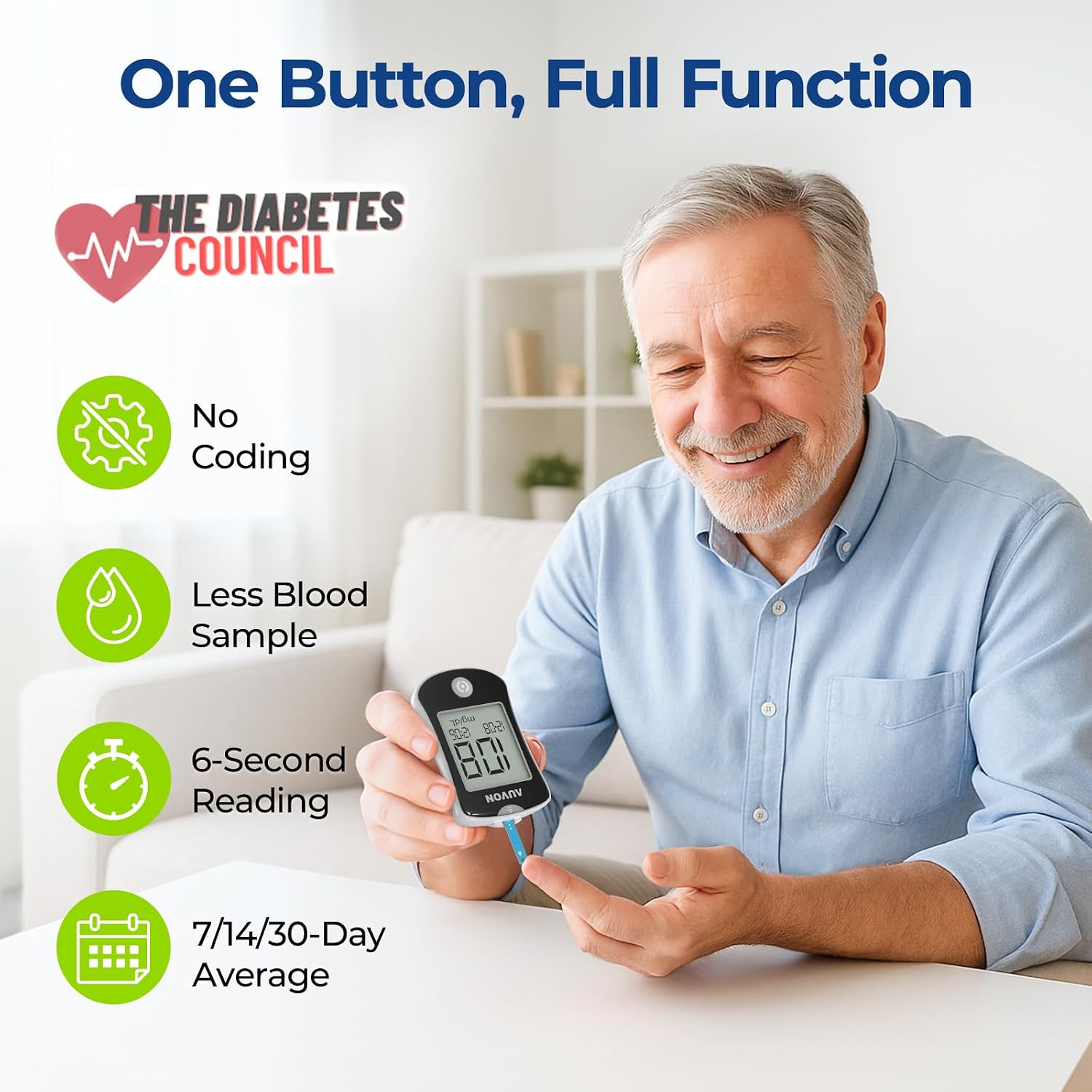
A glucose meter — also called a blood glucose monitor or BGM — is the small handheld device that reads a drop of your blood and tells you your blood sugar level in seconds. For the roughly 38 million Americans living with diabetes, that number drives real decisions: what to eat, whether to take insulin, whether to call a doctor. So when a meter gives you a wrong number, the consequences aren’t abstract. They’re a miscalculated insulin dose, an ignored low, or a false sense of control. Budget meters priced between $15 and $35 have exploded in availability on retail shelves and online marketplaces, and the value proposition looks obvious at first glance. But the reviews — read carefully — tell a more complicated story. This article breaks down what accuracy actually means for a glucose meter, where budget devices tend to fall short, and how to make the right call for your specific situation.
| EDITOR'S PICKAccu-Chek FastClix Glucose Moni… | Mid-tierAscensia Contour Next Blood Glu… | Budget pickAUVON Blood Glucose Monitor Kit | |
|---|---|---|---|
| Test strips | 100 strips | 70 strips | 50 strips |
| Lancets | 108 lancets | — | 50 lancets |
| Lancing device | ✓ | — | ✓ |
| Meter included | ✓ | ✗ | ✓ |
| Control solution | ✓ | — | — |
| No coding | — | ✓ | ✓ |
| Price | $90.00 | $23.97 | $19.98 |
| See on Amazon → | See on Amazon → | See on Amazon → |
What “Accurate Enough” Actually Means — and Who Gets to Decide
The FDA sets the legal accuracy floor for over-the-counter glucose meters sold in the United States. Per the FDA’s guidance document on self-monitoring blood glucose systems, a meter must produce results within ±15 mg/dL of a lab reference value for readings below 100 mg/dL, and within ±15% for readings at or above 100 mg/dL, in at least 95% of tests. A second tier requires 99% of readings to fall within ±20%.
That sounds tight. It isn’t, practically speaking.
Run the math on a real-world low:
By the numbers
- True blood sugar: 72 mg/dL (borderline low)
- Allowable FDA error at that level: ±15 mg/dL
- Meter could legally read: anywhere from 57 to 87 mg/dL
- Clinical difference: 57 triggers a juice box; 87 triggers nothing
For a non-insulin user tracking trends, a reading of 87 when your true sugar is 72 is annoying but not dangerous. For someone on a rapid-acting insulin who is deciding whether to correct a post-meal spike — or for a parent dosing a child with Type 1 — that same spread is a different risk calculation entirely.
Research published in the Journal of Diabetes Science and Technology (Freckmann et al., 2015) evaluated 43 blood glucose monitoring systems and found that performance varied dramatically across brands, with several consumer-grade devices clustering near — and occasionally outside — the FDA’s minimum accuracy threshold. A follow-up investigation of 18 marketed monitors by Klonoff et al., published in Diabetes Care (2018), found similar dispersion: some meters performed significantly better than the regulatory floor; others barely cleared it.
Budget meters aren’t automatically inaccurate. But they’re also not all the same.
The Review Pattern That Should Concern You
Across aggregated buyer reviews of budget glucose meters — including AUVON, Glucoracy, and Metene — a striking pattern emerges. Buyers frequently award high ratings after explicitly revising their expectations downward.
One AUVON reviewer, for example, updated their rating to five stars after concluding the meter is “accurate in giving the ballpark ranges it was designed to give.” That’s a meaningful reframe. A ballpark range is not a glucose reading. You can’t dose insulin off a ballpark range.
A Glucoracy reviewer described four consecutive readings from the same finger — same drop of blood, seconds apart — that produced results including a value of 41 mg/dL followed by a result described as “in the normal range.” A spread that wide on back-to-back measurements isn’t just noise; it’s a device telling you two mutually exclusive things about your biology at the same moment. That reviewer still rated the product highly, which suggests the clinical stakes of meter inconsistency may not have been fully understood.
This is not a knock on buyers — it’s a structural problem with how budget meters are marketed and reviewed. The product category attracts buyers who are underinsured, cost-sensitive, or newly diagnosed. Those buyers deserve to understand what they’re getting.
Contrast that with the Accu-Chek side of the ledger. An Accu-Chek Guide owner describes returning a $20 kit that “didn’t work” and paying $90 for Accu-Chek instead, calling it a “you get what you pay for” situation. Another Accu-Chek Guide user calls it “the only brand of meter I will use” after cycling through multiple alternatives. The consistency language shows up repeatedly in long-run reviews of mid-tier devices: owners report that readings are stable, strip-to-strip variability is low, and the results match what their lab work predicts.
The Real Cost of a Cheap Meter (It’s Not the Sticker Price)
The upfront cost of a budget glucose meter is genuinely low — often $15 to $30 for the starter kit. The hidden cost is in the test strips, which are the actual ongoing expense for anyone monitoring regularly.
Budget meters typically use proprietary strips not covered by major insurance formularies, which means you’re paying full retail for every box. A person testing four times daily uses roughly 120 strips per month.
| Meter Tier | Estimated Strip Cost (100-strip box) | Monthly Strip Cost (4x/day) |
|---|---|---|
| Budget (AUVON, Glucoracy, Metene) | $18–$28 | $22–$34 |
| Mid-range (Contour Next, OneTouch Verio) | $25–$45 (often insurance-covered) | $30–$54 cash; often $0–$10 copay |
| Accu-Chek Guide | $25–$40 (widely formulary-covered) | $30–$48 cash; often $0–$15 copay |
If your insurance covers Contour Next or Accu-Chek Guide strips, the math flips entirely. A $90 Accu-Chek Guide kit plus $10/month copay strips is cheaper over a year than a $20 budget kit plus $30/month out-of-pocket strips. The American Diabetes Association’s Standards of Medical Care in Diabetes (2024) explicitly recommends that clinicians connect patients with insurance-covered monitoring options before defaulting to out-of-pocket alternatives.
FSA/HSA note: Both the meter hardware and test strips are FSA/HSA-eligible expenses. If you’re buying out of pocket, running the purchase through a health spending account effectively gives you a 22–37% discount depending on your tax bracket — which changes the mid-tier value calculation meaningfully.
When to Upgrade: A Decision Framework
The upgrade question isn’t about brand loyalty. It’s about what you’re using the readings for.
If you manage diabetes with insulin — particularly rapid-acting insulin — a mid-tier or premium meter is non-negotiable. The FDA accuracy floor still permits errors that could cause underdosing or overdosing at critical moments. Owners of mid-tier devices like Contour Next consistently report tighter strip-to-strip consistency, and the Contour Next has earned favorable accuracy assessments in independent comparative evaluations. The Accu-Chek Guide’s ejector mechanism and backlit screen also reduce handling errors, which matter when your hands aren’t steady or lighting is poor.
If you’re a non-insulin Type 2 or prediabetes patient tracking lifestyle trends — not dosing — a budget meter may be functionally adequate. Knowing whether your post-meal spike is 140 or 160 matters less when the clinical response is the same: reduce refined carbohydrates, add a walk. The Mayo Clinic’s overview of blood sugar testing notes that the frequency and precision of self-monitoring should align with the individual’s treatment plan and goals.
If readings are driving conversations with your care team, consider the meter’s data ecosystem. The Contour Next ONE and OneTouch Verio Reflect both sync wirelessly to apps and can share logs directly with providers. Budget meters rarely offer this. When your endocrinologist or diabetes educator is pattern-reading your 14-day log, the quality of that data affects the quality of their advice.
If you’re a caregiver dosing a child with Type 1 diabetes, the tolerance for variability is the lowest of any use case. Reviews and published accuracy evaluations consistently place established brands like Accu-Chek Guide and Contour Next above the budget tier on consistency — and for a child who can’t reliably communicate symptoms of a low, a meter that could read 57 when the true value is 72 is a real risk.
Frequently Asked Questions
How much variation between two readings from the same finger is considered normal? According to the FDA’s accuracy standards, some variation is inherent to the technology — but consecutive readings from the same finger prick should generally land within 5–10 mg/dL of each other on a well-functioning device. Readings that swing 20, 30, or 40 mg/dL apart on the same sample suggest a strip quality issue, technique error (insufficient blood volume, wet fingers, expired strips), or a device performing at the lower edge of its accuracy range.
Can I trust a $25 glucose meter if I take insulin? The honest answer is: probably not as your primary decision-making tool. Budget meters meet FDA minimums, but the allowable error range — up to ±15 mg/dL at low readings — is wide enough to generate a clinically wrong insulin decision in a borderline situation. If cost is the driver, pursue insurance coverage for a mid-tier meter and strips before defaulting to a budget option.
What does it mean when my home glucose meter and my doctor’s A1C don’t match? Your A1C (a lab test measuring average blood sugar over roughly three months) and your home meter readings measure different things at different moments. They’re not expected to match exactly — but if your home meter consistently shows readings that seem inconsistent with an unexpected A1C result, it’s worth performing a same-draw comparison: test with your home meter at the same time your lab draws blood for an A1C, then compare your meter’s reading to the lab’s simultaneous glucose result. A discrepancy greater than 15% is worth flagging with your provider.
Is the Accu-Chek Guide worth the extra cost over a budget kit? For most people managing diabetes with insulin, yes. The Accu-Chek Guide’s spill-resistant vial, one-button strip ejection, and formulary coverage across major insurance plans combine to make it a more practical long-run choice than a $20 kit that uses expensive, uncovered strips. The Accu-Chek FastClix lancing device that often accompanies Accu-Chek kits also draws consistently positive reviews from owners for reducing stick pain — a real compliance factor.
Should I use the control solution that comes with my glucose meter? Yes — and it’s a meaningful quality signal that some manufacturers include it at all. Control solution is a liquid with a known glucose concentration; running it through your meter confirms the meter and strips are working together correctly. Metene and Accu-Chek reviewers specifically call out control solution inclusion as a trust indicator. Use it when you open a new box of strips, after exposing strips to temperature extremes, and any time readings feel off.
How do I know if my current meter is giving me dangerously inaccurate readings? Warning signs include: consecutive readings from the same finger prick that vary by more than 15–20 mg/dL; readings that don’t track with how you feel (meter shows normal, you feel symptomatic); and home readings that are consistently far off from lab glucose draws. The most reliable check is the same-draw comparison described above. If you suspect your meter is unreliable, contact the manufacturer — most offer replacement programs — and consult your pharmacist or diabetes care specialist before relying on a device you distrust.
The Decision Rule
If X (you use insulin, you’re a caregiver dosing a child, or your readings drive clinical decisions), then Y: invest in a mid-tier or better meter — Contour Next, Accu-Chek Guide, or OneTouch Verio — and verify insurance coverage for strips before paying cash.
If X (you’re monitoring lifestyle trends without insulin, readings are one input among many, and cost is a genuine barrier), then Y: a budget meter is acceptable — but run the control solution, replace strips on schedule, and treat single anomalous readings with appropriate skepticism rather than action.
The price difference between a good meter and a budget meter is often smaller than it looks once insurance and FSA math enter the picture. The accuracy difference, for anyone who doses insulin, is never small.