A CGM — continuous glucose monitor — is a small wearable sensor you apply to your skin that reads your blood sugar every few minutes, all day and night, without finger-stick blood draws. Instead of snapshots a few times per day, you get a real-time trend line on your phone or a dedicated receiver. That constant data stream can change how you manage diabetes: you see glucose spikes before they become emergencies, and you learn how food, movement, and stress actually shift your numbers. The question most people reach pretty quickly is: what does this actually cost per month? The answer is genuinely complicated. The three major over-the-counter and prescription CGM options available in mid-2026 — Dexcom Stelo, Abbott Lingo, and Dexcom G7 — have very different pricing structures, insurance compatibility stories, and hidden ongoing costs. This article maps all of it out so you can run your own numbers and make a clean decision.
The Three Contenders: Who Each Device Is Actually For
Before the math, a quick framing of the competitive landscape — because recommending a CGM without anchoring it to the buyer’s clinical profile is how people waste money.
Dexcom Stelo — OTC for Non-Insulin Users
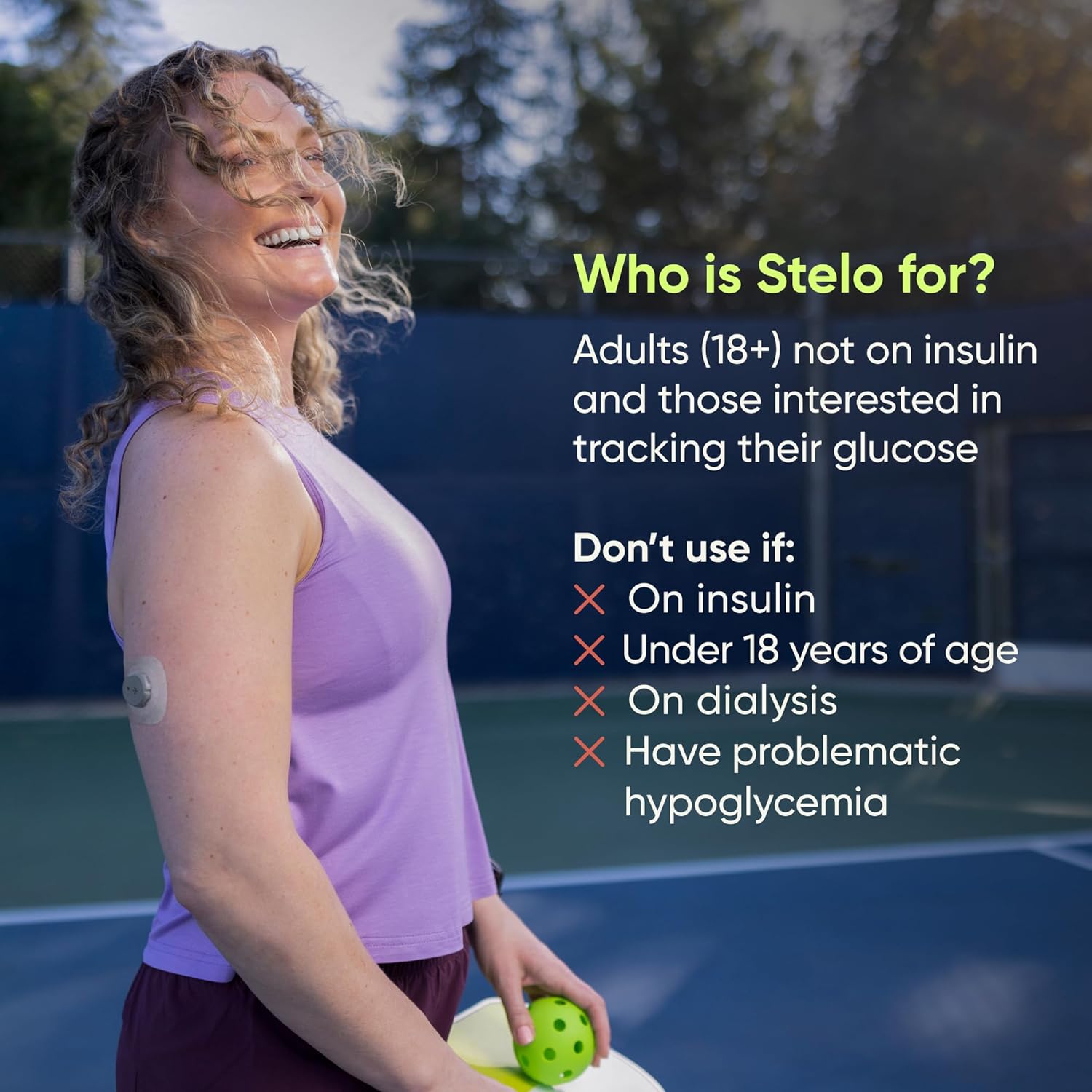
Dexcom Stelo launched in mid-2024 as Dexcom’s first fully over-the-counter CGM, cleared by the FDA for adults with Type 2 diabetes not on insulin, or for people without diabetes who want metabolic awareness data. It requires no prescription. Each sensor lasts 15 days, meaning a standard 30-day month requires exactly two sensors. Stelo is built on the same hardware platform as the G7 but is sold as a consumer wellness product with a simplified app experience and no insulin-dosing clearance. The 15-day wear window reduces sensor-change frequency — a meaningful quality-of-life detail for new users who find the application process unfamiliar.
Who it fits: cost-conscious Type 2 buyers not on insulin, wellness-motivated non-diabetics, and patients who want to start CGM without navigating a prescription workflow.
Skin
$25.99
In stock on Amazon
Check price on AmazonAbbott Lingo — OTC Metabolic Wellness CGM
Abbott Lingo is Abbott’s OTC metabolic CGM, targeted at non-insulin-using Type 2s and wellness-oriented buyers who want glucose data without a clinical diagnosis. It runs on the FreeStyle Libre sensor platform, which Abbott has deployed at scale across its LibreLink family — meaning the sensor adhesion and accuracy profile is well-documented across a large user population. Each sensor lasts 14 days; a 30-day month therefore requires slightly more than two sensors on average, meaning roughly one month in five will require a third sensor. Lingo carries no prescription requirement and is sold direct through Abbott’s consumer channel.
Who it fits: buyers who prioritize adhesion reliability, particularly in warm or humid climates, and shoppers already comfortable with the Abbott app ecosystem from prior FreeStyle Libre use. Healthline’s CGM coverage reporting (Healthline, “Best Continuous Glucose Monitors,” updated 2025) consistently notes that FreeStyle Libre-platform sensors receive favorable adhesion marks in high-sweat use conditions — a practical differentiator worth weighing.
Dexcom
$30.00
In stock on Amazon
Check price on AmazonDexcom G7 — Prescription CGM for All Diabetes Types
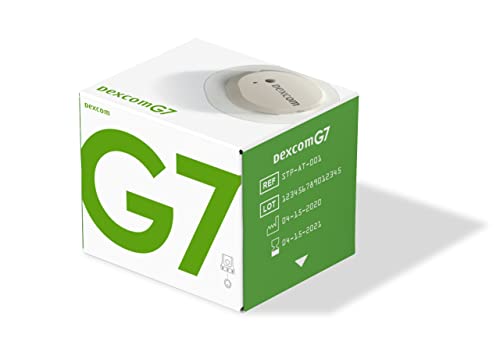
Dexcom G7 is a prescription CGM cleared by the FDA for all people with diabetes, including Type 1 and insulin-using Type 2s. It holds FDA clearance for insulin dosing decisions and integrates directly with closed-loop automated insulin delivery systems. Each sensor lasts 10 days, with a 12-hour grace period extension. It is the only one of these three devices that commercial insurance or Medicare can cover — a distinction that fundamentally reshapes its effective monthly cost for eligible buyers and makes it the highest-value device in the category for insured patients.
Who it fits: anyone using insulin, anyone with Type 1 diabetes, clinicians recommending a device for patients who need clinical-grade hypoglycemia and hyperglycemia alert thresholds, and insured buyers for whom coverage brings monthly out-of-pocket cost to $35–$75.
Stelo CGM
$99.00
In stock on Amazon
Check price on AmazonThe Monthly Cost Math: Side by Side
Let’s do the arithmetic honestly. Prices reflect published retail as of May 2026. Per-month cost assumes 30 days of continuous use. Insurance cost ranges are drawn from the American Diabetes Association Standards of Care in Diabetes 2025, Section 7: Diabetes Technology, which includes cost-of-care data across CGM device categories, and from the Centers for Medicare & Medicaid Services CGM Coverage Criteria Under the Durable Medical Equipment Benefit, updated 2024.
Dexcom Stelo Monthly Cost Breakdown
Dexcom’s direct channel lists a two-pack — covering 30 days at 15 days per sensor — at approximately $99 retail, with a monthly subscription option typically priced at $89/month. First-time buyer promotions have periodically appeared at $79 through Dexcom’s own storefront.
- Cash-pay monthly cost: $89–$99
- Insurance coverage: None. Stelo is an OTC consumer product not currently billable through any insurance DME or pharmacy benefit pathway.
- FSA/HSA eligible: Yes. The IRS classifies CGMs as a qualified medical expense under IRS Publication 502, Medical and Dental Expenses (2025 tax year), meaning FSA and HSA dollars can purchase Stelo directly. At a 25% effective marginal tax rate, this reduces real cost to roughly $67–$74/month for buyers with available FSA or HSA balances.
Skin
$25.99
In stock on Amazon
Check price on AmazonAbbott Lingo Monthly Cost Breakdown
Abbott Lingo sensors retail at approximately $49 per individual sensor (14 days of wear) through Abbott’s direct channel, with a two-sensor monthly subscription at roughly $89/month. Because 14-day sensors do not divide evenly into a 30-day month, buyers effectively consume 2.14 sensors per month on average — meaning one month in approximately every five requires a third sensor, pushing that month’s cost to around $138 at single-sensor retail or somewhat less under a subscription structure.
- Cash-pay monthly cost: $89–$98 on average (third-sensor months pull the true average slightly above the subscription base price)
- Insurance coverage: None — same OTC limitation as Stelo; no current DME or pharmacy benefit billing pathway exists for Lingo.
- FSA/HSA eligible: Yes, under the same IRS Publication 502 qualified-expense rationale that covers Stelo.
Dexcom
$30.00
In stock on Amazon
Check price on AmazonDexcom G7 Monthly Cost Breakdown
Dexcom G7 cash-pay pricing runs approximately $349–$389 for a three-pack — 30 days of coverage at 10 days per sensor — through pharmacy channels as of May 2026, per Dexcom’s published list pricing. Discount programs and manufacturer support can reduce this meaningfully.
- Cash-pay: $299–$389 depending on discount program access
- Commercial insurance: Most plans covering G7 place it as a Tier 2 or Tier 3 specialty pharmacy or durable medical equipment benefit. The American Diabetes Association Standards of Care in Diabetes 2025, Section 7, notes that commercially insured patients using CGM face widely variable out-of-pocket exposure; typical post-deductible copays for covered patients fall in the $35–$75/month range when manufacturer patient-assistance stacking is applied.
- Medicare Part B: Under the Centers for Medicare & Medicaid Services Durable Medical Equipment benefit criteria updated through 2024, Medicare covers therapeutic CGMs — including the G7 — for beneficiaries who use insulin at least once daily. Medicare covers approximately 80% of the approved amount after the Part B deductible, placing typical beneficiary cost at $20–$50/month with a Medigap supplement, or $60–$80/month without one.
Stelo CGM
$99.00
In stock on Amazon
Check price on AmazonTrue Monthly Cost Summary Table
| Device | Cash Pay | FSA/HSA Adjusted (~25%) | Commercial Insurance | Medicare Part B |
|---|---|---|---|---|
| Dexcom Stelo | $89–$99 | $67–$74 | Not covered | Not covered |
| Abbott Lingo | $89–$98 | $67–$74 | Not covered | Not covered |
| Dexcom G7 | $299–$389 | $224–$292 | $35–$75 | $20–$80 |
Coverage Details That Change the Decision
The table is a starting point, not the full story. Three real-world variables swing the G7 number dramatically — and practitioners recommending devices to patient panels need to understand all three.
Medicare’s insulin-use requirement is a hard gate. Under CMS Durable Medical Equipment benefit criteria updated through 2024, a beneficiary with Type 2 diabetes managed exclusively with oral medications does not currently qualify for Part B CGM coverage — regardless of A1C level. This is precisely the patient population Stelo and Lingo were designed for, and it is the population for whom Medicare currently offers no CGM reimbursement path. The American Diabetes Association and allied advocacy organizations have publicly called on CMS to expand CGM coverage criteria to non-insulin-using patients; policy updates are possible in 2026 and beyond, but no change had been implemented as of this article’s publication date.
Prior authorization delay is a hidden cost for G7 buyers. Commercial plans covering the G7 almost universally require prior authorization before dispensing. Initial prior authorization decisions typically arrive within 5–14 business days, and a meaningful share of first-time requests are denied at initial submission and approved only on appeal. During that gap, the patient is either paying cash-pay rates or going without sensor coverage. Counseling conversations should account for this transition window — particularly for newly diagnosed patients moving from finger-stick monitoring to CGM for the first time.
Dexcom’s patient assistance program changes the math for uninsured G7 buyers. Dexcom operates a manufacturer patient assistance program — documented in Dexcom’s published manufacturer support materials — that can bring G7 monthly cost to approximately $99 for qualifying uninsured patients based on income and insurance status. For uninsured patients ineligible for Medicare Part B CGM coverage, this program may make G7 cost-competitive with OTC alternatives while providing clinical-grade alert thresholds and full insulin-dosing clearance. Eligibility should be verified directly with Dexcom before counseling patients on this option, as qualification criteria are subject to change.
Adhesion and Overpatches: The Line Item Most Buyers Miss
Reader and patient communities consistently flag sensor adhesion failure as the top practical complaint across all three CGM platforms. A sensor that detaches or fails on Day 8 of a 10-day or 15-day wear cycle represents a real direct cost — the sensor cannot be restarted — and an indirect cost in the form of unmonitored glucose hours.
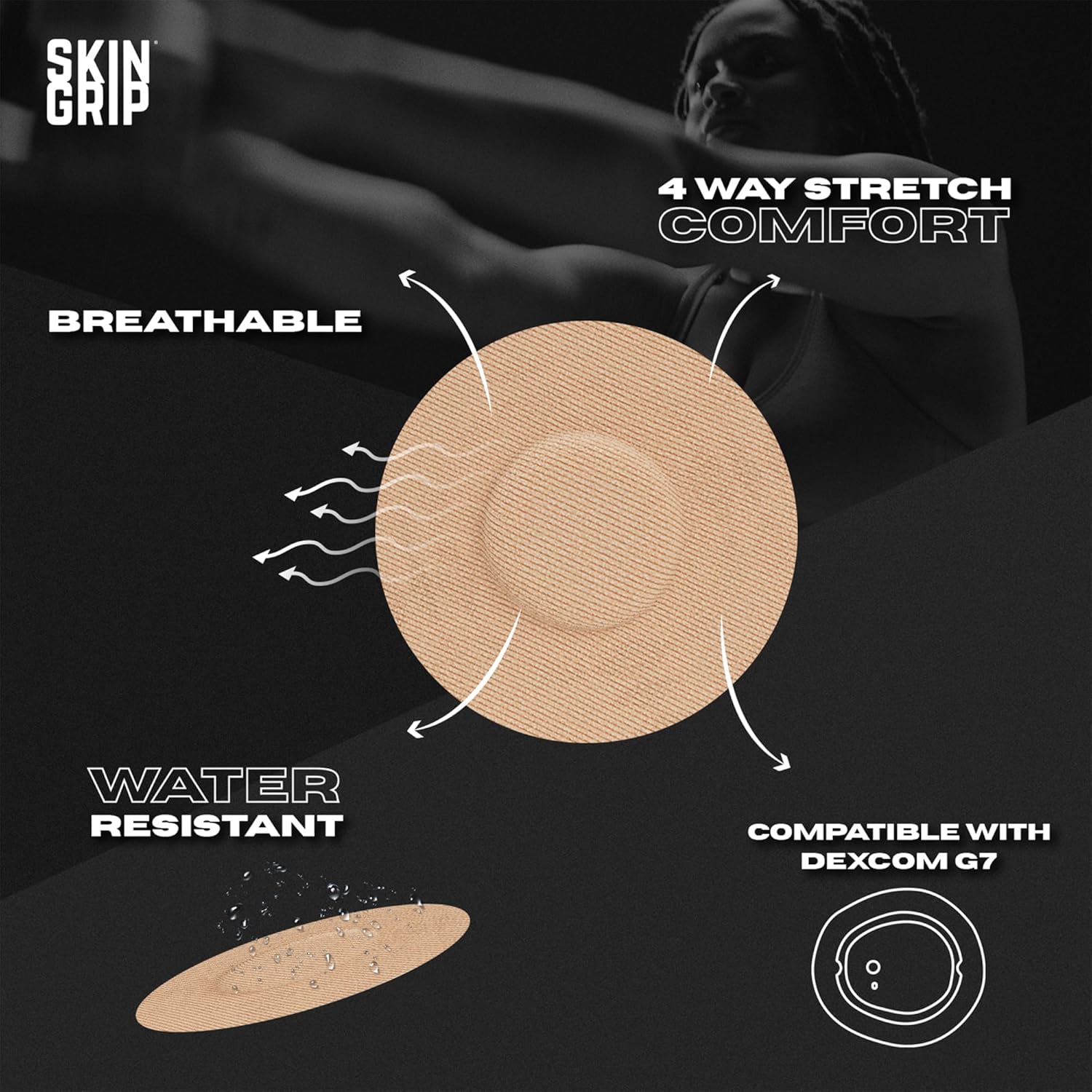
Dexcom G7 ships with a smaller adhesion patch than its predecessor, the G6. In warm climates or for physically active users who sweat heavily, third-party overpatches are commonly added. Popular options include Skin Tac adhesive wipes and fabric-based overpatches available through pharmacy and medical supply channels. Add $5–$15/month to your G7 cash-pay estimate if adhesion is a known concern for your patient or household.
Stelo uses the same G7 sensor hardware and faces the same adhesion dynamics as the G7. Lingo, built on Abbott’s FreeStyle Libre sensor platform, consistently receives favorable adhesion feedback in user experience coverage reported by Healthline (“Best Continuous Glucose Monitors,” 2025) — a meaningful practical differentiator in humid or active-use contexts. If a buyer is choosing between Stelo and Lingo on cost grounds, where the numbers are nearly identical, adhesion reliability in their climate is a legitimate tiebreaker.
Adding a $10 monthly overpatch budget to G7 pulls cash-pay monthly cost to $310–$400, which makes Lingo’s adhesion advantage slightly more consequential in that three-way cash-pay comparison.
The Decision Framework: Four Buyer Scenarios
Buyer has commercial insurance and uses insulin (Type 1, or insulin-using Type 2): Dexcom G7 is the correct choice. The $35–$75/month commercially insured cost, combined with FDA clearance for insulin dosing decisions, closed-loop system compatibility, and clinical-grade hypoglycemia and hyperglycemia alerts, makes it the right clinical and financial decision for this population. Stelo and Lingo cannot substitute for G7 in insulin-using patients — neither device carries insulin-dosing clearance, and neither integrates with automated insulin delivery systems.
Buyer has Medicare, uses insulin at least once daily, and meets Part B criteria: G7 again, at $20–$80/month depending on Medigap supplement status. This is the highest-value coverage scenario in CGM. No OTC device competes with Medicare Part B pricing for eligible beneficiaries.
Buyer is uninsured, has Type 2 without insulin, and is cost-sensitive: Run Dexcom patient assistance program eligibility first. If the buyer qualifies, G7 at approximately $99/month with clinical-grade features likely beats both OTC options on value. If they do not qualify, Stelo and Lingo are near-equivalent on monthly cash cost. Stelo’s 15-day sensor wear reduces change frequency and handling; Lingo’s adhesion profile is slightly more favorable in warm climates. Stelo wins on convenience for lower-friction users; Lingo is the better call for active users in hot or humid environments.
Buyer has an FSA or HSA balance approaching year-end: Either OTC option is immediately FSA/HSA eligible under IRS Publication 502, becoming 22–32% cheaper in effective after-tax dollars depending on marginal tax rate. This is the single highest-ROI CGM buying window for non-insured or OTC-track buyers. Coordinate with the buyer’s HR benefits calendar to capture year-end FSA use-it-or-lose-it balances before they expire.
The monthly cost of a CGM is never just the sticker price. It is sensors, overpatches, the insurance pathway you can or cannot access, and whether pre-tax FSA or HSA dollars are in play. Map those four variables for your buyer before naming a number — and the right device usually becomes obvious without requiring a guess.