The CGM Adhesive Patch Buyer’s Guide: Skin Grip, Lexcam, Onida, Ceeport, and More Compared
A CGM — continuous glucose monitor — is a small sensor worn on the skin, usually on the back of the arm or abdomen, that reads blood sugar around the clock without fingerstick tests. Devices like the Dexcom G7 and the Abbott Stelo cost anywhere from $89 to $130 per sensor, and each one is designed to last about ten to fifteen days. That’s a real investment. The factory adhesive the manufacturer places on the back of each sensor is engineered for average conditions — moderate room temperature, light activity, and typical skin. For swimmers, gym regulars, people with oily or very dry skin, or anyone who sweats heavily through a workout, “average conditions” doesn’t describe their life. An overpatch — a thin, flexible adhesive ring or overlay that holds the sensor down from the edges — is the practical fix. This guide compares the brands reviewers and clinicians actually reach for, so you can choose one before your next sensor falls off in the pool.
| EDITOR'S PICKSkin Grip Adhesive Patches Comp… | Mid-tierTorbot IM074407W314832 Group In… | Budget pick20pcs Sensor Covers for Libre 3… | |
|---|---|---|---|
| Pack count | 20 | 50 | 20 |
| CGM fit | Dexcom G7, Stelo | — | Libre 3, Lingo |
| Waterproof | ✓ | — | ✓ |
| Sweatproof | ✓ | — | ✓ |
| Wear time | 10-15 days | — | 14 days |
| Form | Patch | Wipe | Patch |
| Price | $25.99 | $17.98 | $15.99 |
| See on Amazon → | See on Amazon → | See on Amazon → |
Why Factory Adhesive Alone Often Isn’t Enough
The Dexcom G7, launched in late 2022 and now one of the dominant CGMs on the U.S. market, ships with an integrated adhesive patch that is thinner and covers a shorter wear footprint than its predecessor, the G6. Users across verified purchase histories consistently flag this as the G7’s most frustrating real-world limitation. The Abbott Stelo — the first over-the-counter CGM cleared by the FDA for adults with Type 2 diabetes or prediabetes — shows a similar pattern. Its adhesive is adequate for sedentary days but users frequently report edge-peeling within three to four days of a fifteen-day wear period.
The financial math is unforgiving. A single Dexcom G7 sensor lost to premature detachment represents real out-of-pocket cost even for commercially insured users, and cash-pay users absorb the full replacement expense. Healthline, in its editorial coverage of CGM skin reactions and adhesive sensitivities, identifies moisture, skin oils, and temperature swings as the primary culprits in early sensor loss — factors no factory patch can fully anticipate across all users.
The American Diabetes Association’s Standards of Care in Diabetes, 2025 edition, emphasizes that patient adherence to continuous CGM wear is a key driver of glycemic outcomes. That framing matters: keeping a sensor on the body is a clinical priority, not a convenience matter. An overpatch adds a few cents to a few dollars to the cost of a sensor wear and, in most cases, eliminates early loss entirely. If you’re losing even one sensor every three months to adhesive failure, overpatches pay for themselves many times over.
How to Read This Guide
Each brand section below addresses a specific failure mode. No single brand is universally superior — the right pick depends on your lifestyle, skin type, and where in the wear cycle your sensor typically fails. A quick-reference decision matrix and cost analysis follow the brand comparisons.
The Core Brands Compared
Skin Tac and Skin Grip — The Clinician-Endorsed Tier
Skin Tac liquid adhesive barrier is notable for one reason that separates it from every other product in this category: it appears in reviews as a clinician-recommended product rather than something buyers discovered on their own. Endocrinologists and certified diabetes educators appear to be proactively counseling patients to use it — a meaningful signal that it has a real-world track record in clinical settings. The American Diabetes Association’s Standards of Care in Diabetes, 2025 edition, identifies consistent sensor wear as a driver of the glycemic data quality that improves outcomes, which explains why diabetes educators are incorporating adhesive preparation into patient counseling.
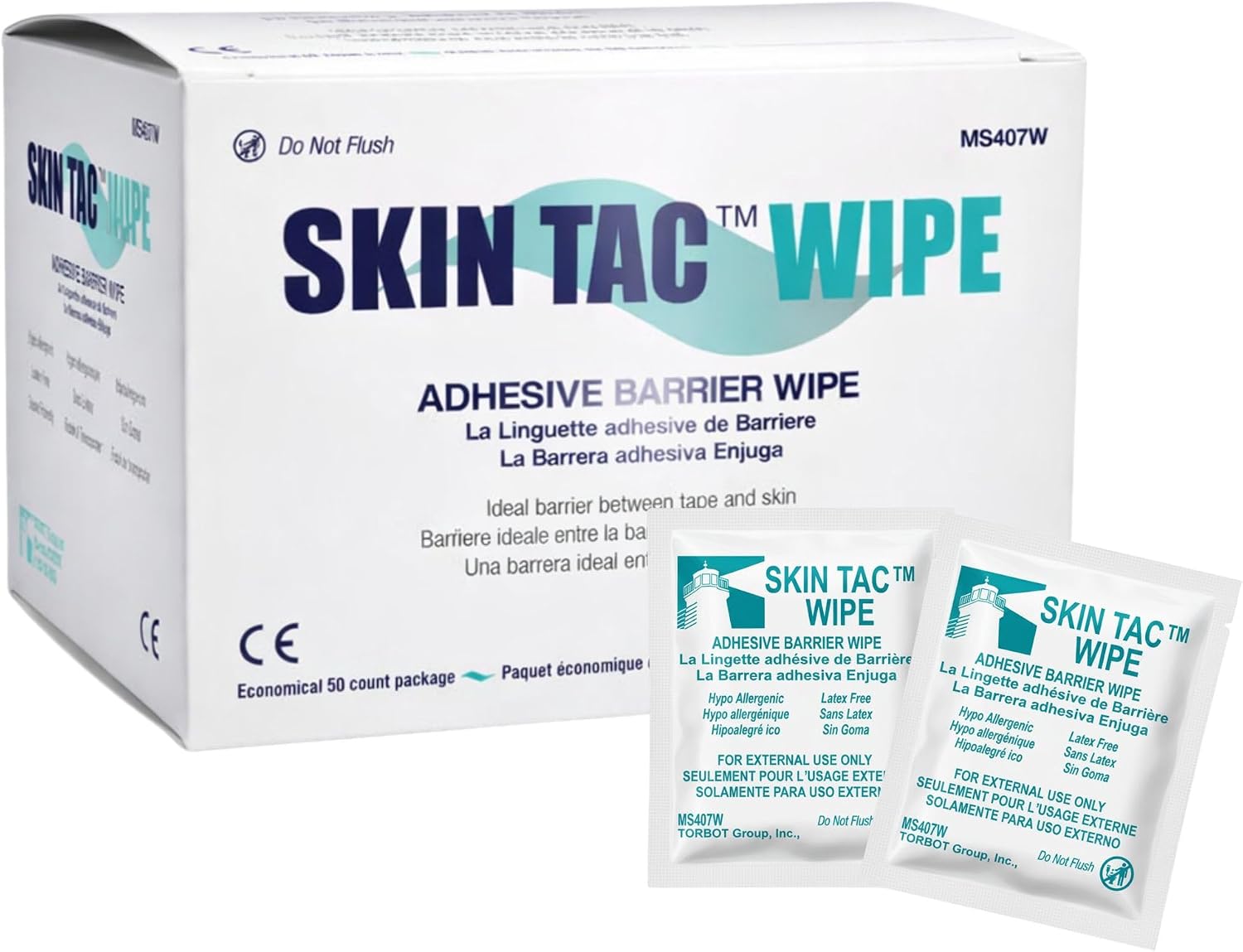
Skin Tac is applied to the skin before the sensor goes on. You dab it, let it dry to a tacky finish — roughly 30 to 60 seconds — then apply the sensor on top. This makes it a different category than an overpatch: it is a barrier wipe or liquid that improves the bond between skin and the sensor’s own adhesive. Many users layer both: Skin Tac underneath, overpatch on top. That two-layer approach appears in long-run reviews as the gold standard for aquatic athletes.
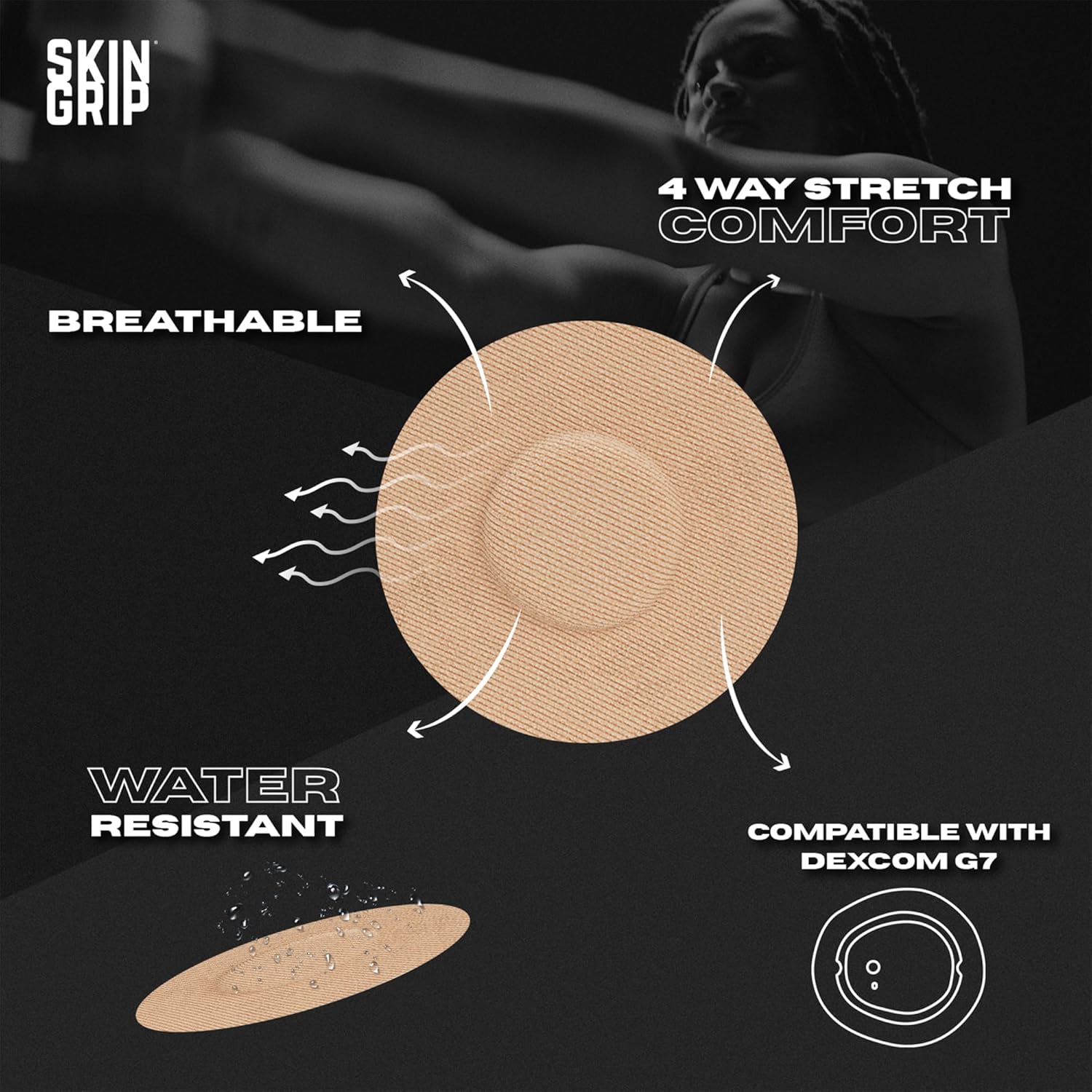
Skin Grip is the overpatch brand most frequently mentioned alongside Skin Tac. It is pre-cut for specific CGM models including the Dexcom G7 and Stelo, and the device-specific fit is the feature reviewers highlight most. The patch ring leaves the sensor’s reading window exposed while anchoring the edges — the correct geometry for CGMs, where covering the sensor dome can cause inaccurate readings.
Best for: users whose clinician or certified diabetes educator has already pointed them toward medical-grade adhesive products, and for aquatic or high-sweat athletes who want the strongest layered approach.
Skin
$25.99
In stock on Amazon
Check price on AmazonLexcam — Best Liner Removal
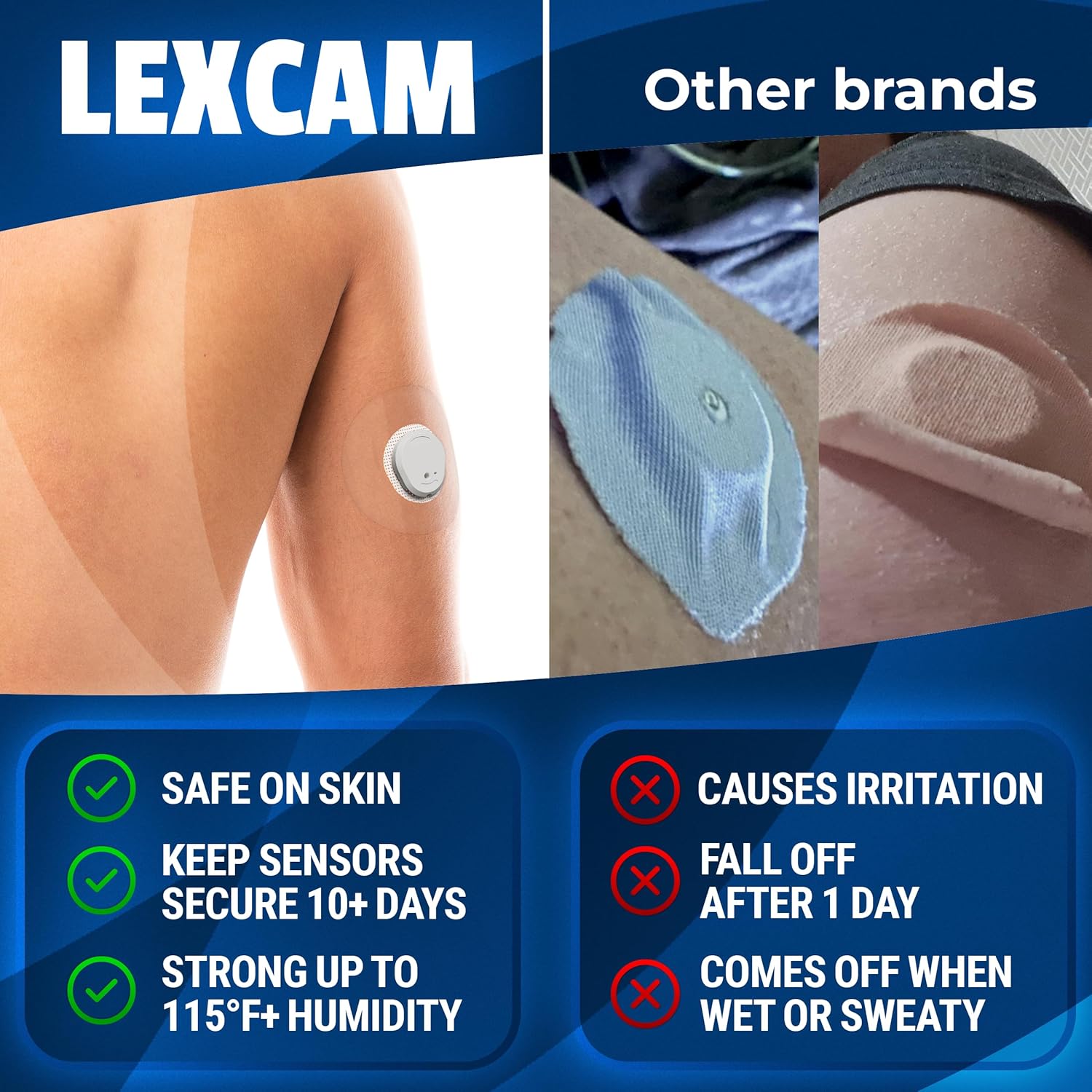
Liner removal — the step where you peel the paper backing off the patch before application — is where a surprising number of users create problems for themselves. A wrinkled or misapplied patch is nearly as bad as no patch, because air pockets cause edge peeling. Lexcam reviewers consistently praise liner removal as the easiest among the major brands. The backing separates cleanly and the patch lays flat on the first attempt, without bunching or tearing. For users managing dexterity challenges, or caregivers applying patches to children or elderly patients, that detail is not trivial.
Lexcam offers pre-cut shapes for both the Dexcom G7 and Stelo, along with several other CGM models. The material is a breathable, flexible fabric-style film — similar in texture to a premium bandage rather than rigid medical tape. Reviewers describe it as conforming well to curved skin surfaces like the back of the arm, which is the most common CGM placement site for both devices.
Best for: caregivers, users with limited hand dexterity, and anyone who has previously fumbled a patch during application and had to discard it.
Torbot
$17.98
In stock on Amazon
Check price on AmazonOnida — Consistent Mid-Range Choice
Onida occupies the reliable center of this category. Reviewers don’t tend to rave about any single feature the way Lexcam users rave about liner removal or Ceeport loyalists highlight longevity — but they also don’t report consistent failures. The brand’s value is consistency. Onida patches are pre-cut for common CGM models, the adhesive is rated for extended wear, and the price per patch sits toward the lower end of the branded tier. For users who have already found a system that works and simply need reliable stock, Onida is the kind of brand you add to a subscription order and stop thinking about.
Best for: cost-conscious users who want a dependable branded option without paying a premium for specialized features.
Torbot
$17.98
In stock on Amazon
Check price on AmazonCeeport — The Long-Wear Loyalty Pick
Ceeport has something no other brand in this comparison can point to as clearly: documented multi-month repeat buyers who explicitly state they tried several other brands first before landing on Ceeport and staying. That pattern — trial, deliberate comparison, repeated return purchase — is one of the strongest signals available in review analysis. It means the product earned its retention rather than benefiting from first-purchase inertia.
Ceeport’s reviews highlight adhesive hold as the primary differentiator. Long-wear users — people pushing sensors toward the full ten-to-fifteen-day window under high-activity conditions — describe the patch as still gripping firmly on day twelve or thirteen, when other brands’ patches have started lifting at corners. Everyday Health, in its editorial coverage of CGM wearability and lifestyle factors, notes that physical activity and sweat are the leading causes of accelerated sensor detachment, which is precisely the environment where Ceeport reviewers report consistent performance. For users serious about extracting full wear value from each sensor, Ceeport is the brand the evidence points toward most consistently.
Best for: athletes, outdoor workers, and anyone committed to reaching the full sensor wear window under challenging physical conditions.
Skin
$25.99
In stock on Amazon
Check price on AmazonNot Just A Patch Air — The Underserved Demographic Win
The Not Just A Patch Air patch addresses a population that often gets overlooked in CGM product discussions. Older adults and individuals with low body mass are among the most likely to experience early sensor loss, yet most overpatch marketing skews toward active athletes. Reviewers of this product include older adults who describe repeatedly losing sensors due to reduced muscle mass and the thinner, looser skin texture that comes with age. The sensor simply had nothing to grip reliably with standard patches, and stiffer patch materials caused discomfort or poor conformation on fragile skin.
Not Just A Patch Air’s softer, more conformable material appears to accommodate fragile or delicate skin textures better than firmer patch options. Healthline’s coverage of CGM skin reactions and adhesive sensitivities notes that individuals with thin or reactive skin face a compounded challenge: they are more prone to both adhesive failure and skin irritation from aggressive patch materials. For caregivers managing CGMs on behalf of aging parents or patients with low subcutaneous tissue, this is the brand to evaluate first.
Best for: older adults, individuals with low body mass, and anyone with fragile, thin, or reactive skin who has found stiffer patches uncomfortable or poorly conforming.
20pcs
$15.99
In stock on Amazon
Check price on AmazonQuick Decision Matrix
| If your primary challenge is… | Consider starting with… |
|---|---|
| Clinician or CDE recommended a product | Skin Tac (liquid barrier layer) |
| Fumbling with liner removal or caregiver use | Lexcam |
| Long-wear athletic or aquatic use | Ceeport |
| Thin, fragile, or delicate skin | Not Just A Patch Air |
| Budget-conscious consistent stock | Onida |
| Specific device fit for G7 or Stelo | Skin Grip or Lexcam |
The Math: What Overpatches Actually Cost Per Sensor
A 25-count pack of most branded overpatches runs roughly $8–$15, depending on brand and retailer. That works out to approximately $0.32–$0.60 per sensor wear. If your Dexcom G7 sensors retail at approximately $105 for a three-pack — roughly $35 per sensor — a single saved sensor pays for between 58 and 109 patches. The cost-per-protection math is straightforward. Even at the premium end of patch pricing, you would need to lose zero sensors over a very long run for “skip the patch” to be a rational financial choice for any active user.
FSA/HSA eligibility note: Overpatches designed for use with medical devices like CGMs are generally considered FSA/HSA-eligible supplies under IRS guidance on qualified medical expenses, but individual plan administrators vary. Confirm eligibility with your plan administrator before purchase, and retain your receipt.
Frequently Asked Questions
Do I need a patch if my CGM already has its own adhesive? For light activity and dry climates, the factory adhesive may be sufficient. But users across all major CGM brands report edge-peeling under sweat, humidity, or water exposure. If you exercise regularly, swim, or live somewhere humid, an overpatch is cost-effective insurance against a total sensor loss.
Should I apply Skin Tac before or after the overpatch? Skin Tac goes before the sensor. Apply it to clean, dry skin where the sensor will sit, let it dry to a tacky feel — about 30 to 60 seconds — then place the sensor. The overpatch goes on after the sensor, around its outer edges, once the sensor is fully seated. The two products address different failure points: Skin Tac improves the sensor-to-skin bond at the center; the overpatch prevents the sensor edges from peeling up over time.
Which patches work for both Dexcom G7 and Stelo? Lexcam and Skin Grip both offer pre-cut sizes specifically for the G7 and Stelo footprints. Verify the specific product size before ordering, since both brands sell multiple sizes. A patch cut for the larger G6 footprint will overlap the G7’s sensor window and may interfere with readings.
How do I remove a patch without tearing skin or leaving residue? Loosen the patch edges slowly with warm water or a silicone-based adhesive remover wipe. Pull parallel to the skin surface rather than straight up — lifting at a shallow angle dramatically reduces mechanical stress on the skin. Never pull a patch cold or dry. Adhesive remover wipes dissolve residue without scrubbing.
Are these patches safe for sensitive or fragile skin? Most major overpatch brands use hypoallergenic, latex-free materials. For fragile, thin, or reactive skin, Not Just A Patch Air is the brand with the most direct reviewer evidence for this use case. If you have a history of contact dermatitis, consider a small test application on your inner forearm 24 hours before a full sensor wear to check for any reaction before committing to a full wear cycle.
Will a patch keep my sensor on through swimming or hot tub use? For pool swimming, most quality overpatches combined with a Skin Tac prep layer will hold through a standard workout session. Hot tubs present a more aggressive environment — the combination of heat, prolonged soak time, and pool chemicals degrades adhesive faster than cold-water swimming. Reviewers using CGMs in aquatic fitness contexts tend to favor Ceeport for its documented long-hold performance. Replace the overpatch after a hot tub session as a precaution even if it appears intact.
The Bottom Line
The decision for active users isn’t whether to use an overpatch — the cost math settles that. The decision is which patch matches your specific failure mode. If your sensors lift at the edges after a few days of heavy activity, start with Ceeport or Skin Grip. If you’re struggling with application errors or managing patches on behalf of someone else, Lexcam’s liner removal advantage is real and consistently documented. If you’re managing CGMs for an aging parent or someone with fragile skin, Not Just A Patch Air has the most specific reviewer evidence for that population. If a clinician pointed you toward adhesive solutions, Skin Tac as a primer layer belongs in your kit regardless of which overpatch you choose. And if you want a dependable, lower-cost option without specialized features, Onida delivers consistent results.
The American Diabetes Association’s Standards of Care in Diabetes, 2025 edition, is clear that sustained, uninterrupted CGM wear — not repeated wear cycles broken up by sensor loss — is what produces the glycemic data that drives better outcomes. Keeping your sensor on the body is the whole game. The right overpatch is how you play it.